Writing

Why Authors Need Other Hobbies

I can already hear some of you saying, “But, Kara, writing is my hobby! It’s my one passion, my true love,” etc.

And, yeah, same, but that’s also part of the problem. For those of us who would eventually like to write full-time or think of writing as more than a hobby, writing can become an all-consuming activity. We spend hours upon hours of our lives staring at the screen, working on plots or outlines, posting on social media about our work, and of course, editing said work. Often, we clock in more time with our writing than we do with our day jobs.

But what happens when the words stop flowing for a while or we write something that isn’t well received? In the past when this happened, I caught myself falling into a mental health spiral because so much of my self-worth is tied closely to my ability to write and my productivity in relation to my writing. Part of this is certainly tied to the capitalistic notion of hustle culture and productivity = self-worth. Author and writer also become part of our identity, and when that part isn’t being stoked, we lose our sense of who we are, our self-confidence, and that leads to a lot of the mental health slipping.

What I found helped me to feel less mentally chaotic when stress or life made writing difficult was learning to crochet.
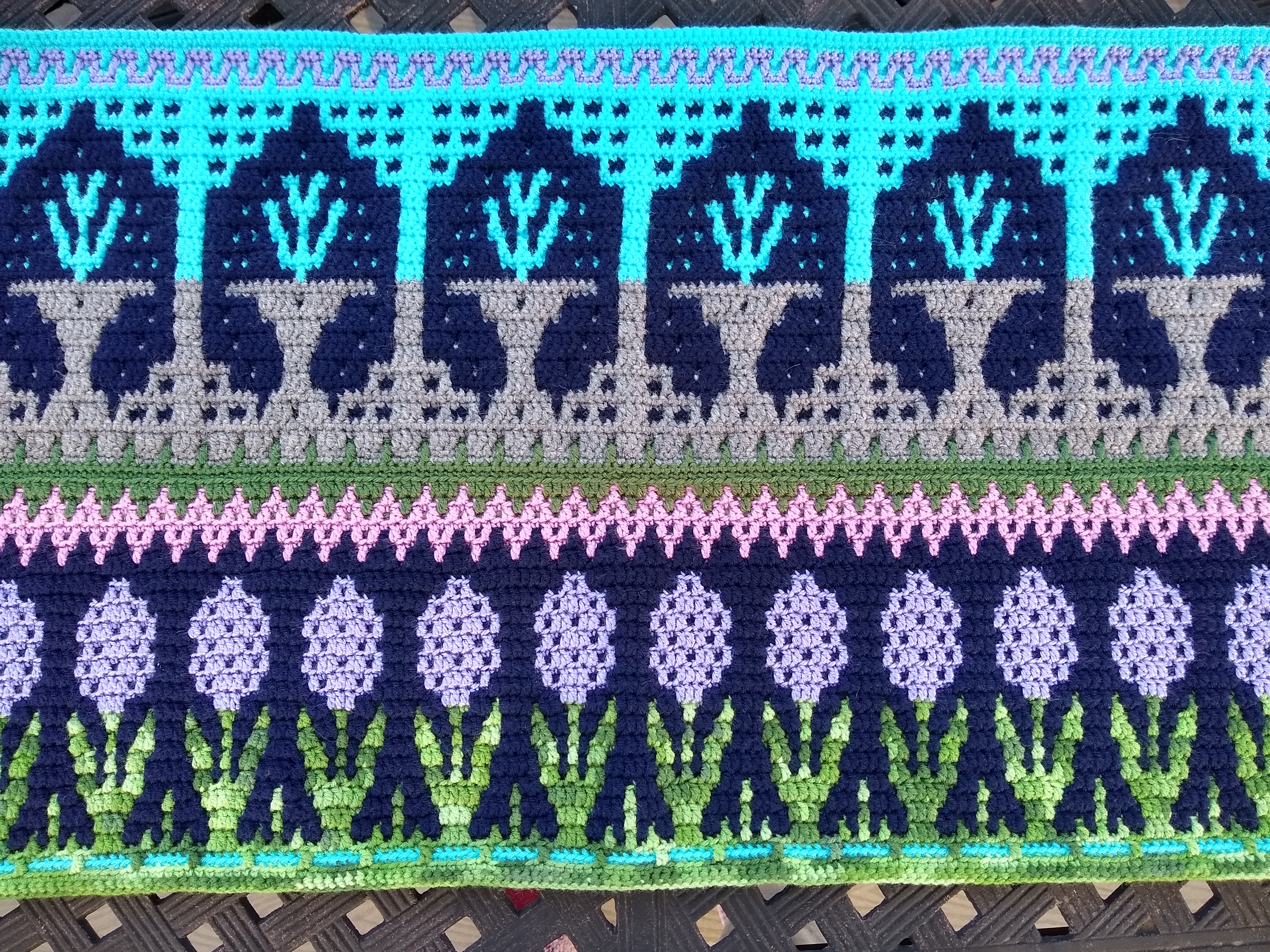
Parts 1 and 2 of the Letitia’s Garden CAL blanket I am working on for my mom. (Pattern by Rosina Plane on Ravelry)

What I love about crochet is that when I’m done with a project, there is an immediate pay off. I learn stitches, I follow a pattern, and I get a hat/scarf/blanket/produce bag/stuffed squid. Unlike writing where it takes months or years for a pay off, crocheting smaller projects can be done in an hour or two. It’s something I do to wind down if I’m feeling stressed by working on something simple or repetitive or to challenge myself by choosing something with an intricate pattern like the blanket in the picture. It helps keep me centered, especially when my writing isn’t going well.

Part of the reason this works is because I am a goal-oriented person who mentally gets off to ticking things off a to-do list, and a crochet pattern is basically a to-do list that ends in a product magically appearing. I can see the pay-off happening as I work the pattern, and that gives me the brain boost I need to counterbalance what’s going wrong with my writing. Does it help all the time? Absolutely not, and sometimes, I can’t bear the thought of picking up my crochet project and working on it.

But having a hobby that isn’t writing to give your brain that boost it needs to keep out of a downward spiral is really what is key here. If you’re athletic, maybe going to the gym and doing reps or having a pick-up game with your friends will do the trick. If you’re a crafter like me, maybe try crochet, needlepoint, knitting, plastic canvas, or even needle felting. Nothing like stabbing something a million times to get the frustration out. The good thing is, most of these hobbies don’t cost very much. You can get cheap yarn and a serviceable set of hooks/needles for $10 and there are tons of tutorials on YouTube, which is where I learned to crochet (I highly recommend HookedByRobin or JaydaInStitches).

If you are not crafty, then try video games. Much like crafts, quests give that bite size chunk pay off and seeing progression through a story or quest helps to refill the wells with serotonin. I greatly enjoy low stress games like Stardew Valley, Animal Crossing, and Ooblets, so if you aren’t a big gamer, those might be a good place to start to unwind.

The other thing I might suggest if you don’t feel like getting into a new hobby or playing a game is reading. I think most authors also tend to be readers, but I get frustrated when I hear authors say they don’t have time to read. You can probably make time for anything you truly want to do, even if it’s squeezing in a few minutes reading an ebook on your phone while in the bathroom. It still helps to refill those creative reservoirs.

Truthfully, I think doing something non-book related is the better option when you need to counterbalance writing angst. Doing something with your hands or playing video games, which helps to engage that hand-eye coordination and decision making anyway, are rife with pay-offs that might make you feel better if things are going wrong. Those small pay-offs that a hobby can bring add up and will ultimately lower your stress even if a pattern or project is frustrating in the moment. A side benefit is that I’ve often had plot epiphanies while my brain was busy chugging away a crochet project or plantings crops in Stardew Valley. It’s the repetitive, meditative nature of it that allows for your brain to run in the background and unpick the knots you’ve made.

If you’re feeling frustrated or stuck with your writing, I highly recommend trying a new hobby or picking up an old one.


organization · Writing

On Doing Things Wrong as an Author

Let me preface this by saying this is not a how-to on how to fix your screw ups. This is a post about things I screwed up that I didn’t realize were even a problem until I did them [repeatedly].

There is no right or wrong way to do most things as an author, especially in regards to writing. There will always be people who are really into your niche genre or dying for this very specific type of character you’re writing, but on the business end of things, there are, let’s say, less desirable ways of doing things. Things that don’t benefit you/the writer or the reader/your audience.

How I F-ed Up My Newsletter

I am incredibly guilty of doing those less desirable things because I’m either a) tired or burnout b) didn’t know better c) didn’t want to bother anyone. I bolded and italicized the last one because not wanting to bother anyone has been a lifelong mode of operation that I probably need therapy for, but we will not get into that. The problem with that mindset is that you treat everything you do as a chore for others. I only send emails to my newsletter occasionally because I don’t want to bother them. Or I don’t want to advertise my book because I don’t want to bother people. This means I am treating the books that I love and spent hours and hours of my life working on as something unworthy of attention, and in the long-run, I am setting myself up for failure because people don’t know I have books or think I’m only reaching out to sell them something, which is not a great look.

So what I’ve been working on is creating a monthly newsletter that will cover the following things:

Join my monthly newsletter for: sneak peeks, freebies/deals, book recommendations, life updates, pet pics, and book research
The background is grey with teal writing and there are 2 bats flying behind the words.

If you join my monthly newsletter, I’ll share things I’m working on, some cool research (and let me tell you, writing historically set books, there is a lot and it is weird), pics of my dogs, and books that I’ve read and loved and think you’ll love, too. When you sign-up, you’ll also get a free prequel short story, and over the next few months, I plan to send out another free short to subscribers. After the initial thank you emails, you will get monthly emails, which will be sent out at the end of every month.

I decided to change this to a beefier, monthly email because I was doing a disservice to my readers/subscribers by “not bothering them” except when I had book updates, and when I thought harder about that, it felt wrong to only send messages when I published. You could just follow me on Amazon or Bookbub if you wanted that kind of bare bones update.

How I F-ed Up my Back Matter

The next giant thing I screwed up is not keeping up with fixing my back matter. Back matter is the about the author, also by the author, newsletter/social media links, etc. that are found at the back of your book. Between changing laptops several times since 2014, switching writing programs, and just being overwhelmed at the prospect of going through like 10 Word docs, I put off updating all of these things for YEARS. This means that my first book had an “also by” list that only went up to like book four of the series. I facepalmed hard when I realized I hadn’t updated my back matter since 2017.

Something I would also recommend other authors doing is going back and formatting their docs, so the chapter headers are in a heading style and the body text is one uniform style. This makes it easier for the Kindle and eReader software to convert your book to something that makes sense. Guess who went back and properly formatted all 10 documents? And I was shocked to find that once I got going, it took significantly less time than I expected. I was able to do all of them over the course of a week and reuploaded the new files to my distributors. Amazon/KDP also has a new bit of free software called Kindle Create that is a lot like Vellum or, if you’ve used D2D, their autogenerated software, which will break your book into chapters and add pretty flourishes if you’re so inclined. Once again, very easy, highly recommend to make your books look spiffy.

If you’re an author, this is your sign to fix your back matter and formatting as it won’t take you nearly as long as you think once you finish the first book.

How I Forgot to Publish an Entire Box Set

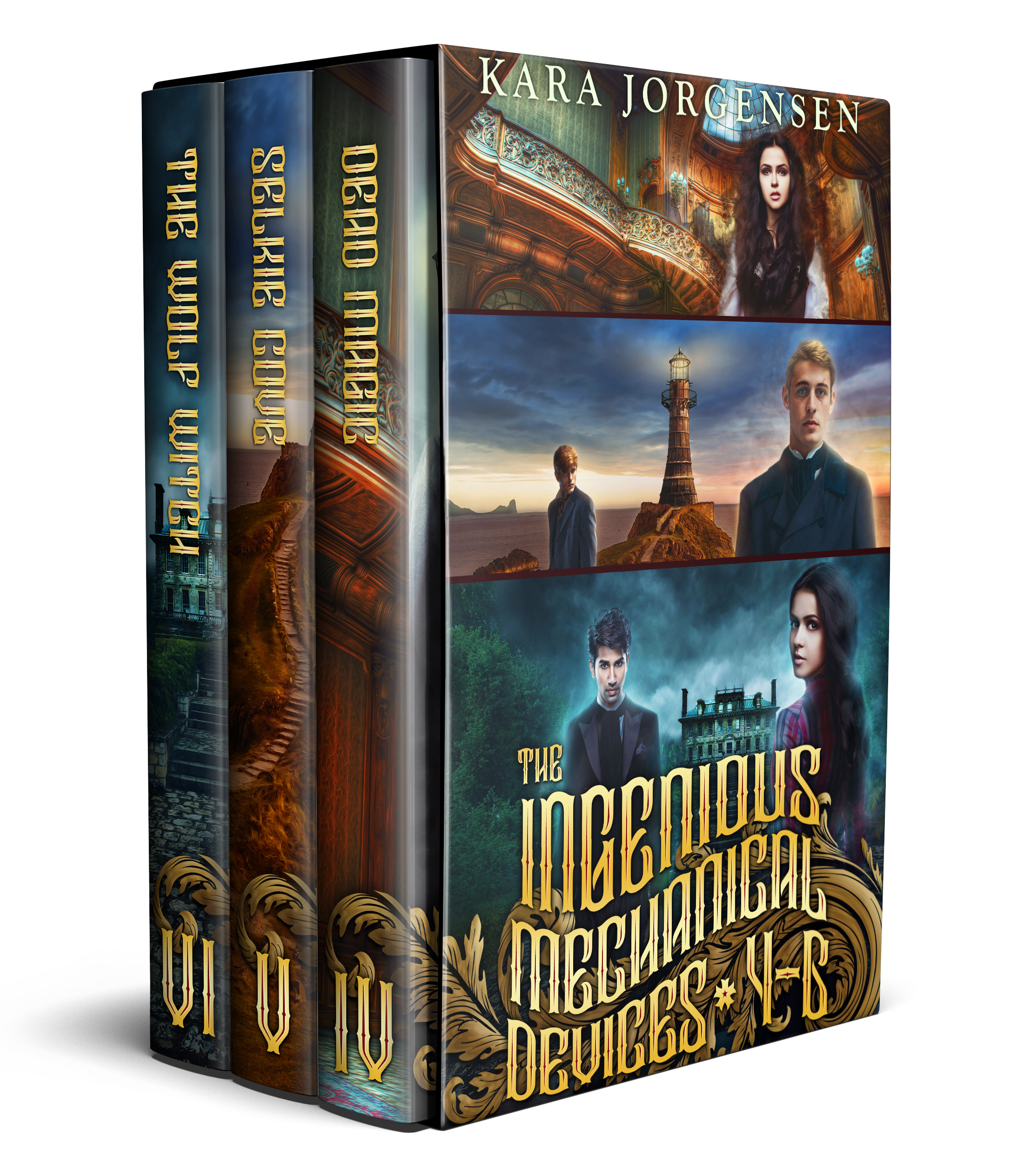
The last thing I did to get my work back into shape is to add a new box set for the Ingenious Mechanical Devices series. A while ago, I made a box set for books 1-3, which is 20% off the cost of buying the books individually, but I thought I’d wait until a year after book 6 came out before I made the next box set. Well, then I got overwhelmed with life and then enough time passed that I forgot. A couple weeks ago, I reached out to my cover designer (Lou Harper at Cover Affairs), made the file, and got it all listed, so if you’re interested in getting a box set of books 4-6 for 25% off buying the books individually, now you can. Both sets are available on all major retailers, BUT I had a little hiccup with Apple Books and Kobo. They have the set as a preorder that releases January 29th. I’ve reached out to fix it with no answer, but the 29th isn’t that far away, so if it doesn’t get fixed immediately, you will get your books by the end of the month.

TL;DR

If you’re an author, research best practices instead of assuming you’re being annoying because you could be in a totally different way than you though.

You may also want to join my monthly newsletter as it starts up in earnest this month.

If you’re an author, fix your back matter and formatting.

Check out my latest release, which is a box set of books 4-6 in the Ingenious Mechanical Devices series for 25% off the cost of the books individually.


Let me know in the comments what kinds of things you like to see in author newsletters!

organization · Personal Life

How I’m Getting My Sh*t Together

If you saw my post on “Life’s a Mess but There’s Hope,” you know that I have been having a rather rough time. Earlier in the year, due to life/emotional stress (or from a potential asymptomatic covid leftover), I was struggling with brain fog, checking OCD, and general anxiety. This combined with work stuff and writing malaise had wreaked havoc on my self-esteem and self-worth, so while I was mainlining YouTube videos, as one does when they feel shitty, I came across Sarra Cannon’s videos about her quarterly planning.

I already am a big proponent of using planners and have used a bullet journal every year since 2016, but when my downhill mental spiral started in earnest in 2020, I stopped setting concrete goals and my organization devolved from there to the bare minimum. So when I saw Sarra’s planning videos, I was excited, especially since she is a writer and entrepreneur, and it turns out her HB90 system is centered around exactly that. Before I go on, I’d like to say that I am in no way affiliated with Sarra’s classes. I just took the HB90 course and felt that I benefited from it.

What is the HB90 system?

The HB90 system was created by author Sarra Cannon (YouTube channel is Heart Breathings) as a way to help others stay organized and move toward the ideal life they want. Instead of focusing on a year at a time, she breaks things down by quarter. Some of you might shrug and say it sounds like every other planner, but there were certain aspects that greatly appealed to me.

The first one was that this system focused on quarterly goals instead of yearly goals. A problem I often faced was getting off track due to life and my yearly goals would rapidly spiral into why bother land. I wouldn’t be able to right that ship and would give up. By having quarterly goals, they are smaller chunks, and after each quarter/90 days, you do a review and figure out what worked, what didn’t work, and what you need to do. That way, if you know you were doing something self-sabotaging, you can sort of check yourself and figure out how to move forward. Also, you can decide if you want to continue a half-finished/unfinished goal or shelve it next quarter.

The other thing that appealed to me was the visualization/ideal life aspect. At the beginning of the course (and each quarter), you fill out questions regarding what you truly want your life to look like. The idea is that if you have a specific direction/vision, you know that your goals should aim you toward that vision and you can eliminate or minimize things that won’t move you toward that life. It wasn’t done in a “you should be rich in the future with a mansion and a convertible” or girlboss kind of way. She’s simply asking you to find an ideal in order to make sure your choices make sense. Something I struggle with is “spaghetti flinging,” so if I don’t know what I need to do, I will do all the things instead. This means, I do a lot of random stuff that doesn’t amount to much. This is meant to eliminate that because I can say, “Yes, this idea is great, but this isn’t what I’m focusing on right now.”

I don’t want to go over every aspect of this course (this is what taking the course is for), but something I appreciated was that Sarra Cannon is mindful of reality and different realities. She asks you to be realistic but also kind to yourself. Don’t set yourself up for failure by being like “New Year New Me!” while still having old you’s habits and abilities. You have to work on that gradually, and I was so relieved to hear her talk about if you have chronic health problems and budgeting your time based on how often you know those things take you out of commission. This really isn’t a hustle culture kind of thing, so that work til you drop and hustle harder wasn’t there. It was about knowing what you are currently capable of and potentially working toward different habits in the future or scheduling yourself better right now. As someone who has inflammation problems, migraines, and anxiety, I can’t live up to the ableist standard of hustle culture, so this took some of that pressure off me while I was working on my goals/schedule.

My Ideal Life

When I was asked to imagine my ideal life, I struggled a bit. Academia has been going through a weird time of upheaval, especially in the humanities where I work, and that has made my own life more complicated. What I decided to do for my ideal life was to create a vision board on Pinterest, and I quickly realized it would make no sense to anyone but me. What I want is a life lived creatively. I want a rich, fulfilling life that is focused on things that make me feel good: my partner, my dogs, going to museums, doing creative writing, doing more art. There’s certainly room in there for a full-time academic position if one should ever come available, but I don’t feel like I can bank on that due to the current climate at US universities. I would like to model my life a little on Vincent Price’s. He was an actor, obviously, but he also loved art and cooking, and I want a life that is filled with creativity in various forms (he also wrote a book about his dog, The Book of Joe). I already crochet, but I’d like to do more traditional art, maybe even pottery, and I’d eventually like to live off my writing (especially if teaching full-time is ever off the table). This means my overall goals should be pointing me toward being able to rely on my writing more and giving myself the space to treat my writing seriously.

My Goals for 2022 Quarter 1

Goals in the HB90 system are a little different from what we normally think of as goals. The HB90 system asks you to pick things for goals that are slightly out of your control. That way you can see whether the tasks you put under them worked or not. So I’m not posting ALL of my projects under these goals, but the idea is that you have an overarching goal, then projects under it (larger scale stuff that you would normally consider goals) and those projects get broken into tasks that can be accomplished between a few hours or a week’s time. So here are my goals for Q1:

  1. To work on publishing new books while reworking my back list to increase my monthly income to $X/$Y/$Z a month (numbers have been hidden because I felt awkward talking about how much I make off my books).
  2. To create an energized community surrounding my works and increase my social media followers by 10%/15%/20% (Focus on newsletter, blog, Instagram, Twitter).
  3. Continue to work on my teaching materials and to maintain my mental health by maintaining a decent work-life balance.

To accomplish these goals, I will be writing more (please see my 2022 Projects post for specifics), reading some books on marketing, taking another course to keep my author knowledge up to date, hopefully sending out more newsletters, fixing the back matter in my books, and working on some departmental stuff for one of the universities I work at.

The Kanban Board

The top level of my Kanban board for quarter 1, aka the to-do section. The other sections aren’t shown since they’re empty.

To keep this post from being 8 miles long, I will not go into minute detail about the Kanban board (you can check out one of Sarra’s videos for detail), but the Kanban board is part of the HB90 setup as well. It is originally a Japanese form of organization where you get a dry erase board/paper/digital board and divide it into three parts. It goes to-do, currently working on, done. The idea is that you put everything in the to-do part, and as you work on it, you move it down until it ends up in the done section. Sarra uses sticky notes, and because my tasks aren’t super granular this quarter, I decided to use dry erase magnets as they are less likely to fall off.

The things written on each magnet are tasks that I need to do this quarter. I’m sure I’m missing some, but that’s what the extra magnets are for. What I like about this technique is that it is very visual. I am a tactile, visual person who needs lists in front of my face in order to remember to do things. If I can see progress (aka things moving down the board), I think I will feel better about myself and maintaining my mental health with be easier. Something I have struggled with is feeling like I’m doing so much but not getting anywhere. Something I’m still gauging is how much will fit in 90 days, but that should come with practice and will vary based on what classes on I’m teaching and such.

Final Thoughts

I’m excited to have some sort of framework in which to organize my writing and indie author stuff because these last few years have been a shit show for me. Sarra Cannon’s videos and course has helped to reignite my focus and zest for being an indie author. I’m cautiously hopeful that this will get me back on track.

Let me know if you want to know anything else about the HB90 program or how I use planners in the future! I do plan to update you all on how this is going at the end of the quarter.

Monthly Review · Writing

2022 Projects

Photo by Lisa on Pexels.com

As I mentioned in my recent post, I want 2022 to be a year of getting my shit together. I’ll talk more about this in a future post, but I have been taking a course on the HB90 method, which is a way to keep yourself organized, plan future goals, and get your life in order. The course was made by a fellow writer, so I’m hopeful it’ll help me to get back on track. While I’m doing the behind the scenes work, I wanted to give you a little preview of what I am working on and hope to publish in the coming year.

Now, a little disclaimer that I cannot control many factors, so I don’t have full release dates yet. Assume longer projects will come out in the second half of 2022.


Photo by Mitja Juraja on Pexels.com

The Reanimator’s Heart

The Reanimator’s Heart is an off-shoot of the Paranormal Society Romances, so it still takes place in the same time period as Kinship and Kindness and many scenes are at the New York Paranormal Society. The reason I chose to create a spin-off is because this will be sort of equal parts paranormal mystery and M/M romance.

The Reanimator’s Heart is like Pushing Up Daisys meets Penny Dreadful. There are definitely some darker, scarier moments in this story, so if you like Jordan L. Hawk’s Widdershins or KJ Charles’ Magpie Lord stories, this is probably up your alley.

Oliver Barlow is the Paranormal Society’s resident coroner and necromancer. Oliver does his best to keep his powers hidden, but when he finds the man he’s had a crush on for years dead, he accidentally revives the charming Felipe Galvan. But Felipe refuses to go back to being dead until they find out who murdered him. Oliver and Felipe soon find themselves entangled with a murderous cabal that wants to bring something horrid from the great beyond.


Photo by Brandon Nickerson on Pexels.com

TROUSERS AND TROUBLE (Paranormal Society Romance #2)

Trousers and Trouble is the sequel/prequel to Kinship and Kindness. This story follows Bennett from when he leaves his uncle’s home, arrives in Brooklyn, and meets his best friends, Ruth and Rory. I know the series title says, “romance,” but let’s stretch this to mean platonic friendships and self-love. This is really a story of Bennett discovering who he is and a community where he is accepted for who he is (on several levels).

As with Kinship and Kindness, there will be magic, shifters, but this story has three transgender main characters. Ruth and Rory will eventually each have their own books in the series.

Between drag balls, performances at the Stratford Theater, and days spent at the Paranormal Society, Rory and Ruth are living their best, bachelor lives in Brooklyn. That is until a teenager on the run from his old life stumbles into their path.
While parenting had never been in the cards, Ruth and Rory know what they need to do, and they soon become Bennett’s fairy godmothers as they help him become the person he was always meant to be. But sometimes the past sinks in its teeth and refuses to let go. When Bennett’s family comes knocking, Ruth and Rory will stop at nothing to keep their new friend safe.


Future WIPS

  • A short story freebie for my newsletter that will probably be in the K&K world (join my newsletter in advance and you will get another free short story, “The Errant Earl”)
  • Tempests and Temptation (PSR #3)
  • Book 2 of the unnamed necromancer series
  • More books in the Ingenious Mechanical Devices series- not sure how many, but there will be at least 2 more

Well, I think I have kept you all long enough. Let me know in the comments which of these projects you are most looking forward to!

Uncategorized

The Box Set of Books 1-3 of the Ingenious Mechanical Devices is Now Available at All Major Retailers

For quite a few years, the box set of books 1-3 of the Ingenious Mechanical Devices series was only available on Amazon, but I have finally taken it wide, which means that you can now buy a copy on all major ebook retailers, such as Kobo, Nook, Scribd, Apple, and more.

The best part is that if you buy the box set, it costs 20% less than buying the three books individually.

The box set contains The Earl of Brass (#1), The Gentleman Devil (#2), and The Earl and the Artificer (#3).

If you click the button below, it will take you to your favorite retailer. If you have never visited Books2Read before, it will ask you to pick a retailer and will remember for future clicks.

The Wolf Witch · Writing

The Wolf Witch is Out Today!

banner books to 6

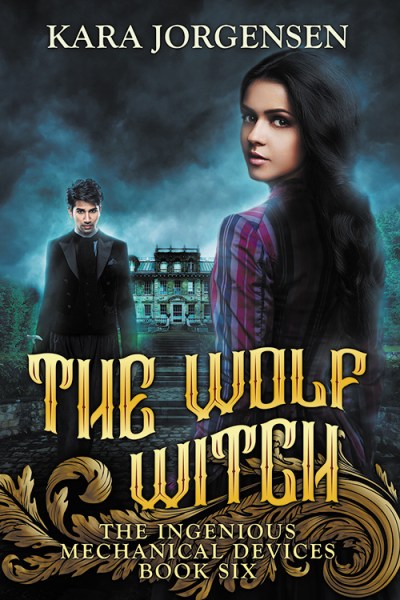
The sixth book in the Ingenious Mechanical Device is out today! You can grab a paperback or ebook copy of THE WOLF WITCH on Amazon here.

Since returning to England from abroad, Emmeline Jardine has managed to get a place of her own, maintain a tenuous truce with her guardians, and celebrate her new found freedom by attending as many parties as she can manage. That is until a man claiming to be her father shows up.
Her father has a problem. Her half-brother, Wesley, has disappeared while investigating possible werewolf sightings, and he needs Emmeline’s help finding him. Emmeline reluctantly agrees only to find there are others interested in Wesley’s plight. When she receives a mysterious invitation to a country estate deep in the woods, Emmeline is shocked to find a familiar face there.
Nadir Talbot, Decadent, writer, and all around nuisance, infuriates her to no end, but Emmeline soon finds he is the only she can turn to as they are thrust into a world of werewolves, monsters, and secrets from her family’s past that threaten to bring the empire to its knees.

Emmeline has done a lot of growing since Dead Magic, so I hope you’ll enjoy reading her story and following her on her journey to discovering who she truly is.

If you pre-ordered a copy, it will be waiting for you on your Kindle, and if you enjoyed THE WOLF WITCH, I hope you will leave an honest review on Amazon or Goodreads. They help small time authors like me a lot in terms of visibility.

I hope you all enjoy THE WOLF WITCH, and I will have news soon on my next project, which involves characters mentioned in THE WOLF WITCH.

Personal Life · Writing

In Defense of Small Word Counts

Let me let you in on a little secret. I don’t write a lot of words per day.

My daily word counts vary from 350 to 700 on a good day, but I almost never break 1,000 words unless I’m at the very end the book because the resolution is often easy for me to write since all the major strings have been tied.

On social media, it’s common for people to post their word counts after a writing sprint or just as a daily thing they do to hold themselves accountable. When I see people post that they wrote 4,000 words in a few hours, I feel sick. That’s more than I write in a week sometimes, most times. Seeing giant word counts is something that bothers me on and off. When my writing is flowing well, I don’t really care. When I’m struggling, all I see are other people’s numbers and I begin to feel inadequate.

When I’m writing consistently, it’s easy say to myself, “Why do you care? You’ve published 5 books. It isn’t like your words don’t add up to a full book.” And my books aren’t exactly tiny. Most are over 90,000 words. So what if it takes me 6-9 months to write it? I’d like to blame capitalism for that. Everything we do is measured in productivity and inevitably we tie our self-worth to the outcomes of our labor. How many words per day is merely a metric by which I measure my self-worth when things aren’t going well.

Someone might say, “Ditch the word count. Just write.” I tried that last year when my mental health was rather shitty, and it did the opposite of help because without something to push me, I wrote nothing for a few months. When writing is a form of self-care, you understand how this can cause a downward spiral. My small daily word count goal of 350 words is like saying I’m going to meditate for 15 minutes every day. It’s something I have to push myself to do because my brain, when it’s feeling low, resists doing it even though it’s good for me. A small, doable goal gives me the push I need to get it done.

Once I hit my 350, I can stop and go to bed. Most of the time I keep going. Days I don’t write because I just don’t have mental or physical spoons to do so, I make up for it the next day. I have a word count tracker that I use to chart my progress and hold myself accountable. Days I don’t write, I don’t put a zero in. Some may think it’s cheating, but zeroes made it harder to write when I was down. Now I just fill in 350 and make up for it the next day by writing 700 words or as I tell myself 2 350s.

We do what we must to trick ourselves into taking our medicine.

For years, I’ve dreaded things like NaNoWriMo where you write 50,000 words in a month or 1,667 words a day. Before I made friends with other writers, I thought you had to be a pro to accomplish such a massive daily word count or be on speed. It never seemed possible. Then I made friends with writers who seemed to do it without a lot of trouble and my confidence cracked. I couldn’t do it. I tried to do NaNo and gave up within the first week. Despite all the hype and support of other writers, I stared at that word count like it was Mt. Everest. Only the strongest and best could do it, and I couldn’t.

What I failed to notice is how many writers do NaNo and don’t publish or shop the book after. Plenty of books grow out of NaNo, but most don’t or they need to be heavily revised. That’s far from my usual process. Until last year, I had never had to totally rewrite a book. My books need editing, but most of it is fact-checking, copy edits, and cleaning up/beefing up descriptions. What I start, I finish, even if it takes the better part of a year.

I guess the point of all this is that you have to do what works for you. If writing a lot and then editing a lot is what comes naturally, then do it. If you write a little at a time, that’s fine too. There’s no one way to write even if there are plenty of books that try to teach you how to boost your productivity. At some point, you have to come to terms with what your process is and embrace it as best you can.

Personal Life · Writing

Good Riddance to 2018

To be blunt, 2018 was an exhausting train wreck that I am glad to see the back of.

More than anything, I try to be a positive person for my own sanity and those around me, but this year has tested my resolve. It wasn’t like I had any deaths in my family or any grave illness or anything that was an obvious issue. Bad things don’t always have to be grandiose. They can be quiet and subtle, like a voice whispering to you that you are worthless, your work is worthless, and you will get nowhere.

2018 was the year of crippling doubt and disappointment.

As you might have noticed, I haven’t finished The Wolf Witch despite starting it in 2017. I dove into writing that book before I was ready because I felt I needed to produce something even though I was creatively exhausted. That was a massive mistake that led to a mental spiral that probably could have been prevented had I waited a few months to work on it. Instead I drove myself further into the ground, wrote 50,000 words that needed to be totally rewritten, and wrecked my self-esteem and mental health. I felt horrible about myself. I couldn’t write and my draft was garbage (it truly was; it’s not just me being hard on myself). This led to cycle of not writing, then feeling bad about myself, then not writing even more. Since writing is one of my coping mechanisms, you can see how this went downhill quickly.

Apart from being a writer, I’m also an adjunct English professor, which means that I don’t have predictable work (my semesters can range from 1-4 classes) and I’m constantly applying for jobs that might give me some semblance of stability because I’m living below the poverty line and it sucks. I’ve applied for at least twenty teaching jobs and as many writing/copywriting jobs. Toward the beginning of the fall semester, I heard back from a job I really wanted because it was a way to combine my science and writing background while at the same time providing the financial stability I’ve been craving. After an interview and positive feedback, they decided they didn’t need to hire anyone. To say I was crushed is an understatement.

Somewhere along the way, I lost myself this year. I lost sight of who I am and what I want and what I do. On top of that, Anthony Bourdain’s suicide shook me. I looked up to him as someone I aspired to be like. Much like my other inspirations, Julia Child and Tim Gunn, Bourdain was passionate and well-versed on his subject while still injecting it with humor and an openness that I think is necessary for exploration and innovation. When he killed himself, I was in a low point in terms of how I saw myself, and it freaked me out. If someone as together and passionate and awesome as Anthony Bourdain could lose hope and kill himself, how did others in more precarious situations manage to stay sane? Obviously, I don’t know what demons he was fighting, but my situation felt bleak in my mind and I didn’t know how to get out of it.

But what made that easier was my students. My classes this semester were filled with bright, lovely students who made me look forward to work and reinforced that I’m in the right place doing the right thing. Their drive and kindness took the sting out of rejection and hopelessness. I had two really personable College Writing classes that took as much of an interest in me as I did in them, and those sorts of relationships where you know your students care about you and look forward to your class makes it easier to keep going even when things are difficult outside the classroom. So, thank you, guys. They know who they are and some of them stalk my social media, so I hope they see this and know the impact they made in my life.

Do I wish I received the copywriter job? Hell, yes. But do I feel as awful as I did a few weeks ago? No. My hope is still that I will be able to get a job as a creative writing professor soon and that I will continue to write and publish books as I set out to do. Going forward, I’m going to try to stay focused on my goal of publishing two books in 2019, but if I go off course, I will try to roll with the punches and do my best.

It’s all I can really expect of myself. And in the past few weeks, I feel like I’ve come out of the fog I’ve been fighting all year. I’m hoping I can maintain and progress on my book before the semester starts. All I can do is keep moving forward and doing what I can to make a better life for myself.

Here’s to a less shitty year and the people who make it infinitely better.

The Wolf Witch · Writing

The Wolf Witch– a Snippet

WolfWitch_v1

Hi, peeps! I’ve been hard at work rewriting the entirety of The Wolf Witch. I’ve been posting bits and behind the scenes goodies to my Patreon lately, but I wanted to share with you a preview of chapter 1. I’m hoping to have The Wolf Witch out by the fall, so let me know what you think of the first half of chapter 1.


The fact that three seemingly connected murders had gone unreported in a city like London was the first clue that something was amiss. The second was that they appeared to have been caused by a wolf, and to Wesley Bisclavret’s knowledge, he was the only werewolf in all of Britain. It didn’t take a Pinkerton to realize that someone—probably someone important—had something to hide.

Snuffling along the cobbles, the wolf lifted his head at the sound of a steamer chugging down the lane. His ears flattened in annoyance as he pushed into the hedges again. This is why he never took city assignments. Too many cabs, too many people, too many confusing smells and noises. The stench of that much garbage on top of thousands of bodies made it nearly impossible to track anyone and the racket of banging and thrumming from streets over gave him a headache. He should have told Les Meutes and the Smithsonian to shove their assignments, but he needed to prove himself if he wanted to make it on his own. The moment the cab passed, Wesley slunk out and shook the grime from his back. At least England didn’t have so many horses. The damn things seemed to know a werewolf from a dog and made a god awful racket even if they only sensed them nearby. Most of his work took him to the West or up the Mississippi. At least there, he could blend into the shadows even if wolves had long since abandoned those grounds for fear of running into humans. In Louisiana, he had grown up stalking bandits with his father and the other rougarou, moving silently through the trees on silent paws as one. Wolves lived in those parts, bobcats too, but here… Here, there was nothing but the occasional scroungy stray dog and rock as far as the eye could see. Even their parks were barely more than manicured lawns.

When the streets fell silent, Wesley padded down the street and sniffed the air. Cologne. Expensive cologne and fancy food. French, if he wasn’t mistaken. His mouth watered at the heady perfume of beef hanging in the air, but with a shake of his head, he continued on, following the smell lurking beneath it. His tail flicked as his lips curled into a semblance of a smile. He had him now. Shifting his eyes between the pavement and the road ahead, Wesley followed the smell through the city, ducking into parks or behind iron fences and trees like some feral creature whenever a human shape cut through the nighttime fog.  Padding across the road to a row of neat red brick houses with fronts choked ivy and fences sharp as iron pikes, he could taste the slick of paint on his tongue and the stench of flowers that had no business being concentrated into perfume. Dandies, he huffed, curling his lip and sneezing out the irritating odor.

Wesley darted past a house alight with the clamor of a party in full swing, hoping no one spotted him through the window as he picked up the scent in the next shadow. Trailing down the alley between the two houses, Wesley lifted his head. The other wolf was here or had been recently. He was certain of it. Lifting his leg on the corner of the house, he pondered his next move. Even in his human form, he could smell his way back to the house and confront the man. His client hadn’t even demanded he hand the thief over to Scotland Yard; all he wanted was the stolen artifact. At least that would make the job easier. Hell, he could steal the thing and catch the next transatlantic dirigible to New York before dawn. Squeezing past the garbage littering the back alley, Wesley froze. His mouth watered at the scent, and he instinctively licked his teeth as if he could taste it.

The wolf stirred within. Blood, and where there’s blood, there’s flesh.

Shit, Wesley thought as he pushed past the mottled brown and black wolf.

Book Reviews

Reading Rec: Unfit to Print

June is LGBT+ Pride Month, so I decided to review LGBT+ books for the month. I’m hoping to write 10 reviews this month, so here is number 5: Unfit to Print by K. J. Charles. I received this novella as an ARC, and Unfit to Print will be out July 10th.

unfit to print

Vikram Pandey’s job as a lawyer crusading to better the lives of Indian immigrants living in London brings a case of a missing youth. The only clues are a photograph of the young man in question and that he has been spending time with gentleman, in a manner of speaking. Going door to door on Holywell Street, Vik runs into his best friend from school, Gil Lawless, who now happens to be the proprietor of an illicit bookshop. Together they search for the lost boy and find they share more than memories.

I am a sucker for grumpy, uptight characters. Perhaps it’s because I feel a kinship with them, being an over-wound person myself. Either way, Vikram is one of my favorite characters thus far in K. J. Charles’ world. He is confident, well-versed in the law, a hard-ass of the highest order, and a soft heart. In the other corner, we have salt of the earth, Gil Lawless, seller and writer of unlawful smut who lives in the moment and lives with (note: I didn’t say owned) a cat named Satan. They go together like grape jelly and chili sauce (don’t look at me like that, it makes good sweet and sour sauce). Their dynamic is fabulous, but in the story, I wish there was a little more of them as a couple outside of the missing person search. Unfit to Print is a novella, so there is only a certain amount of space.

The mystery itself is well-written with enough intrigue and violence to keep you turning the page without being convoluted. One of the most interesting aspects of the story is the Victorian pornography angle. Nothing in the story is described in a way to make it overt erotica, which it isn’t, but it’s an interesting topic in that the Victorians had A LOT of porn floating around for such a seemingly morally uptight society. The story touches upon the various avenues through which the Victorians met their sexual needs and the hypocrisy surrounding the industry as well as how vulnerable people fall victim to it.

In terms of representation, this is a win, especially if you have been following the ridiculous comments romance publishers have made about PoC being main characters. Both characters in Unfit to Print are PoC, and the theme of identity and what it means to be a first-generation immigrant are discussed in the story.

If this review tickles your fancy, you can pre-order Unfit to Print now.