Personal Life

The Discomfort of Trying

Remember back in my discussion of social media and the devaluation of the arts, I mentioned how AI “art” partly arises from the discomfort of trying and being bad at art and how many tech bros don’t want to try to actually learn how to create art because a) it’s hard b) it takes time c) being bad at something is uncool d) caring enough to try for long periods is also uncool. That is vastly oversimplified, but you get the point.

In my infinite wisdom and procrastination as I work on book 3 of the Reanimator Mysteries series, I have decided to take up cross-stitching! Yes, folks, Kara is learning a new craft, and ironically, this time, there is no mental breakdown that has set it off. I was in a mental health low when I decided cross-stitching looked interesting, so maybe, I followed my usual pattern anyway, but I had been putting it off. At first, I wanted to finish “An Unexpected Question” and didn’t want to use my craft project as a procrastination method, which was sensible because I would have absolutely done that. Then, I kept putting it off, despite having AIDA cloth, hoops, floss, and a simple pattern. Why was I actively intrigued by projects and cross-stitchers I saw on Instagram but kept not starting a project?

Because what if I sucked at it? What if it was too hard?

I never thought those words exactly; I just sidled away from the project, putting it off for another day. When I finally realized what I was doing, I was pissed. Kara Jorgensen does not cower before a new craft project. Hell, my life’s goal is to be decent at every craft I can possibly learn, and if I can construct whole plastic canvas village sets, I can do a six by six inch cross-stitch pattern.

To force myself to actually start, I decided to participate in a stitch along (I’ll use SAL as an acronym for it here on out). SALs are when a cross-stitcher releases the pattern in pieces week by week, so week one you do the frames of the piece, week two you do a part in the upper left corner, week 3 you do part of the upper right, etc. In this case, it’s the Femurs and Fungi SAL by Fine Frog Stitching, which is supposed to have a sort of science goth, dark academia nature aesthetic. I saw it on Instagram and thought it looked really cool, so I bought the pattern, ordered all the materials on the list, and prepared myself to start the project in April. After following another SAL from a different creator a few months ago, I had always hoped to join one but never committed. Part of the fun with them is sharing your pieces each week to show off what you’ve done. It’s like having a community to cheer you on and having a sort of cheat sheet in case you get stuck since you can check out what other people have done with the patterns.

By joining, the SAL, which begins in early April, I set a deadline to learn the basics of cross-stitching. Most SALs are roughly advanced beginner to intermediate in terms of skill level, so I knew I would need to do a semi basic project to learn the ropes before I could do the SAL. A few weeks ago, I finally picked up my AIDA and hoop after watching like ten “how to cross-stitch” videos on Youtube. It didn’t look difficult, but that anticipatory anxiety remained. In a fit of oh-for-fucks-sake, I stuffed my fabric in a hoop, measured the center with a chalk pencil and got started, and guess what happened?

I sucked. Yes, I could follow a pattern since they’re very similar to plastic canvas patterns. Yes, I could put my stitches in the same way each time. But I struggled. I couldn’t find the holes in the AIDA, I couldn’t separate the floss properly and spent half an hour untangling it, I couldn’t thread the needle without taking five minutes to do so, and I couldn’t figure out how to hold the hoop without making my hand cramp. At one point, I did like twenty white-knuckled stitches and put it down. There was that little voice whispering, “Maybe this craft isn’t for me,” but instead, I stepped back and thought, “What am I doing wrong, and where can I make my life easier?”

I invested in a needle threader. I have a minor hand tremor that makes threading difficult. I already used one for plastic canvas yarn, so I bought one small enough for cross-stitch thread. One problem solved. That problem finding the holes on the fabric? Turns out, I was using the wrong size needle. I got the proper size, and the process is now significantly easier. A cross-stitcher on Youtube posted a video of how to properly pull the floss to separate it, and once I figured out that technique, the floss no longer tangled.

The vast majority of my problems were caused by inexperience, not ineptitude or a lack of innate talent. If I had someone teaching me, they probably would have taught me the tricks of the trade, but since I’m teaching myself, I needed to hunt down the things that are common knowledge to those who have been doing it for a long time. That isn’t true of just the world of crafts. Everything has those bumps that beginners don’t know about, and you can either throw down your hoop and give up or seek the answers yourself to figure out how to get past them.

The progress I’ve made over the past week has been significant. My stitches are no longer so wobbly or lopsided. I can find the holes in the AIDA much easier, which means I stitch faster and with more fluency. I’ve done creative projects long enough to know that there is always a skill acceleration, then a plateau, then another acceleration, etc. as you level up whatever skill you’re working on. At some point, I’ll hit another wall and have to go back to consulting my more experienced friends and the lovely people of Youtube who share their knowledge for free.

But the point is I’m learning by doing. I’m enjoying and trusting in the process of learning, even when it’s frustrating. Doing any sort of artistic endeavor is difficult, but if you want to learn it, do it. Do your homework, research the supplies you need, and dive in knowing you will be bad at it initially. The only way to get good at something is to actually do it, so trust the learning process and don’t be afraid to look for help online. Take this as your sign to use that craft kit or start that project.

Writing

Social Media and the Devaluation of the Arts: Part 2

Last week in part 1, I discussed how video-based social media has screwed over artists and the artistic process. While you don’t necessarily have to read part 1 to understand part 2, I will be building upon those arguments today.


Scrolling through Tiktok, a woman making miniatures flashes across my screen. With a pair of long tweezers, she places a dozen tiny books onto a bookcase, one after the other. The cuts are evident, but I know that even someone with a deft hand and lots of practice picking up tiny things would struggle to put these itty bitty books on a shelf and have them look artfully arranged. I wonder how much time has gone into creating this video. Was this a time lapse or a rehearsed arrangement of books? Have the other books been glued down to avoid accidentally dumping or upsetting what’s already been placed down in this diorama of a library? But I’ll never know. The moment the last book hits the shelf, the camera pulls back to reveal a quaint, cozy library done in 1:12 scale. It zooms in on a few details before looping back to the beginning.

There’s something about miniatures that I love, though I don’t make them myself. It’s a replication of real life but on an inhuman scale. It’s a very human thing to build houses for ghosts. To decorate them to honor some unseen presence. We relish the work and time we put in making something the hypothetical inhabitant would like. Dollhouses pick up where our temples or homemade altars left off, and it’s comforting to know humans never truly change.

I follow a bunch of people who make miniatures on Instagram and Youtube. Miniaturists often make their own pieces for their dioramas or buy them from independent creators who specialize in a very specific niche like making tiny, lifelike vegetables or weaving itty bitty carpets on a bracelet loom. Under a video of someone rolling out and painting a clay cabbage, a commenter asks how much they cost. I wince at the responses to the creator’s honest answer. “FOR A CLAY CABBAGE?? I COULD MAKE THAT FOR $3!” says the questioner, and others quickly chime in to tell the craftsperson what a rip-off their price is.

The Price of the Aesthetic

If you’re an artist of any type, I’m sure you’ve heard someone complaining about the price of your work, whether it’s a $5 ebook or a $300 full color art commission. People don’t understand the amount of work that goes into making something. It isn’t just the cost of the materials or even the time it takes to make it. You’re paying for skill. It’s the same reason you can make yourself a cheeseburger and fries at home, but you pay $15 for the same thing at a restaurant. The chef knows what they’re doing, and you’re paying for their expertise. Yes, you could make that clay cabbage at home for $3, but do you have the experience to know what clay works best or how thin to roll it without tearing it or how to paint things in a way that makes them seem lifelike? In the amount of time, effort, and material you used to figure it out, you’ve probably spent more than you would have if you bought it from a professional.

When I commission artwork of my characters from my favorite artists, I do so because I know they can do a better job than I ever could. I’m paying for their skill, and usually, I’m underpaying for that skill. Most artists I know do not charge what their work is worth, and even then, they still get told they’re overcharging or trying to rip people off. No matter how little a creative charges, it will always be too much for someone. With the way social media algorithms demand artists to perform in videos, I wonder how much worse this will get.

As someone who crafts and writes, I know the time a project takes, the toll repeated motions can have on the body, the costs of materials, and the amount of energy it takes to learn a skill and hone it over years, but what about those who don’t? I think back to that Tiktok video of the woman placing tiny books on a shelf. I wonder how many people watching the video understand how much work goes into making each of those miniature books. Yes, they look uniform and nearly perfect, despite there being several dozen of them, but that is due to hours of labor and years of skill. They don’t look perfect because it’s easy. They look perfect because the artist knows what they’re doing. And now that work is been distilled into thirty seconds of “content” on Tiktok, being watched by people who may have no interest in miniatures or how they’re made or anything this artist is doing beyond consuming shifting pixels on a screen. The ratio of people who know what they’re looking at to the people who don’t is getting worse the further the video goes outside its target audience, and the more that happens, the more the demeaning comments flow in.

The shift to splashy thirty seconds or less videos is doing a disservice to the arts. A very common format on Tiktok is someone making something with half second sharp cuts between steps in the process. Thread the needle, needle into fabric, row, row, row, row, progress shot, tada. It forces the artist to condense their work and process into what I like to call the aesthetic of productivity. It flattens the creative process to the bare bones of each step, making it almost prescriptive when the art of creating the piece is not meant to be a tutorial. This format doesn’t leave room for contemplation or mistakes or reevaluation, just forward progress, a march to the finish before it’s onto the next Instagram worthy piece. It’s slight of hand that hides the work in favor of the sparkly product, but when we hide the work, we hide the skill, the meaning, the way we’re truly supposed to experience art.

Bob Ross wasn’t a cool artist because he made a shit ton of paintings; it was because he made the act of painting accessible and enjoyable. He took his skill and time and taught others how to make art and be fulfilled by the process of adding happy trees and embracing mistakes. What we’re seeing now is antithesis to this. It’s all product and capitalist consumption, no process or joy or fulfillment. When we take out the most fulfilling parts of creating and what allows us to express ourselves, we not only devalue what makes us human but the skill that artists have cultivated through years of practice and work.

Who Let the Tech Bros in?

I won’t get into my long winded rant about how the devaluation of the humanities lies squarely with white supremacy and its besties, capitalism and fascism, but for now, trust me when I say that the greater accessibility of higher education, online tutorials for nearly anything, and the ease of sharing marginalized voices via social media coinciding with a massive devaluation of the arts and humanities isn’t a coincidence. And as if smelling the blood in the water, tech bros have caught wind of the devaluation of the artistic process and sought to capitalize on it.

First, it was NFTs plaguing the art community, and now, it’s AI generated “art.” “Art” because art requires a certain level of humanity that a computer can never emulate. “Art” because it’s a plagiarist, and plagiarists don’t deserve credit for their work. And most importantly, “art” because it isn’t art; it’s an approximation of what the unskilled, uncaring, and uninterested think art should be. The worst part is, we’ve helped them get there with each high production value, no substance video.

For years, we have been devaluing the humanities. It started again in earnest more recently with the championing of STEM fields above all else and was compounded by the mass denigration of people who majored in the humanities (despite the fact that their skills make them more employable, even outside their respective fields). This has all been further heightened by the well-established misogynistic feelings in regards to needle crafts, clothing design, and artisanal products. Many of the crafts or types of art we see on Tiktok or Instagram were considered “women’s work” and were taken for granted or not seen as serious art for centuries, and now, that the queerness of many masc traditional artists is more obvious, there wasn’t enough “traditional masculinity” left to uphold the arts against the patriarchy. Techno grifters quickly realized they could cash in on those who wouldn’t dare debase themselves by dabbling in the arts and being vulnerable enough to be bad at something.

AI tech bros, whether they know it or not, are selling hyper-capitalist, patriarchal art. It requires no skill, no talent no practice, just stealing the hard work of legions of unseen (and probably marginalized) people. You can’t get more capitalist than that. At the core of it is instant gratification and accolades with none of the process or emotion that goes into actual art. And where do they show off these new masterpieces? Social media. Because as long as we’re quickly scrolling and haphazardly liking, we won’t notice the woman in the painting has seven fingers or that the pattern on her dress makes zero sense or that the piece has no emotional impact or intention. All that truly matters is that the tech bros have colonized a space that was inhabited largely by marginalized groups and filled it with easily consumable trash.


If the process no longer matters and the product barely matters beyond how many follows, likes, and retweets we garner, it’s no wonder that AI “art” has proliferated like a fungus. AI “art” is the culmination of the devaluation of art on social media because all that matters is pulling as much “content” and money from a piece as possible. Unfortunately, I don’t know what the solution is besides legislation cracking down on AI due to copyright issues, but there needs to be major push back from artists and art appreciators alike against the shiny-fication of the arts and the way it flattens the process and the meaning of the pieces themselves. Only by pushing back against the hyper-capitalist algorithms and trends can we truly move toward something more equitable and sustainable for artists.

If you want to help your artist friends, show off their art, like their quieter posts, and support things like UBI and other social safety nets that allow artists to more comfortably flourish. It isn’t too late to turn the tide.

the reanimator's soul · Writing

One Month Until The Reanimator’s Soul

I am so excited because in less than a month, The Reanimator’s Soul (The Reanimator Mysteries #2) comes out in ebook and paperback. During October, I’m going to be sharing more of the story along with some fun tidbits about why this book came to be, what it’s about, etc.

Today, I want to whet your appetite by giving you some things I listened to and looked at while working on The Reanimator’s Soul.

First up, we have the YouTube playlist for The Reanimator’s Soul. These are songs that I think relate really well to the story but were not necessarily things I listened to on repeat while writing that (those were weird ambience tracks). Some highlights that might give you the tone:

“Against the Kitchen Floor” by Will Wood encapsulates Ansley and Oliver’s past relationship pretty well as well as the scars Oliver has from that relationship. Will Wood writes a lot of music neurodivergent and/or mentally ill people can relate to.

You’ll also notice a few song from Poor Man’s Poison. They are quickly becoming one of my favorite folk(ish) bands. They sing a lot of about social injustices, the rich v. the poor, and they are catchy as hell. It works very well for a book about how medicine can uphold white supremacist ideologies.

“Where You Go I Go” by Fight the Fade felt like the perfect song for Oliver and Felipe’s relationship, like so spot on I made my partner listen to it. There’s plenty more on the “soundtrack” for this book, so I hope you enjoy it.

And I cannot give you previews without sharing the infamous Pinterest Board for The Reanimator’s Soul.

This is one of my favorite things to share because I get to throw a bunch of random photos and quotes at you and let you concoct your own plot for the story. I have a lot of face-casting pictures for the characters along with some pics of Victorian things you might expect to see, and plenty of moody quotes to hammer home those feelings.

If you haven’t preordered The Reanimator’s Soul yet, there’s still time. It comes out October 24th, 2023 at all major retailers. The Google Play preorder link will be up VERY soon (my apologies for my Google Play peeps), and paperbacks will be available closer to release day since I can’t put those on preorder ahead of time.

The Reanimator's Heart · the reanimator's soul

Art of Oliver and Felipe!

I commissioned artwork of Oliver and Felipe! If you follow me on social media, you have probably already seen this picture, but I wanted to show it off here as well. OblivionsDream is an absolutely fantastic artist who previously made fan art of Oliver and Felipe (you can see it here). Once I saw how perfectly Oblivionsdream captured my boys, I knew I had to commission art from her when she opened up slots.

I asked for a picture of Oliver and Felipe that was soft. They spend so much of The Reanimator’s Heart and The Reanimator’s Soul in peril that I wanted to capture some sweet downtime.

I also wanted to point out some details I love about this piece. Truthfully, I love all of it, but one of my favorite things is how OblivionsDream always adds Felipe’s greying hair. You can see it around his temples, and he also has crows feet around his eyes and scruff. The attention to detail (especially regarding things mentioned in the books) brings me so much joy. There’s also the contrast between who Felipe and Oliver are dressed too is very them. Oliver’s contented expression is just so sweet, and one of my favorites is the stuff on the windowsill. Oliver and Felipe have keys to each other’s living spaces, so the two keys brought me joy.

Paying artists to make artwork of my characters is one of my favorite things, and when the art comes from someone who has read my books and likes my characters, there is no better feeling.

Uncategorized

Spiting the AI

If you aren’t chronically online [like me], you may not have heard about all the issues with AI art. If you aren’t sure why it’s a bad thing, a quick synopsis is that for AI art to work, they have to steal artwork from human artists in order to mush things together to create what people are generating. It isn’t like they are taking from public domain works, and that is obscenely shitty, especially since of course corporations are cutting ties with human artists to use a machine that makes wonky ass hands and regurgitates soulless garbage made of art that was actually nice and had thought and composition behind it. It’s the art of equivalent of me writing a book by stealing good sentences from bestsellers. I mean, it’s a new book. Who cares where all the good sentences came from, especially if I changed the names, right? See how stupid it sounds when you change art to writing. We call that plagiarism. My advice for this is DO NOT FEED THE MACHINE. Don’t play with AI generators, don’t use those photo changer apps because they are AI also, and if you have Adobe or other art programs, double check that your settings are such that it isn’t stealing your data/files to feed to their AI machines.

As someone who values equity and the arts/humanities, supporting AI goes against everything I stand for, and using it, even casually, spits in the face of every artist who works hard on their craft and is trying to make a living and those who spend hours on their art as a hobbiest. Yes, I will fight people over this. Go use AI to make a machine that will do my taxes and leave the creative stuff to human beings.

Anyway, this is not meant to be a rant about how gross AI art is, though I could spend a lot of time doing so. The reason why I bring this up is because one of my goals for this year is to get back into art, drawing, and crafting. I crocheted like a machine in 2020 (though, ironically machines cannot crochet as it’s too difficult), but I sort of burnt myself out on it. Last year, I had intended to do more art, but I ended up focusing on getting back into writing and really didn’t do anything besides my bullet journal spreads/doodles. That isn’t to say that isn’t art, but it wasn’t what I had intended to do.

All through middle and high school, I took art classes, to the point that in my senior year, I was in Portfolio Art (senior year, you took all of the art classes class) and Arts and Crafts (which was like ceramics, plastic canvas, basket weaving, etc). Art has played a pivotal part in my life, and during college, I wasn’t able to take any art classes because the vast majority conflicted with my science labs. In the fourteen years since I graduated high school, I have lost that muscle memory for art that isn’t craft-focused. My hope is that I can do more little pieces, play with the supplies I have, and just enjoy art as a process. Aka, not cry over my lost muscle memory and rage quit when it doesn’t go well. At first, I know my art will look terrible, and that’s fine. The whole point of doing this is to reawaken that side of me, enjoy the process, and work toward improving in a very loose, fun way.

Something I want to put out into the universe is that I would love to sell planner stickers one day. I absolutely adore sticker sheets of cute but mundane things, and there are more niche stickers I would love to have that don’t exist in shops in the US. Maybe one day I can make some fossil stickers or ones of amphoras and Grecian urns. We’ll see.

At this point, I have Posca acrylic paint markers, needle felting kits, plastic canvas kits, and Himi gouache sitting in my basement waiting for me to use them. I don’t know how much I’ll post about my art journey this year or how far I’ll get, but I hope you will join me in recapturing the childlike glee of making art.

selkie cove · Writing

Selkie Cove: Chapter Two

SelkieCoveLH

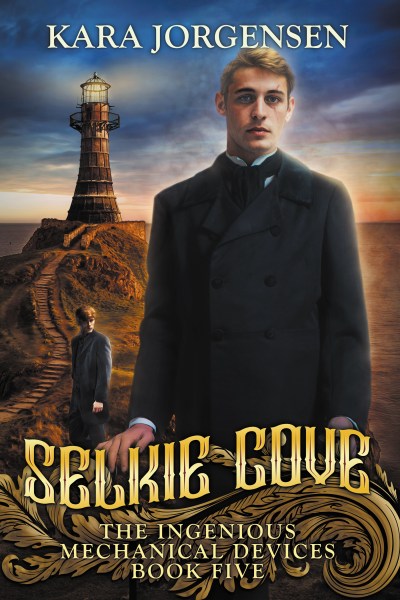
As you have probably seen in early posts, Selkie Cove (IMD #5) will be out July 25th. I’m super excited for you to read it, and if you would like, you can pre-order it here. Paperbacks will be available before the release date.

If you missed chapter one, you can read it here.


Chapter Two

Sigils and Seals

Immanuel closed his eyes, drinking in the crisp autumnal air as it blew in from his window and ruffled the page that contained a sigil he had been working on to conjure wind. For most of the morning, he had barely gotten a stir of air. It wasn’t until he stopped picturing hurricane-force winds and replaced them with birds soaring and the smell of rain that he felt the kiss of Hyde Park’s earthen perfume brush his cheek. Opening his eyes, Immanuel found a loose Celtic knot beneath the nib of his pen. A smile flashed across his lips as he quickly jotted down his thoughts and results beside the sigil before they could sink beneath the sea of the research he was doing. For hours he had been gathering information on Arctic mammals from half a dozen books from the museum’s library, and he desperately needed a break from penguins and whales. Immanuel shuddered at the thought of having to dissect the latter beast and studied the new sigil’s form. While magic had only been part of his life a short while, it was proving to be as interesting a discipline as science.

Immanuel eyed the tea cup resting at the edge of his blotter and chewed his lip in thought. He had at least fifteen minutes before Sir William Henry Flower finished his weekly meeting with the heads of the museum’s departments. Anyone with any authority would be in the Shaw Room, which meant there would be time to try a trick he had been working on. Placing the cup before him, Immanuel drew in a slow, steady breath. With his eyes locked on the cold tea, his finger traced a whirl that grew into a deformed star on the tabletop. For a moment, nothing happened. He pictured water rolling over his back, the sensation of water dripping across his skin, the call of the ocean lapping against the shore. A ripple passed from his mind to the tea’s surface. The harder he stared, the rougher the waves became until the tea nearly sloshed over the edge of the china. When it reached a peak in the center, Immanuel’s mind snagged it. The sigil evolved beneath his hand, twisting into a lattice of peaks and valleys as the surface rose high above the cup until—

“What the devil do you think you’re doing!”

Immanuel jumped and the peak of liquid plummeted into the cup, shooting tea across his blotter and papers. Scrambling to keep the ink from bleeding into an indecipherable blur, Immanuel looked up to find Peregrine Nichols glaring back at him from the doorway. The junior botany curator’s sharp brown brows furrowed as he slammed the door shut with his foot and stood at the end of Immanuel’s desk. Despite being over a head shorter than Immanuel, the Peregrine had a commanding air he couldn’t hope to emulate. He had seen Peregrine take down a revenant with a pry bar and an incantation when he could scarcely will his body to move. Carefully, mopping his notes with a handkerchief, Immanuel avoided Peregrine’s gaze.

“Are you out of your bloody mind, Winter?” Peregrine hissed. “What if someone saw you? How would you have explained your levitating tea to them?”

“It wasn’t levitating, I was merely experimenting with— I didn’t think anyone would barge in.” Immanuel’s face reddened against his will as he held the handkerchief over his paper and hoped he hadn’t ruined the wind sigil. “Sir William always knocks.”

“But not everyone does. That’s the point. If you’re looking for a way to get on Elliot’s bad side, provoking a modern Inquisition by being careless is a good way to start.”

“I didn’t mean any harm.”

“It doesn’t matter. One slip up and we’re all pyre fodder. So, have you come to an answer yet? She’s even started nagging me to find out.”

A wave of guilt rippled through Immanuel’s gut as he broke from Peregrine’s hard gaze to shut the window and put the wet pages on the radiator to dry. He still didn’t have an answer. After discovering he had extranormal abilities and helping to foil a witch hell-bent on bringing an otherworldly creature to London, he had been offered the chance to join Her Majesty’s Interceptors, a sort of Home Office to deal with England’s overlooked world of magic. It had been tempting, but— Immanuel wasn’t certain what the “but” was. With all that transpired since he had been given a second chance at life, he was tired, and he savored the peace that had finally fallen over his life. His job as a junior curator and his relationship with Adam were all he could have wanted. Becoming an Interceptor would change all of that.

“I will get back to her soon. What is it you need?”

“For you to not do magic at work,” Peregrine snapped, keeping his voice low. Releasing a sigh, the impish curator stepped around Immanuel’s desk to inspect the drowsy pink orchid blooming on his shelf between an ammonite and a sea urchin’s shell. “This is Hexalectris colemanii. Where did you get it? They’re exceptionally rare. I tried to get one, but it arrived dead.”

Immanuel met Peregrine’s umber eyes before quickly averting his gaze back to his papers. “I— I didn’t think you wanted it anymore.”

“So you fished it out of my rubbish bin?”

“I… Well, yes. I thought it might be pretty, and I wanted to see if I could revive it. It was an experiment, really. You can have it back if you want.”

“Thanks,” he replied tartly as he stood on tiptoe to pull the plant down. Hugging the orchid to his chest, he turned on heel to make for the door. “Oh, Sir William wants to see you in the loading dock, and may I suggest you put your papers away before you go.”

The moment Peregrine shut the door behind him, Immanuel released a slow breath. Carefully moving the drying pages behind his desk, he blocked them from sight with a stack of books. He rushed down the hall and hoped to god Sir William hadn’t been waiting long. The last time he did, he became the liaison between his boss and the British Museum, which really meant a month of being a glorified errand boy. Darting down the back steps, Immanuel nodded to the archivists at the front desk before slipping into the storeroom’s maze of dusty wooden shelves. His heart thundered in his throat as he crossed the boards, focusing his attention on the shelves of specimens and bones. It had been months since he was attacked between the stacks by Lord Rose, but each time he ventured into the vast storeroom without a companion, he found his mind grasping to relive those dark moments. More than anything, he wished he knew how to make it stop.

As he grew closer to the loading docks, an unintelligible mix of men’s voices rose through the stillness. Ahead, a crane swung, dangling a long box the size of a coffin. Sir William stood near the controls, watching the crate with an eagle eye as he fed the crane-operator directions. Spotting Immanuel step from the shadows, Sir William stared down his patrician nose at the lanky young man, his gaze lingering on Immanuel’s scar and blotted eye. Immanuel shifted beneath his gaze before clasping his hands behind his back to stop his fidgeting form.

“I beg your pardon, sir. I got caught up helping Peregrine.”

Ignoring him, Sir William turned and gestured for Immanuel to follow him the way came. “A specimen has arrived that I need you to examine. I know it to be a the work of a mountebank, but it came from a well-respected benefactor who claims it to be genuine. We obviously cannot have forgeries in the collection, which is why I would like you to give it the time and attention it deserves. Very little. But make the report detailed, so I can present it to them with little conflict. Do you understand what I’m asking of you, Winter?”

“Yes, sir. I believe so, but what is it?”

“A charlatan’s creation.” Stopping beside man-sized crate covered with a canvas sheet, Sir William released a huff. “Here it is. Put the report on my desk when you’re finished, so I can review it. No matter how foolish this is, we must take care not offend our donors.”

The breath hitched in Immanuel’s throat as the director tossed back the sheet and his eyes fell upon the creature. Floating within the glass-walled case was a seal-like beast. While the skin retained the smooth, grey speckled fur of a harbor seal, the face and body had the unmistakable profile of the human form. Its arms were short, as if stunted, and ended in a webbed hand tipped with sharp claws. Spotted hooded lids covered the creature’s large eyes, which peaked out beneath long lashes, but the longer Immanuel stared at it, the more he feared it would turn its gaze to him. A twang of recognition rang through him, touching the deepest parts of his mind. All thoughts escaped him as he took in the creature’s bisected tail and elongated human torso. With a tut, Sir William tossed the sheet back over the glass coffin, hiding the creature from view as a dockhand passed.

“Take this up to Mr. Winter’s office and let no one else see it.”

Before Immanuel could speak, the direct snapped his fingers for one of the dockhands to fetch a cart. Whatever the creature was, Immanuel had the sinking feeling it wasn’t as unbelievable as Sir William thought. The director turned and headed back to the dock, leaving Immanuel standing mute as two rough dockhands swept in. The wooden dolly yawned beneath the weight of the beast and the gallons of fluid surrounding it. Immanuel flinched as the gruff men rammed in the cart into the doorframe on their way to the upper floor before shoving the corner further into the elevator with their scuffed boots. Following close behind them, Immanuel stood silently in front of the elevator doors, staring down at the shoes Adam had polished for him the previous night. The men beside him spoke of a new freak show opening in Piccadilly one of the other men had seen. Immanuel’s scarred eye burned as he clasped his nervous hands behind his back. Would they call him a freak if they knew what he truly was? That with a touch of his hand, he could see the last moments of the creature at their feet’s life, if it really was a creature at all and not some amalgamation of body parts, or that he taught himself to manipulate water. Would they call for his demise if they knew all the ways he went against nature?

With a ding, the elevator doors creaked open, and the men rolled the box down the hall to Immanuel’s office. Immanuel inwardly sighed, standing out of the way until, with a few more bangs, they left him alone with the veiled creature. Ignoring the glass box taking up most of the space between his desk and door, Immanuel shimmied behind his desk to gather up the papers and fallen books the men had scattered in their wake. His eyes roamed over the sigils and notes. The ink had bled in a few places, but overall, his work appeared to be legible. He carefully tucked his the papers into his notebook and turned his attention to the pile of letters sitting on his blotter. As he turned over the first envelope, his eyes lit up; the seal was from the Royal Zoological Society. Immanuel’s hands shook as he ripped open the seal and pulled out the letter.


***


Adam watched from the threshold as Immanuel scanned the letter in his hands. His bichrome eyes widened, and a wide smile brightened his features. Immanuel bit his lip and reread the letter again, the look of glee refusing to leave his face. Swallowing hard, Adam lightly wrapped on the door with his knuckles. Immanuel jumped, but upon seeing Adam, relief spread washed across his face only to be replaced with the previous unbridled happiness.

“Adam, I got in,” Immanuel said, beaming. Standing, he held the letter out for Adam to take, but his companion didn’t move from his place near the door. “Look! I got into the Zoological Society. Read it. Tell me I’m not imaging this.”

“Congratulations. I’m very proud of you,” Adam replied, his voice tight.

“Thank you. I can’t believe it. I was certain my paper wasn’t good enough. Walrus evolution isn’t exactly interesting, but—” Glancing at the clock above his door, Immanuel paused as he stuffed the letter back into the envelope with trembling hands. “You got here quickly. I wasn’t expecting you for another few minutes.”

“Mr. Bodkin let me out early.”

Immanuel gaze drifted to the letter again but caught himself. “That was very nice of him.”

Stepping out the way of the coat rack by the door, Adam kept his eyes locked on the knotty floorboards. How could Immanuel not notice the strain in his voice or the tightness in his features? Immanuel walked toward the door but returned to grab the letter of his desk. Adam drew in a breath and steeled himself. Happiness could blind as much as anger, and it wasn’t his place to ruin Immanuel’s day. It wasn’t his place to ruin anything for anyone. Clearing his throat, Adam turned to the cloaked crate inches from his ankle.

“What’s this?” he asked, nudging the box with his foot.

Immanuel glanced toward the window for any sign of rain before grabbing his top hat. “A specimen Sir William wants me to take a look at after lunch. A seal of some sort.”

“Great. The flat will stink like dead fish.”

Adam turned at a gentle squeeze of his arm. Immanuel let his hand linger as he met Adam’s gaze, a fleeting embrace before they had to pretend they were nothing more than friends. Most days he would have relished such an allowance in public, but today he wanted nothing more than to peel his lover’s fingers off. His coat.

Staring into Adam’s eyes, Immanuel whispered, “It’s nothing a bath for two can’t fix.”

He should have smiled, he should have done something, but all Adam felt was the gnaw of dread hallowing his chest.


***


Immanuel wouldn’t stop rambling. It was a habit Adam normally found endearing, that his happiness could send his mouth and mind spinning out of control, but after the day he had, Adam wished he would shut up.  Sitting in a leather-backed booth at Benekey’s, Adam rubbed his brow as Immanuel prattled on about walrus anatomy between bites of fried fish. His head pounded with clank of glasses and silverware, the din of voices all around them, and the haze of cigarette smoke drifting in despite the high walls of the booth. A plate of roast beef sat untouched beside a glass of wine he hadn’t intended to order. It would turn his face red, if it wasn’t already, but perhaps it would make denial that much easier.

Adam snapped out of his thoughts as Immanuel’s hand brushed against his under the guise of chasing a loose chip.

“What’s wrong? You’re very quiet today,” Immanuel said softly, his mismatched eyes wide with concern. “Tell me about your office. Any interesting clients?”

Resisting the urge to scratch his wrist, Adam tapped his nail on the base of the glass and kept his gaze on the merlot within. Ruin it, his mind whispered. “I was fired today.”

“You were wha—?” Immanuel’s mouth wordlessly opened twice before he shook his head and put his hand over Adam’s. “Mein Gott, why didn’t you say anything? I’m so sorry, Adam. If I had known, I wouldn’t have—”

Adam ripped his hand away and picked up his knife. “It’s fine. I don’t want to make a thing of it.”

“Can you fix it? Can you prove to Mr. Bodkin that whatever it was, was an accident? You always seemed to get on so well, so maybe he would listen after given the chance to rethink his decision.”

He swallowed against the knot in his throat and tried to keep his voice level. “It wasn’t due to a mistake. They needed to make room for the boss’s son, so they gave me the ax.”

“Oh.” Immanuel’s expression lightened as he leaned back in his seat. “Then, it shouldn’t be too hard to find new employment. You didn’t do anything to deserve it. There must be other offices looking for accountants.”

“Yes, but Ellis… Ellis owns half of them. The others are either friends of his or they wouldn’t hire me because I don’t think he will give me a reference. Bodkin never mentioned it and I forgot to ask. That’s what happened when Reynolds was fired last year. He was blackballed. Last I heard, he had to take a position in Edinburgh,” Adam replied, his voice alien, tighter but calmer than he anticipated.

“But— but why wouldn’t they give you a reference if you were let go due to nepotism?”

“Because I don’t fit their aesthetic,” he spat as he turned to watch his reflection in the smoked glass mirror beside them.

“What do you mean by ‘aesthetic’?”

His henna-red hair and blue eyes flared, taking on an unworldly hue under the dim electric lights. “I think you know what I mean.”

Dropping his voice, Immanuel pushed aside his plate and leaned closer. “That you’re— you’re,” the word escaped him, “schwul? There’s no way for them to know that for certain. You’re so careful.”

Ignoring Immanuel’s doe eyes upon him, Adam ground his jaw and began hacking his roast into cubes. “Apparently, they suspect it. It seems no matter what I do, people still see through me.”

“Even so, I’m sure you’ll get a new position before you know it. You’re pretty perfect to me.”

“Unfortunately your opinion matters very little.”

Adam looked up from his now blood-ringed plate to find Immanuel glaring at him. His blotted blue eye glistened with moisture while his lips sealed in a hard line. On the table beside his fork, Immanuel’s finger itched with the urge to draw a sigil. For a moment they merely stared at each other as Adam waited for something on his side of the table to go flying with a twist of his lover’s finger. Let him, he thought bitterly.

“I understand that you have had a very trying day, but could you please not take it out on me. I have done nothing to you, Adam.”

“My apologies. It’s just that while I was on the train, I realized I can only be without work for two months before we’re in the red. My sister’s toy business has been slow since she married, and I only have a little over a month’s worth of pay in reserve.”

When Adam’s gaze returned to his plate, Immanuel asked, “Have you spoken to Lord or Lady Dorset? I’m certain they—”

“I’m certain they would too, but I’m not going to sponge off my brother-in-law for the rest of my life,” he snapped.

“It would only be for a little while.”

“I said, no.”

“Then, what do you plan to do? You act like you won’t be able to find work as an accountant, but you couldn’t possibly ask your sister for help when you need it. If your fears are correct, you may not have an income.  Then what will we do? My wages at the museum…” Immanuel drew in a tremulous breath. He liked living on Baker Street in their own flat where they could do as they please without fear. “I suppose I could ask Sir William for a raise… or an advance. If I tell him the circumstances, then—”

“Don’t you dare. I don’t need everyone knowing my business.” No one would discuss how far the countess’s brother has fallen behind his back.

“Adam,” Immanuel pleaded, shaking his head, “what do you expect me to do? You act like you won’t be able to get work, but you act like we should do nothing to stay afloat. I’m certain Hadley—”

“Don’t bring up my sister. I don’t need help.”

Immanuel sat back, watching Adam stab a piece of beef and twirl it on the tip of his fork without bringing it to his lips. “Are you really going to let your pride sink us? This doesn’t only affect you, Adam.”

For a moment, Adam merely scowled at him, but in an instant, his hand was on his coat and his hat was on his head. Immanuel scooted out of the booth after him, calling his name as Adam cast a burning glance over his shoulder. Standing next to their table, Immanuel watched Adam cut through the crowded restaurant and disappear onto the street. Tears burned the backs of Immanuel’s eyes at the sudden sensation of falling. He blinked until his clouded eye cleared, stuffing his hand into his pocket for coins. The cool metal with its familiar striations and reliefs brought his mind back to the smoke-hazed room clattering with men. Drawing in a long slow breath, Immanuel released it as the panic momentarily receded.

Paying their bill, Immanuel slipped onto the street hoping to see Adam leaning against the brick façade waiting for him, but when he reached the corner, he knew for certain he had gone. Fear welled in his breast, compelling him to run home to make certain his lover was all right. Immanuel stood very still until with each breath and droplet of rain pattering against his face, the feeling finally relinquished its hold. Adam would be fine. He was a reasonable man, who had shown no sign of wanting to hurt himself. He would be fine. Pulling out his pocket watch, Immanuel clicked open the cold brass face. Even if wanted to, there was no way he could make it to the house and return to the museum without arousing suspicion at his tardiness. There was only one thing he could do: go back to the museum and carry on as if Adam Fenice’s troubles weren’t his own.


Thank you for reading! Please let me know what you think, and if you’re interested, you can pre-order Selkie Cove.

Book Reviews

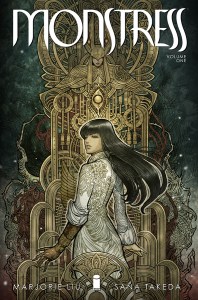
Book Review: Monstress

Monstress

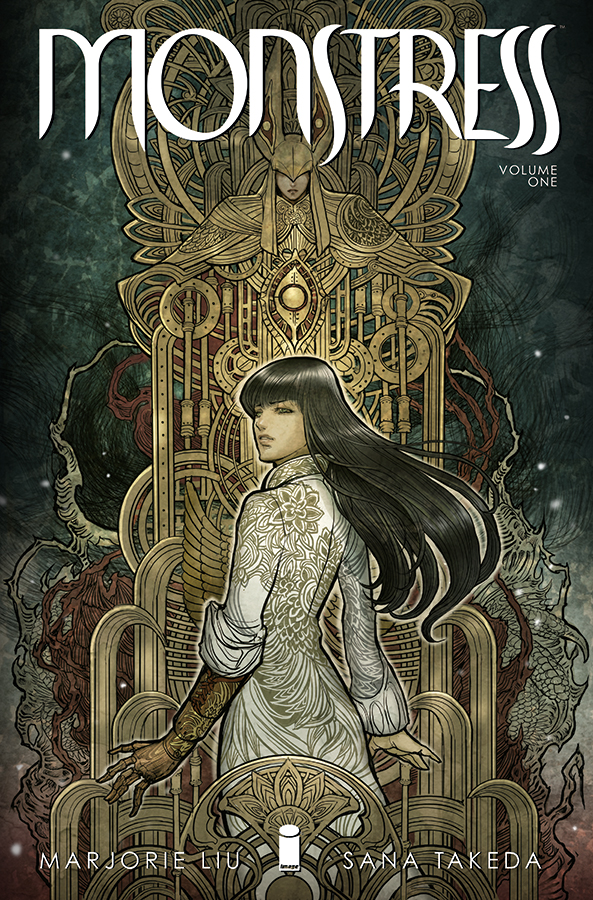
Title: Monstress by Marjorie Liu and Sana Takeda

Genre: Fantasy/Graphic novel

Rating: 4.5 stars

TL;DR: Monstress was fantastic. A dark and gritty story offset by absolutely gorgeous artwork.


Monstress follows the story of Maika Halfwolf, a woman who is half-human and half-monster with powers lurking inside her beyond compare. For this, she is hunted mercilessly because to possess her is to possess a power that could rebuild or destroy the world.
At first glance, Monstress might appear to be a traditional anime/manga style human-monster hybrid, but it’s so much more complex than that. The world is rich with detail, and the asides at the end of each chapter help to fill-in the gaps that the authors couldn’t cram into the storyline, which frees them up to focus on the action, world-building, and characters.
We meet Maika, who is, to put it simply, very pissed. Her memory is spotty, everyone is trying to kill her, and there’s a monster inside her threatening to take over. I’d be pissed too, but Maika is more than the usual tsundere type. She’s strong physically, but what future books will focus on her emotional growth. To balance Maika’s blind rage, we have a bubbly, naively optimistic fox-child and a calculating cat who keeps them together.
What I love about Monstress involves more than just the main characters. I am in love with the world. There’s a richness to it, a complexity beyond the surface not often seen in graphic novels. This richness arises from the political and historical background that informs the actions of the characters in Monstress and carries through in the art style. Sana Takeda’s art is beautiful. It is a mixture of art nouveau, art deco, and Japanese mechanica all interwoven with a thread of the traditional manga aesthetic. After reading the book, I know I will go back and examine every picture for details I missed. There’s also an added layer of diversity in the story. I don’t think I’ve seen so many female characters in roles of power, and in this story, it works without seeming odd or forced. Witches and monstresses have been part of literature and mythology for centuries, and they are usually worse than their male counterparts. Monstress is no different. You’ll also find that characters are diverse in terms of ethnicity, species, and sexuality.
I can’t wait to read volume 2 when it comes out. If you like graphic novels that are not only beautiful but stuffed with action, then Monstress is for you.

Book Reviews

Book Review: Ninety-Nine Righteous Men

99 righteous men

Title: Ninety-Nine Righteous Men by K. M. Claude

Genre: Horror, graphic novel

Rating: ♥ ♥ ♥ ♥ +0.5

Tl;DR: Ninety-Nine Righteous Men perfectly blends the tragedy of unrequited love with Gothic horror into a beautifully illustrated graphic novel that can only be described as a Catholic’s nightmare.


You know a book is good when you dock half a star for not being long enough.

K. M. Claude’s graphic novel begins with two somewhat unlikely heroes, priests Daniel and Adam, who have a rather tumultuous and complicated past together, as they are drawn into the web of a demon possessing one of the parishioners. What transpires is a tale of tormented souls united by lust’s cruel embrace.

The art style for Ninety-Nine Righteous Men is gorgeous. It’s a style reminiscent of both Eastern and Western comics by utilizing a more Western anatomical style with a more manga-like action style. What Claude creates is some impressive juxtapositions with the rigid piousness of Catholic imagery alongside the pliant sensuality of the demon. At times, I’m hesitant to read graphic novels because I typically hate the style of traditional Western comics (mainly the gritty, rather sloppy style of super hero comics), but Claude’s art style is clean, precise, and deliciously detailed.

One of the things I greatly appreciated was the balance between sensuality, sexuality, and the quiet moments of action and dialogue. When I first began reading, I worried the entire graphic novel would be reminiscent of the game Catherine, but Claude deftly balances all aspects of the work until it comes to a head at the climax (puns intended).

As an ex-Catholic, I felt comfortable in the discomfort of Adam and Daniel’s wholly Catholic world. Often what disturbs them, disturbs me, and Claude highlights the rather gruesome aspects of Catholicism that tend to disturb small children with wandering eyes. While what’s discussed in the book might anger some more devout Catholics, we must all remember that priests are humans and should be treated as such. If you’re a fan of Anne Rice’s style of sensual Southern Gothic with Catholic guilt, you’ll probably enjoy Ninety-Nine Righteous Men.

My biggest complaint with the book is a good one. I wanted more. I didn’t want the book to end. I wanted more on Daniel and Adam’s backstories, their lives before the priesthood, their encounters together, and even Caleb’s life before the story takes place. While the characters are well fleshed-out, I think they could have been explored more.

Ninety-Nine Righteous Men is a unique tale of lust, love, and sacrifice through the lens of the Gothic, and I look forward to reading more by K. M. Claude in the future.

Writing

Silly Writer Goals

As writers, we all have real goals, like publish X amount of books a year or finish book three by next March.  Things that are very tangible and very practical.  I can rattle off a few of my real goals: I want to publish book three of the Ingenious Mechanical Devices series in a timely manner (aka within a year), start my fantasy series soon after or while working on book three, and to get my thesis proposal accepted in April.

Then, there are goals that are a little less… professional? I think we all have the secret desire that our books will be made into movies or that certain characters will be loved by all. Here are a few of my own silly goals: Continue reading “Silly Writer Goals”