organization · Project Shop My Shelves

Project Shop My Shelves

As I was perusing my bookshelves the other day, I realized that I have a problem: I buy too many books. Well, not exactly. Over the past few years, I have reined in my book shopping habit, but what I didn’t account for is that I never truly get ahead of what I have on my shelves, so the books stack up. I have books on my shelves that I have been “dying to read” since 2016 when I was in grad school. That is, uh, not great. The funny thing is that I made a To-Be-Read section in my bullet journal where I list out all the books I own, books I want to read, forthcoming books from authors I love, and that spread has gotten progressively longer year after year.

This year I decided that I want to do something about it, and I’m going to call this Project Shop My Shelves. My goal with shopping my shelves is to actually read the books I already own and read double the amount I buy. Yes, I will be curtailing my book buying. With the buying, I have had a few reservations about this. I want to support my fellow indie authors, especially during this politically horrible time, and I want to buy trad pub books from marginalized creators because if they don’t have a good launch, they’re less likely to get future publishing deals. The book buying ban will be mostly focused on white cis het authors because, frankly, they can wait for me to buy their books. In order to get ahead of my buying, I want to make it a habit to read at least double the amount of books I buy, so if I buy 3 new books, I need to read at least 6 books. I’m not sure how I’m going to count advanced reader copies (ARCs) yet, but I don’t get them that often, so they may be an exception to this rule as I’m doing promo work my reading them.

In order to make a dent in my rather embarrassing TBR pile, I think I’m going to try to read the books that have been there the longest. Maybe not all at once, but I would like to make a point to move them to the done pile if possible. There are some that have been there since at least 2016. I have removed books that I think I am no longer the audience for and donated them to a local book drive, so my hope is that I will still enjoy the ones that remain, even if I’m nine years older. If I find I don’t really jive with a series or book I bought back then, I will move it to the donate pile and make a note of it. In the same vein, I want to be realistic about my enjoyment of certain authors. Sometimes, we buy things because we think we should like them, and we really don’t. I have a few authors where I like a specific series, but I think once I finish that, I won’t be invested in their work anymore and that’s okay.

Going forward, I also want to be mindful about the medium in which I buy an author’s books. There are some authors that I enjoy much more in audiobook than I do in ebook or paperback (like J. R. R. Tolkien). As much as I like having the physical copy of their books, if I’m not using it to teach a class, it doesn’t make sense to have it if I don’t read it in that form. At this point, I have a tendency to buy duplicate copies, one in ebook/paperback and one in audiobook, and I want to not do that if possible.

I’m hoping to post about this project once a quarter and track my progress as I try to cull my tbr pile to a more manageable level. If I can’t read more or read faster, I can at least read with more purpose, and that’s what I plan to do. Project Shop My Shelves starts in April, so I hope you will join me in knocking down your tbr pile and reading what you have.

Once again, here are the main parts of Project Shop My Shelves:

  • Don’t buy new books unless they are from marginalized authors (indie or trad)
  • A 2:1 ratio of old books to newly bought books every month (or more if possible)
  • Read through the older books to finally get them off the TBR pile
  • Be realistic about my enjoyment of an author and what medium I prefer to read them
  • Post quarterly about my progress with this project
The Reanimator's Remains · Writing

“An Unexpected Evening” (TRM #3.5) is Out!

If you’re part of my newsletter, you have already received your copy of “An Unexpected Evening,” but I also wanted to release it officially to my non-newsletter readers.

You can grab your copy through the freebies section on my website or through this link. “An Unexpected Evening” (TRM #3.5) is a 16,000 word novella that takes place a few weeks after the events of The Reanimator’s Remains (TRM #3), so I would highly recommend reading that book (and the ones before it) first.

The cover of "An Unexpected Evening" is in the center (black with green text and a masquerade mask). An Unexpected Question TRM #3.5. Oliver and Felipe, Things go wrong, food, seances, ghosts? a halloween party, an ominous prophecy, 16k words

The Paranormal Society’s All Hallows’ Eve party is the highlight of the magical social season, and after years of going alone and ducking out after an hour, Oliver is hellbent on having a good time with Felipe this year, even if it kills him.

While Felipe is more than willing to wear a costume and dance the night away to make Oliver happy, an ominous prophecy from a sybil only hours before the festivities puts him on his guard. Unfortunately, the sybil’s warning isn’t Felipe’s only concern if the feelings coming across the tether are any indication.

Will Oliver and Felipe make it through the masquerade in one piece or will the prophetess’s warning be their undoing?


CW: discussions of past sexual trauma, sexual content, and panic attack


If you would like to grab your copy of “An Unexpected Evening,” you can do so by clicking the button below. You can also pop over to my freebies page on my website to grab the other 2 in-between stories for the Reanimator Mysteries series.

Writing

Join Me on Weeknight Writers

On Saturday, March 15th from 1-3 pm EST, I will be participating in a virtual panel on writing trans characters! I am super excited to have been invited by Weeknight Writers to participate in this panel along with authors Felix Graves, Georgina Kiersten, Vaela Denarr and host Dianna Gunn and Jade Benjamin.

Trans stories are more important than ever. This two-hour panel will feature four trans authors sharing how they approach writing trans characters and what trans folks should keep in mind when writing their own stories. We’ll also touch on how cis writers can create trans characters without perpetuating stereotypes or causing harm and how everyone can support stories featuring trans characters.

This event is hosted by the Weeknight Writers Group, a social enterprise  dedicated to providing affordable and accessible support for authors. The first hour and a half will be devoted to questions from our Sustaining Members and the panel moderators. The final half hour will be devoted to live audience questions.

You can purchase a ticket on their website for $15 or you can join their newsletter in order to get half-off your ticket. I also believe that being a sustaining member of the Weeknight Writers will also get you access to the panel and others before/after it.

I hope I will see you there or that you will support this fantastic writers’ organization that continues to bolster marginalized writers.

Monthly Review

February 2025 Wrap-Up Post

Even though the US is a hot mess, I felt like February was far better than January. Maybe it’s seeing the push back, protests, and having judges rule in our favor that has heartened me. That or the spite inside of me has been kindled. That helps as well. Before we get going, let’s take a look at my goals for February:

  • Finish writing “AUE”
  • Edit “AUE”
  • Send it out to my newsletter peeps first (everyone else gets it a month later)
  • Reread The Reanimator Mysteries books 1-3
  • Start proofing the audiobook for The Reanimator’s Remains
  • Read 8 books
  • Blog weekly
  • Send out my monthly newsletter
  • Maintain my fragile sanity
  • Perpetually bug my congress people

Books

My goal was to read 8 books, and I read exactly 8. The links below are affiliate links, so I get a small kickback if you purchase the book through them.

  1. Two Friends in Marriage (#3) by Jackie Lau- 5 stars, a lovely queer MF romance featuring a demisexual FMC and a bisexual MMC. Watching these two go from friends to married to lovers was just so sweet and cute. There’s also a giant penguin plush in the story who helps to sort of bridge the gap through cute and loving gestures.
  2. A Study in Black Brew by Marie Howalt- 4 stars, a retelling of A Study in Scarlet (aka a Sherlock Holmes story) set in a world with multiple alien races, advanced tech, and of course, coffee/black brew. It comes out May 22nd.
  3. Husband Material (#2) by Alexis Hall- 4 stars, a mm story built upon the structure of Four Weddings and a Funeral. Lucien and Oliver are simultaneously at their worst and best in this book, and while I enjoyed this one, the ending kind of annoyed me.
  4. Textiles by Beverly Gordon- 4 stars, a coffee table-ish book about the history and cultural significance of textiles. This is less specific than Victoria Finlay’s Fabric, but it gives you a lot of rabbit holes to go down while doing future research. I believe it is out of print.
  5. The Single Life (#1) by Akiko Morishima- 4 stars, two women who were penpals as children and realized they were lesbians through their letters meet up as older women. This is not a romance, but it’s sort of a slice of life as two queer women figure out what they want from the future.
  6. The Single Life (#2) by Akiko Morishima- 4 stars, see volume 1’s review.
  7. The Single Life (#3) by Akiko Morishima- 4 stars, see volume 1’s review.
  8. Time Loops & Meet Cutes by Jackie Lau- 4 stars, I loved this book. It’s like 50 First Dates meets Ground Hog Day as a workaholic eats some dumplings and gets caught in a time loop where she befriends another time looper and desperately hopes the man she has fallen in love with her will eventually remember her or that they might have a future together. This book comes out May 6th, and I HIGHLY recommend grabbing it.

Admin/Behind-the-Scenes Stuff

  • Approved the first 15 minutes of the audiobook for The Reanimator’s Remains (TRM #3)
  • Wrote the rest of “An Unexpected Evening” (TRM #3.5)
  • Edited/Proofread/Formatted “An Unexpected Evening” (TRM #3.5)
  • Sent out “An Unexpected Evening” (TRM 3.5) to my newsletter subscribers
    • I also posted the link for it in the freebie section of my website
  • Started working on the Court of Crows Stitch-a-long from FineFrogStitching
  • Agreed to take part in the Weeknight Writers Writing Roundtable on writing trans characters taking place on March 15th
    • You can grab a ticket here or wait for the replay
  • Stayed on task/schedule with grading for my classes
  • Celebrated my partner’s birthday
  • Bugged my senators and congress person repeatedly about… everything. If you can, please reach out to them and try to push them to do the right thing (and praise them when they do- carrot and stick, my friends)

Blogs


Writing

At first, I was very upset that my brain utterly derailed from stress in January after *gestures to the White House*, but I think taking this extra month to work on “An Unexpected Evening” was worth it. The story is significantly better, clearer, and longer. Sometimes, taking extra time is dawdling or dealing with executive function issues, but other times, it really is part of the marinating process. This time it felt like those extra few weeks of marinating helped me to really nail what I was trying to say with Oliver and Felipe. It also made it clearer what I want to do with book 4 (more on that in the near future). I’m super excited for you all to read “An Unexpected Evening,” and I hope you will leave a review on Goodreads or Storygraph if you read it.


Hopes for March

  • Reread all of the Reanimator Mysteries books in preparation for book 4
  • Start outlining book 4
  • Write at least 10k words of book 4
  • Proof as much of the audiobook for The Reanimator’s Remains as I can
  • Deal with several doctor’s appointments this month (boo)
  • Have the Weeknight Writers event go well (March 15th)
  • Continue to bug my senators and house member
  • Read 8 books
  • Blog weekly
  • Send out my monthly newsletter
  • Maintain my sanity
  • Work diligently on my cross stitch project

Writing

8 Things New Authors Should Know

I’m the first to admit that I do not have the answers when it comes to writing or being an author. Hell, I’m still shocked they let me teach students, but after ten plus years of being an indie author, publishing ten books and a bunch of short stories, I have learned a thing or two. It’s funny because I posted a similar blog a year or two ago, but after teaching my novel writing class this past semester, I realized there are a few things I really think new authors should know.

  1. You have to be your biggest fan. I often see writers who come from a fanfic background get down about the lack of validation and encouragement when they come nonfanfic writers because your stories go out when they’re finished rather than as they work on them. You are probably never going to get that same validation on your work unless you post the draft live on your blog or on Patreon, so my suggestion is to become your biggest cheerleader. You need to love what you’re working on and light your fire for your characters. That isn’t to say there aren’t going to be hard days where you are frustrated or hating the process. You just have to be excited to see these characters go on their journey more than anyone else. Write for yourself first and foremost to keep that excitement alive.
  2. Take care of your body. My partner and I are both from artistic backgrounds, and the number one thing they always remind me of is to take care of my body. If you want to have a long and sustainable career as a writer, you need to take care of your hands and your back. Resist the urge to curl up like a shrimp while you type, make sure your wrists are in an ergonomic position to avoid carpel tunnel, stretch those fingies and wrists, and take breaks. I’ve been stressing this to my students lately because what you can do at 18 or 21 is infinitely harder at 34.
  3. Avoid burnout. Something we all need to know the warning signs of and try to prevent is burnout. Burnout is basically when you run your brain into the ground by overtaxing it and not giving yourself enough rest. It can also be caused by compounded stress. Sometimes, it is unavoidable due to bad things intersecting all at once, but if you can help it, be on the look out for suddenly feeling run down, actively avoiding your work, everything suddenly being far harder than it normally is. This can be due to other health issues, but if this feels more mental than physical (or is mental and turning physical), it may be burnout. Radical rest is the best medicine. Your deadlines and readers can wait for you to take care of yourself. Being burnout for a long prolonged period can lead to permanent damage, so please rest when you feel it coming on.
  4. Learn about taxes early. I know this is probably not as big of an issue outside the US, but please learn about how taxes work for independent creators in your state. I always thought taxes were very scary, but the IRS is not going to bust into your house like the Kool-Aid Man and arrest you. What you can figure out is what counts against your taxes (losses/things needed to create your products), how to do quarterly taxes (which will save your money in the long run if you make a decent amount per year), and what the threshold is for upgrading to an LLC or having a professional handle your taxes and advise you. I know it is stressful and varies from state to state, but figuring this stuff out took a lot off my plate. If you want to sell things on Etsy or from a storefront online, you should also figure out how to do sales tax and such as well.
  5. Learn that authors are not your competition. They are your coworkers. No reader exclusively reads one author and no one else, so there is no reason to treat other authors like the enemy. I know that often this comes from a place of jealousy, but treat the people who are doing better than you are inspiration or case studies. See what they are doing in terms of marketing or interactions and try to apply that to your work. Don’t copy people; learn from them. Other authors are your community, and they are often the ones who step up to help out newer authors. Fine supportive people. It may take a bit, but also don’t be afraid to leave groups that are catty or mean spirited. They aren’t your friends, and you can do better.
  6. Be true to yourself and your vision. This is sort of similar to point one, but it can be easy to get caught up in doing what everyone else is doing. Authors see people are making book boxes or Tiktoks or book trailers, and suddenly, you’re worried that these things are the key to success. No one thing is, and if doing Tiktoks isn’t something you want to do because you hate video, then don’t do it. It’s best to stay focused on what you want and how you want your writing life to look and focus on how to make that work rather than fling spaghetti and do everything while hoping something sticks. If you try to do everything, you will burn yourself out and get less done.
  7. Remember that not everything you see online is real. People lie. Shocking, I know, but yes, people on the internet lie about their success or pull a Wizard of Oz to make their success look grander than it really is. There are a lot of people online who are grifters who just want to sell you their course or get you to listen to their money-making podcast, so they tell you what you want to hear. They have the secret to make a million dollars or how to make four figures a month. Someone can make a million dollars over fifteen years and call themselves a million dollar author, or they might make $50k in a month, but what they don’t say is that they spent $30k in ads. You might also see authors who claim to have personal assistants when, in reality, it’s a chatbot or them under a different Facebook or email account pretending to be someone else. Trust me that it is more common than you would think, especially from people who try to act like authorities online.
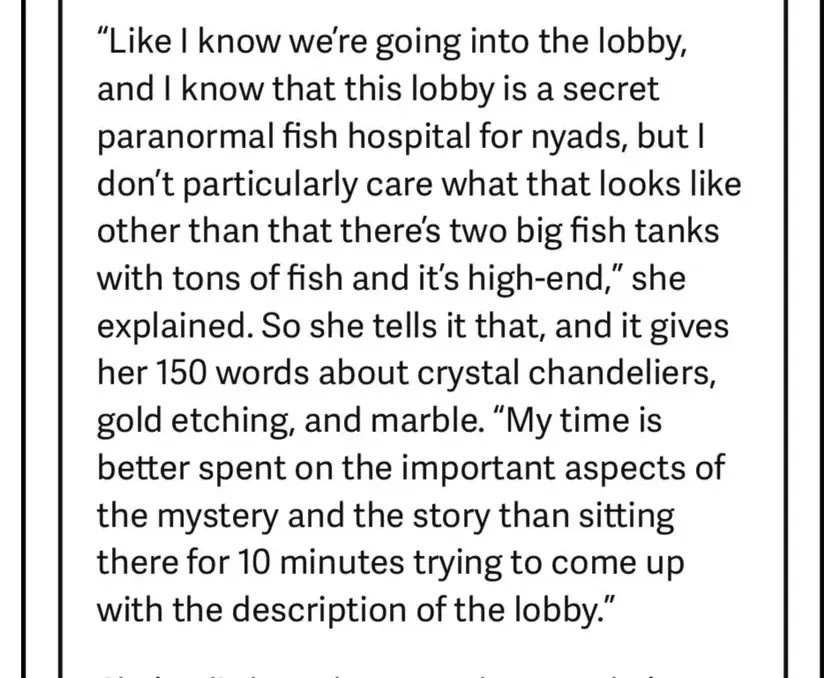
  8. Don’t use AI. There are also a lot of people who will tell you AI can help you write faster or that it can help you with research. It can’t. AI is basically the mediocrity machine. It picks the most common dreck and smooshes it together on command, but it cannot think, it cannot create emotional depth, and it isn’t consistent. There are TONS of resources online that can teach you to become a better writer, but AI isn’t it. It isn’t a shortcut to success, but it is a shortcut to losing your career because most readers do not want to read AI written or aided stories, and yes, you can tell. From a creative writing teacher perspective, every bit of AI writing I have seen has been far worse quality than anything newbie writers in my classes have turned in. It’s soulless. If you can’t convince yourself to write and have to turn to AI in order to do it, you are in the wrong field and should leave to make room for those who do give a shit about craft and their readers.

Writing

Plot? Character? Both? Both. Pt. 2

Last week in part 1, we talked about how to build characters in a way that makes it easier to build the rest of the story structure around their growth and change. I highly recommend reading that before reading part 2 if you haven’t yet.

A caveat before we begin is that I am using my writing process as a scaffold for this. Everyone has a different writing process and there is no one way to write a novel. My hope is that you will adapt my advice to what works best for you by taking what works and leaving what doesn’t. Also, this post will have very minor spoilers for The Reanimator’s Heart as I use it to show how I construct the basis for my characters/plot.


A few key reminders before we start

  • your main characters must change from the beginning to the end of the story (this can be positive or negative growth, but there has to be change)
  • if you’re writing a romance or a character driven story with more than one protagonist, you’ll need to have more than one character change, so they will all need a journey tied to the plot
  • if you are planning to write more than one book with the same characters, you will need to have them change incrementally across multiple books, usually by shifting different traits in each book
  • the hierarchy of building a story goes character > plot > world-building > everything else

Let’s ruin their lives

The big difference between a character driven story and a plot driven story to me is that character driven stories focus on the change in the character first and make the plot work toward that. Plot driven stories have the characters serve the plot, meaning you could hypothetically swap out the characters without changing the major beats of the journey. In real life, we might be going through a midlife crisis without something in our external life making it worse, but because this is fiction, we can make things far more convenient than reality in our character driven story. Think of the external plot as a trigger for the inner journey of your characters. They are already feeling this way, but the external plot has kicked off a lot of feelings and made things more complicated for your character. I think a lot of writers tend to think of the internal journey and external plot as being separate, but if they are intrinsically intertwined, you can really heighten the character’s turmoil and strengthen both the character development and the plot at the same time.

I’m not going to go into a specific beat sheet or structure, so if you’re a plotter, feel free to use whatever plot structure works best for you. Personally, I like Sarra Cannon’s beat structure, which you can find in her HeartBreathings channel on Youtube.

Last week, I mentioned that we need to figure out what your character needs most to be a happier or better person (or feel free to ruin them; it’s your book) in order to figure out the internal journey. For Oliver and Felipe in my book The Reanimator’s Heart, they both need to work on their issues with isolation in order to be happy. Oliver needs to step out of his bubble while Felipe needs to let Oliver into his. How they deal with their isolation and interact with each other will be informed by the past and personality we crafted earlier. As a reminder, Oliver is autistic and a necromancer, which has contributed to his isolation and getting stuck in a rut after years of pining after Felipe who also works at the Paranormal Society. Meanwhile, Felipe is seen at the society as almost a demigod. He is a self-healer, a hero, someone who takes the worst cases and can survive the harshest conditions. This has set him above and apart from the other investigators who like and respect him but also low key fear him. This along with his daughter going off to college has caused him to pull away from most people because they expect him to constantly be that untouchable hero.

My question to myself while constructing a plot is how can I ruin my characters’ lives in a fun and inventive way? This is why we want their issues to be similar, so that we can ruin their lives efficiently while plotting. Ultimately, since this is romance, we want Oliver and Felipe to get together by overcoming their loneliness together. Now, let’s combine this with a worst case scenario for them personally. Oliver is a necromancer, and Felipe is a hero with nearly supernatural abilities. What if Felipe gets killed, and Oliver reanimates him? That’s pretty messy. Oliver is also a rule follower by nature and going against the laws of nature by keeping people alive long after death is definitely against the rules, so if he were to reanimate Felipe, that would cause him some angst. Felipe is–was–nearly immortal, so the whole being dead thing would also cause angst and an identity crisis.

Note how all of this is picking at wounds or character traits/history that was already there. As you’re writing and brainstorming, it’s fine to tweak the backstory to make this work more smoothly. This is also why I think you should give yourself some vagueness or breathing room with a character’s history; it allows you to tweak things to better serve the character-plot symbiosis while plotting.

Constructing the plot

Now that we’ve ruined their lives, we’re probably at the end of act one in terms of plot structure. This life ruining should kick us into the story proper, which means the plot should unfold logically from there. Keep in mind as you go from the kick off to the finale that your characters need to grow or change by the end of the story. In Oliver and Felipe’s case, it’s overcoming their isolation. Since it’s a romance, we can assume that means they get together as a couple in a happily ever after. There needs to be a logical progression from lonely to together that builds over the course of the story.

As I said, I’m not going to go into too much detail regarding plot structures, but the four acts of a story should go as follows:

  • act 1 (0-25%)- introduce the issues (and if it’s a romance, entangle them)
  • act 2 (25-50%)- we’re exploring the new world and showing how these issues are a problem
  • act 3 (50-75%)- at the beginning there’s some moment of recognition of the flaw and they spend the rest of the act trying to rationalize it or shy away from fixing it all while being more conscious of it
  • act 4 (75-100%)- things come to a head and the character(s) are forced to confront their issues and finally overcome them, usually while overcoming the external plot

As you brainstorm the plot and overall external conflict of your story, you need to think of a plot that will poke at the wounds your character already has while still being interesting. This way you are constantly touching the internal journey rather than weaving it back and forth into the story as a subplot. With Oliver and Felipe, I decided that a way to intertwine the inner journey and outer plot was to have Felipe die by being murdered. This forces the characters to go solve his murder (along with another murder I grafted onto the plot for cohesion after this initial brainstorming). By solving his murder, they are forced to spend a lot of time together, look for clues, get to know each other, and do things that tackle their loneliness issues while complicating their relationship. If he had died naturally as opposed to being murdered, the two plots of the story wouldn’t be linked together as tightly.

Throughout the story, but especially in acts 2 and 3, you have the perfect opportunity to use plot points to deepen or explore the internal journey while they do things for the external plot. These can be large plot points like when Oliver is nearly killed, which reveals the true depth of Felipe’s feelings and some clues for the external plot, or they can be quieter plot points, like where the characters discuss the case while having dinner and by sharing a meal, they’re also no longer isolating. You want the majority of the major plot points to do double duty in serving the internal journey while also moving the external plot forward. This is also why I suggest having the main characters in a romance have the same issue in a different flavor (like loneliness). If they have opposing issues or ones that very different, figuring out how to riff off the main plot while balancing both may be difficult or come off as disjointed.

As you are writing your story, I want you to make sure that you don’t lose sight of the most important part: the characters. They are the key to making a compelling story or series that sucks your readers in. It’s easy to get wrapped up in the fun and games of the plot, but if you’re writing a character driven story, they need to be front and center in your mind and on the page from the opening to “the end.”

Uncategorized · Writing

Plot? Character? Both? Both. Pt. 1

One of the most common arguments I remember hearing in my MFA program that I still online is whether genre fiction is character or plot focused. The answer is often both, especially if you write romance or something with a heavy emphasis on character development. A question I hear a lot when I’m teaching creative writing or with friends who want feedback on their books is how do I construct a plot that is character-centric but still fun and tightly structured? This week and next week’s blog posts will be about how to do create character driven novel that is heightened by an external plot.

A caveat before we begin is that I am using my writing process as a scaffold for this. Everyone has a different writing process and there is no one way to write a novel. My hope is that you will adapt my advice to what works best for you by taking what works and leaving what doesn’t. Also, this post will have very minor spoilers for The Reanimator’s Heart as I use it to show how I construct the basis for my characters/plot.


How to build a character

I think the biggest piece of prework for writing a character-centric story with a plot that enhances the characters is knowing the characters really well. In order to create the plot of your story, you need to know where the characters are at the beginning and end of the story, aka how they change over time. The plot will help to move them toward that goal, but first, you need to figure out where your characters are before the story starts.

I’m a gardener (a loose-ish plotter), so I like to spend a lot of time before I start truly writing getting to know who my characters are. I do this by brainstorming, ruminating, making notes about what I think their backstory is, their personality, what they look like, etc. Let’s use Oliver from The Reanimator’s Heart as an example. I really wanted to write a character who is autistic, so I knew that was going to factor into his personality and overall design because your neurotype influences how you act and behave. I was inspired by the show Pushing Daisies, which had a main character who could raise the dead in order to solve murders, so it made sense that Oliver would then be a necromancer. Autistic + necromancer = Oliver, so what does that mean in terms of character traits? I decided that I wanted him to be an autistic who isn’t very good at masking or hiding his traits, so he’s quiet, a bit weird, not socially adept, and if necromancers are stigmatized in this magical world because it’s a rather morbid power that can cause very bad things, it would make sense that he either self-isolates or is isolated within the Paranormal Society (the setting of the story). I asked myself, does he have family? I decided that I didn’t want him to have living family members (upping the isolation), but he does have a really good friend that he’s close to, Gwen, who also works at the society. What job would make sense for a necromancer at the Paranormal Society? Being a coroner or medical examiner would meaning he can talk to the dead with little oversight as people typically avoid dead bodies. I researched medical examiners, and you need to be a doctor to be one, so now, Oliver has a medical degree.

Ultimately, I decided Oliver is an autistic necromancer who tends to self-isolate due to his social difficulties and his necromancy being stigmatized. His backstory is that he is without living family, has a medical degree but for some reason is no longer practicing medicine, and works as the medical examiner for the society’s investigative wing. This is where we find him right when the story starts. If you’ve read The Reanimator’s Heart, you know how all of this plays into the story line.

For me, physical attributes always come second as I use them to highlight or heighten the character traits rather than the other way around. I wanted Oliver to look dead, so I made him very pale (he’s white) and gave him dark hair to make the contrast even starker. He’s tall because autistic looming can make people uncomfortable. I also wanted him to be accidentally scary to people who don’t know him (his looks might also intimidate people who might try to mess with Gwen/his best friend). His grey eyes fit the monochromatic theme and gave him a little enigmatic flare because why not. This is a romance after all.

PS- make sure to write all of this sort of brainstorming somewhere you can find it again. Do not trust yourself to remember because you won’t.

Now, if you’re writing a romance or a multi-POV book with more than one protagonist, you will need to do this for two characters, and for romance, you will need to figure out a way to make them highlight or contrast with each other. The Reanimator’s Heart is a romance, so Oliver needs a love interest/romantic partner. That’s where Felipe comes in. If Oliver is a necromancer who works as the medical examiner and isn’t very social, who might he run into often at the society? An investigator. That’s how Felipe ended up with his job. From there, I decided he is going to be one of the best investigators, the kind who go on the longest, toughest missions. I hadn’t initially decided what his power is, but I knew his background had to be in monster hunting and fighting. I had toyed the year before with the idea of a character being Zorro adjacent, but the story idea fizzled out for many reasons. Ultimately, Felipe ended up being born from that spark of inspiration, so he ended up being a heroic monster hunter known for his fighting prowess who also comes from a family of monster hunters in California. To make him a foil for Oliver, Felipe would have to be sort of his opposite, which would make him more outgoing, social, and well-liked by the people at the society. Felipe ended up becoming a charming, more extroverted, levelheaded monster hunter/investigator. His physical traits had to fit someone of Mexican-American descent since he is from California, and I decided it would make sense for him to be Latinx. Felipe became a short king because I wanted a little size difference with Oliver and because heroes are tall way too often.

Even if Felipe is a foil for Oliver, they have to have something in common, and since Oliver is isolated and lonely due to his autism and powers, it would make sense for Felipe to also be dealing with loneliness of a different flavor. In a romance, a good way to have the main characters interlock and play off each other is to have them struggling with the same internal problem in different ways and have them make up for what the other lacks.


Where did you come from? Where did you go?

Something I want you to pay attention to in regards to the construction of characters mentioned above is that they were not constructed by squishing together a bunch of character traits. I’ve seen a lot of blog posts or videos that suggest focusing on traits, but I think it makes more sense to take a holistic approach and work backwards and forwards to figure out how a character acts and why they act this way. The why is the important part. If you want your characters to come off as real people, you have to think of the psychology and cause and effect behind their traits. Our personalities aren’t made in a vacuum, and neither should your characters be built in a vacuum.

Our pasts and upbringings inform our identities, so I think it’s important to figure out how you want your character to be at the beginning of the story. Once you have that, you have to ask why they behave this way? Some of it will boil down to things like neurotype, gender (and the societal expectations of that or the subversions), sexuality, class, trauma, religion, disabilities, the culture they were raised in, etc. All of these things have an effect on how we behave or interact with our world, so your character’s personality also will be affected by the world building in your story. By starting with the current person and working backwards, you are more likely to have a cohesive character who is more than a hodgepodge of traits, and when you need to figure out how they’ll react in your story, you can look back at that history for the answer. I suggest being flexible or loose with this past history in case you need to tweak or change something as you write the story, but knowing the basics and overall journey of how the character got to this point is helpful.

Next week we’re going to talk about making the plot work with the character development in more detail, but before we get into that, we need to figure out how the characters need to grow from the beginning to the end of the story. Keep in mind that if this is going to be a series with the same characters in multiple books, you should only fix one trait or problem at a time. I tend to see most writing “rules” as guidelines, but if you want to have a character-centered story, the character has to change or grow throughout the story. Before you start working on the overall plot, you need to figure out how you want them to change. That journey will be the scaffold upon which the rest of the plot is built.

A good way to figure this out is to think about what your character needs most to be a happier or better person. For Oliver and Felipe, they both need to work on their issues with isolation in order to be happy. Oliver needs to step out of his bubble while Felipe needs to let Oliver into his. How they deal with their isolation and interact with each other will be informed by the past and personality we crafted earlier.

Stop by next week to see how we integrate their internal growth with the external plot!

Monthly Review

January 2025 Wrap-Up Post

How have these past two weeks been so, so long. Also, to everyone in Canada, Mexico, and China, yes, this is the stupidest timeline and the US deserves all the hate it gets globally. ANYWAY, let’s remind ourselves what I was supposed to get done this month.

  • Finish writing “AUE”
  • Edit and format “AUE”
  • Pay Q4 2024 taxes (bleck)
  • Set up my syllabi and Blackboards for my courses
  • Send out my newsletter (with “An Unexpected Evening”)
  • Start planning out TRM #4
  • Blog weekly
  • Read 8 books

Books

My goal was to read 8 books this month, and I read 10. All links below are affiliate links that give me a little kickback.

  1. The Reckless Decade by H. W. Brand- 4 stars, a nonfiction book about the 1890s. This was WAY too timely for what’s going on. If you want a hint as to how we might get out of this, I think this book might be helpful to a point.
  2. Calling the Spirits by Lisa Morton- 4 stars, a nonfiction book about seances throughout the ages. It starts with necromancy and goes all the way to modern ghost hunting shows. It was quite interesting and research for a potential book.
  3. Toad Words & Other Stories by T. Kingfisher- 4 stars, I read books 3-5 in rapid succession, so I’m not sure which was which. Overall, I really enjoyed T. Kingfisher’s commentary on fairytales and her retellings.
  4. The Halcyon Fairy Book by T. Kingfisher- 4 stars, see #3.
  5. Jackalope Wives and Other Stories by T. Kingfisher- 4 stars, see #3.
  6. Adrift in Currents Clean and Clear (#10) by Seanan McGuire- 5 stars,
  7. Bryony and Roses by T. Kingfisher- 4 stars, a beauty and the beast retelling with a beast who has been stuck in a time loop for centuries and a gardening beauty named Bryony. This was a really interesting mechanism for BatB as it reminded me a bit more of Eros and Psyche, but I wish there was more emotional intimacy built between the MCs as that is my jam.
  8. Fever by Jordan L. Hawk- 4 stars, a horror story set during the Canadian gold rush featuring a cabin in the woods, queer characters, and plenty of spookiness. This is good horror for people who are big babies… like myself.
  9. Boyfriend Material (#1) by Alexis Hall- 4 stars, a disaster gay needs a fake boyfriend for a fundraiser and winds up fake dating a fussy lawyer. Soon, fake dating turns to real dating turns too real turns to much more. On one hand, I wanted to shake Luc, but both MCs deserve each other as they are both annoying.
  10. She Loves to Cook & She Loves to Eat (#5) by Sakaomi Yuzaki, 5 stars, the two MCs finally move into together, so we get house hunting, LGBT+ struggles in Japan, and a hint at their new life together. This series is so sweet and cute, and the food always looks impeccable. I love how mental health and the characters’ sexualities are handled.

Admin/Behind-the-Scenes Stuff

  • Postponed the release of “An Unexpected Evening” because my brain broke somewhere around January 20th and didn’t recover in time to finish writing the story
  • Wrote some of “An Unexpected Evening”
  • Started zapping my partner’s face 3x a week because we must achieve gender euphoria, even in hellish times
  • Started working on a writing notebook to keep track of all my writing stuff for the next year (we’ll see how this goes)
  • The Reanimator’s Remains (TRM #3) made it to the next round of the Indie Ink Awards in several categories (a huge thank you to all who voted!)
  • Had several mental breakdowns due to the state of the US
  • Called my reps nearly daily about various issues
    • Democracy.io can be very helpful if you want to email all your reps at once
    • You can also call the Capitol switchboard and ask for your rep by name- (202) 224-3121
  • Paid my 2024 Q4 taxes (bleck)
  • Set up my syllabi and online stuff for my classes
  • Started teaching my classes
  • Kept up with my arm/shoulder workout

Blog Posts


Writing

When I tell you this month has been hard, I mean it. At the beginning of the month, I was struggling to get back into writing because I took a month and a half off after the release of The Reanimator’s Remains to avoid burnout. I needed the break, but the problem with a break is getting back into the routine of writing. I also ended up rewriting and restructuring “An Unexpected Evening,” which made it significantly better but threw me off my game. My confidence was mildly shaken by having to fix it, so when January 20th rolled around and all hell broke loose, my brain just noped out of writing completely. I kept hoping I could wrangle it, but if you have been following politics in the US, you can understand why this was nearly impossible (and made worse by my classes starting). I think I’ve finally regained equilibrium and am hopeful that I’m finally back on track for real this time. The good thing is that I think you will enjoy this silly story… novella? Not sure, it’s grown a bit according to my guestimated word count. I seriously appreciate all of you so much for your kind words when I announced that I had to push the short story’s release back.


Hopes for February

  • Finish writing “AUE”
  • Edit “AUE”
  • Send it out to my newsletter peeps first (everyone else gets it a month later)
  • Reread The Reanimator Mysteries books 1-3
  • Start proofing the audiobook for The Reanimator’s Remains
  • Read 8 books
  • Blog weekly
  • Send out my monthly newsletter
  • Maintain my fragile sanity
  • Perpetually bug my congress people
Personal Life

What the 1890s Can Teach Us

I never wanted the time period I write in to become relevant to our current day, yet here we are in the US, rapidly backsliding to the 1890s. I have seen a lot of comparisons to Germany in the late 1930s/1940s, which is certainly apt, but I actually think the 1890s is much closer to our current political climate. While there aren’t Nazis in the 1890s, there was certainly plenty of white supremacy and prejudice to go around, but there’s also a glimmer of hope in regards to what might be to come if we can get our act together.

If you know nothing about the 1890s, the biggest takeaway is that the US was becoming a global superpower while actively working against its people. It was the decade where we had the rise of the Gilded Age. Rockefeller, Carnegie, J. P. Morgan had to bail the country out of an economic downturn, and in return, they thought they should be essentially a silent partner in the US while still calling in favors. Populists gained traction by pointing out that the country was truly divided into the rich and the poor or the robbers vs. the robbed while progressives tried to point out and address the growing inequities in the US. At the same time, the government was raising highly unpopular tariffs, trying to colonize places it had no business being in (in this case Hawaii and the Philippines), and enacting the laws that created what came to be codified racial segregation.

Most of these things we’re seeing with a modern flare. Instead of Morgan and Rockefeller who at least tried to appear philanthropic, we have tech bro oligarchs like Musk and Zuckerberg, and where there were steel mills and factory strikes, we have Amazon and AI to contend with. It’s becoming clearer and clearer that, regardless of race, we are held down by the 1% who need us as cheap, exploited labor, and that the government is needs to step up in order to combat that. Much like in the early 1890s, our current (and past) administration is in bed with them, hoping to profit. On the ground, progressives are trying to make a difference. Rights are being pushed for, unions are created, incremental changes are codified.

What I’m hoping is that right now will be a wake up call. In the latter half of the 1890s, after the unpopular tariffs and the assassination of the president who created them, there was a turning point in America where progressives came into power and tried to create change. It was the path that eventually paved the way for FDR’s New Deal decades later, but at the time, progressives fought against that economic inequity by breaking up monopolies, fighting corruption, and campaigning for things that helped the average person have a better life.

As we watch the policies we have taken for granted that helped so many of us get ripped away by a white supremacist agenda, now is the time to push back. Progressives started from the ground up, local to federal, and that’s what we need most right now. We need people to not comply with policies that spit in the face of democracy, human rights, and decency because if we don’t comply, we slow down the machine and mitigate damage. People in the 1890s threw dynamite at Pinkertons sent to break up a strike, so we must do what we can to slow down the people who seek to destroy all we have gained as country. We cannot go back. We will not go back to Plessy v. Fergusin, to separate but “equal.” We cannot cede the hard earned rights of queer and trans people in the name of compromise.

Now is the time to be bold. The Progressives of the 1890s had Teddy Roosevelt. We have people like Alexandria Ocasio-Cortez and Elizabeth Warren. We have people in this fight who want to do right and keep us from falling into the black hole of fascism and plutocracy, but we have to do our part. On a personal level, we need to push back against the white supremacist rhetoric we hear on a daily basis. DEI is just diversity. Being anti-DEI should be called what it is: segregation and white supremacy. We need to learn history and read books from people who are outside our groups to better understand how to be a good ally and unpack our conscious and unconscious biases.

We also need to be vocal with our elected officials about what we want and what we will accept. The presidential vote is not the only one, so during midterms and local elections, we need to show up and choose our leaders with care because they hold our future in their hands. I have called and emailed my elected officials more this week than I think I have in the past four years. Democracy.io has been very helpful in doing that, and every call and email counts, even if your elected official is a conservative. Friction is friction, and if they receive enough of it, they will slow down.

What helped progressives in the past was holding the feet of those in power to the fire until they had to act. Monopolies must be broken, power must be taken back, and laws that protect marginalized people must be made and/or re-instated. I’m sure during the depression of the early 1890s when corruption was at a high, people thought that it was hopeless too, but it wasn’t. Companies and the rich can be tamed, elected officials can be removed, and there has been no movement in history, whether it’s Nazis or the Confederacy, that lasted.

Hate is not sustainable as long as those who choose love and compassion are willing to gum up the works and protect the vulnerable. Mitigate harm, look to your local community for ways to help and support others, and let’s work our way back up. Progressives have done it once, and we can do it again.

I promise I will get back to more writing posts, but at the same time, I refuse to let this become the new normal.

Personal Life

Trans People Need You to Step Up

We start the 47th president’s term with a ban on transgender student athletes passing the House of Representatives and heading for the senate, so I am imploring you today to step up for the trans people in your life and push back against anti-trans bills now, for the next four years, and beyond.

You might think, “Oh, well, it’s just about student athletes.” Yes, but children are our most vulnerable demographic, and if they can make the world so hostile that the next generation of trans kids goes back into the closet, they are truly aiming for ALL trans people. It starts with “protect the girls, protect the children,” and I have to ask myself, from what? Trans kids are not a danger to cis kids. Trans girls playing softball or soccer are not taking a spot from a cis girl or going to molest anyone. Their cis male coaches are much more likely to do that statistically, and trust me when I say, absolutely no one is pretending to be trans to get close to cis kids to do them harm. The risk of harm to the trans person far outweighs anything else. Trans people are four times more likely to be the victim of a violent crime than cis people.

This leads to the very high suicide rate among trans people. Some in the anti-trans movement will ascribe that to trans people being mentally ill, but much like autistic people, it isn’t the marginalization itself that makes them suicidal, it’s the societal conditions in which we live. Trans people have a harder time finding and keeping work, they are more likely to be cast out by their families than cis people, and the conservative side of our nation does everything in its power to make our lives harder, whether that’s through taking away gender affirming care, making name and gender marker changes near impossible, or by creating a social climate that is openly hostile to trans people.

A lot of push back comes from the fear of children being “mutilated,” but who knows your heart better than you? You can be the most seemingly loving parent, but your child still knows themselves better than you do, and I think that scares a lot of people. I grew up not having a word for how I felt, but I’m still nonbinary, I’m still trans. I grew up, found words for it, and had to live with the regret that I may never be the person I could have been if gender-affirming care had been available to me as a teenager. Most prepubescent kids just want you to call them by the correct name and wear the clothes they want. They’re not getting surgery or hormones. They just want autonomy and to be accepted for who they are. When they hit puberty, they sometimes get hormone blockers to stave off those permanent changes until they are old enough to decide they are sure in their decision to transition. I hit puberty at 11, hard and fast, and it completely screwed with my mental health and my perception of who I was. Not every trans person gets dysphoria (the gender version of dysmorphia), but I can tell you that it is hell on earth to feel like your body never fits right. You eventually stop looking in the mirror because the you in your head is never there, and the outside world perceives you in a way that goes against your inner identity.

Teenagers (16 and up, most over 18) who take hormone replacement therapy to have their bodies align with their inner identity have far better mental health and well-being outcomes than those who don’t get that sort of care. A trans kid allowed to transition is a happier, more well-adjusted child and a future adult with a better outlook. Hormone replacement therapy is safe and well-studied. This isn’t new technology, and there’s no reason to force a child to go through a puberty they didn’t want just to have them go through surgeries later when they are out of their parents’ control. Because that is what happens. That child/adult has always been trans. They just have to work far harder and go through far more pain to become the person they have always been.

Ultimately, that is the purpose of these sorts of laws: to cause pain. Conservatives and fascists seek to exert hierarchy and control. A trans person changing their identity disrupts that hierarchy. A woman becoming a man means having a usurper in their midst, and a man becoming a woman disrupts the belief that women are lesser. And a nonbinary person choosing to step out of the gender hierarchy all together is akin to anarchy.

One of the first places the Nazis went after when they came into power was Magnus Hirschfeld’s Institut für Sexualwissenschaft, or the Institute for Sexual Science, was because it supported gay and trans people. It was a place where trans people could get hormones and gender affirming surgeries. The Nazis had to clamp down on this because it disrupted the social order, and those who did were labeled as degenerates. They burned Hirshfeld’s research, set transgender research back for decades, and put many queer and trans people in concentration camps. Even if you don’t understand why someone would want to change genders, I have to ask if you really want to support something the Nazis thought was a great idea.

What I am asking you to do is to be vocal in your support of trans people. Call those out who want to harass trans people and anyone who doesn’t fit the gender mold because ultimately cis Black girls and tomboys are the ones who will face the most backlash and scrutiny under these anti-trans laws because they aren’t really about trans people, they’re about control and enforcing ever shifting gender norms.

Please reach out to your senators and reps (federal and state) and tell them to support transgender people. If you’re able, call your senators and tell them not to support SB9. You can see all the anti-trans bills that are filtering through congress here. If you aren’t comfortable calling your reps, you can send an email to all of your senators and your house rep through democracy.io

Your support is needed now more than ever, so I hope you will stand up for people like me and my partner, and make the world a better place for everyone, regardless of gender.