Personal Life

Getting to Know Each Other (Blog Hop)

This blog hop is designed to show our readers a more personal side. We list seven interesting facts to help cast light onto that tough writer’s persona we all like to project. But I am human and like everyone else I have dreams, hobbies, problems and goals. I see this as a way to share some of them with you, my readers.

The rules are that I share seven facts about myself, and links to at least fifteen blogs that I enjoy reading. I don’t think I follow that many blogs, and the ones I have are tagged by other authors already, so I will simply fill it out and forgo the tagging.

Seven Facts About Me:

1) I am in graduate school studying creative writing, but I began my undergraduate career as a biology major (added English in the beginning of my junior year).

2) If I could, I would be a hermit.  Honestly, I would rather stay shut up in my house 98% of the time with my books, tv, and dog than go anywhere.  If everything could be delivered to my house, I would never need to leave (apart from class). Continue reading “Getting to Know Each Other (Blog Hop)”

Writing

What is Your Novel’s Sex?

I’m not sure many people think about the gender of their book while they are writing it, but when I began The Earl of Brass as an undergraduate, it crossed my mind.  While reading other steampunk novels, I was rather surprised by how the books seemed to either be very masculine (G.D. Falksen’s Blood in the Skies) or very feminine (Gail Carriger’s Soulless).  I wanted to write a book that was androgynous, that had no defining gender for itself or its audience.

As part of my research for writing The Earl of Brass, I read through Sir Arthur Conan Doyle’s The Lost World as well as Charlotte Perkins Gilman’s Herland in order to better understand Victorian and Edwardian adventure novels. There again, I found the gender gap.  In Conan Doyle’s novel, the men leave their women at home and go on an adventure full of dinosaurs and savages, and while Gilman infused her work with feminist ideals, it was very much an us-versus-them mentality with a muddled ending where the women and men fall in love and go back to America. Continue reading “What is Your Novel’s Sex?”

Personal Life · Writing

You Are What You Read

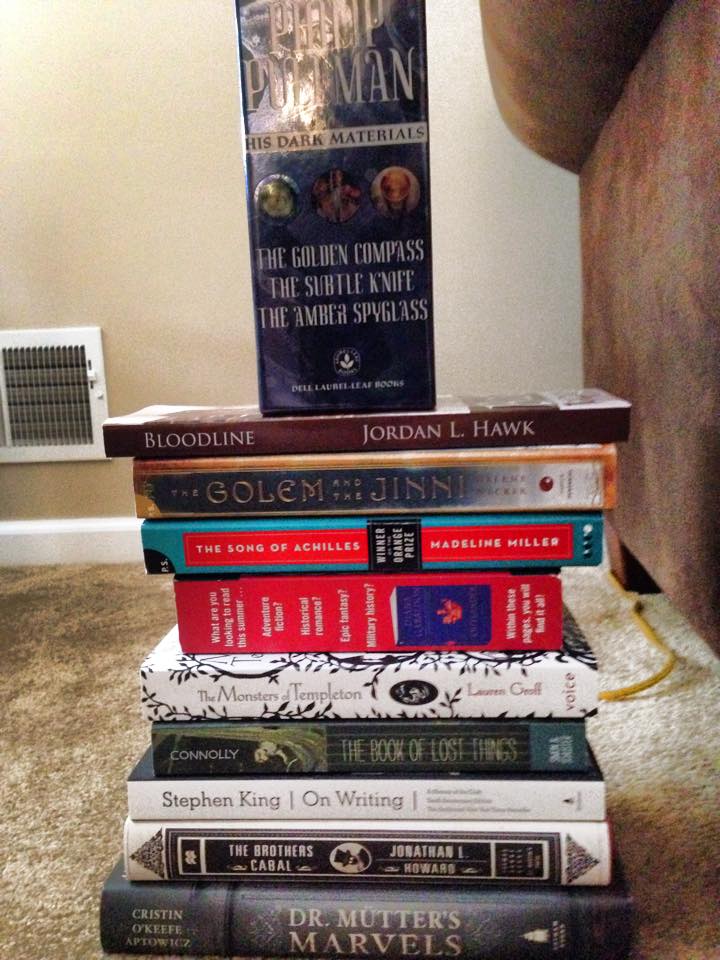
tbr pile oct 30What do your reading choices say about you?  Since beginning graduate school, I have been turning this question over in my mind as I listened to others in my classes mention who their favorite authors are.  Most of them are people I have never heard of or read but are rather famous in the contemporary lit world.  Typically, I hold my tongue and don’t mention what I read for fear of being ridiculed or looked down upon.  This led to a greater question: why do people read certain books?

Do people (especially those in academia) read for fun or do they read certain books because they feel it is expected of them?  As I continue my journey through the MFA in Creative Writing program, I find myself wondering what my professors read, especially when they are writers or poets as well.  What we read automatically becomes ingrained in our beings and eventually comes out in our writing. I can attest to the fact that when I read a book I love, I am inspired to write and often I will lean toward that genre or some theme found in that work.  If I read a book I had to drag myself through, it typically slows my writing to a crawl.  Oddly, while I didn’t love reading Virginia Woolf for the most part, her works had a huge influence in the way I deal with close narration and “head hopping” as others call it. Continue reading “You Are What You Read”

Writing

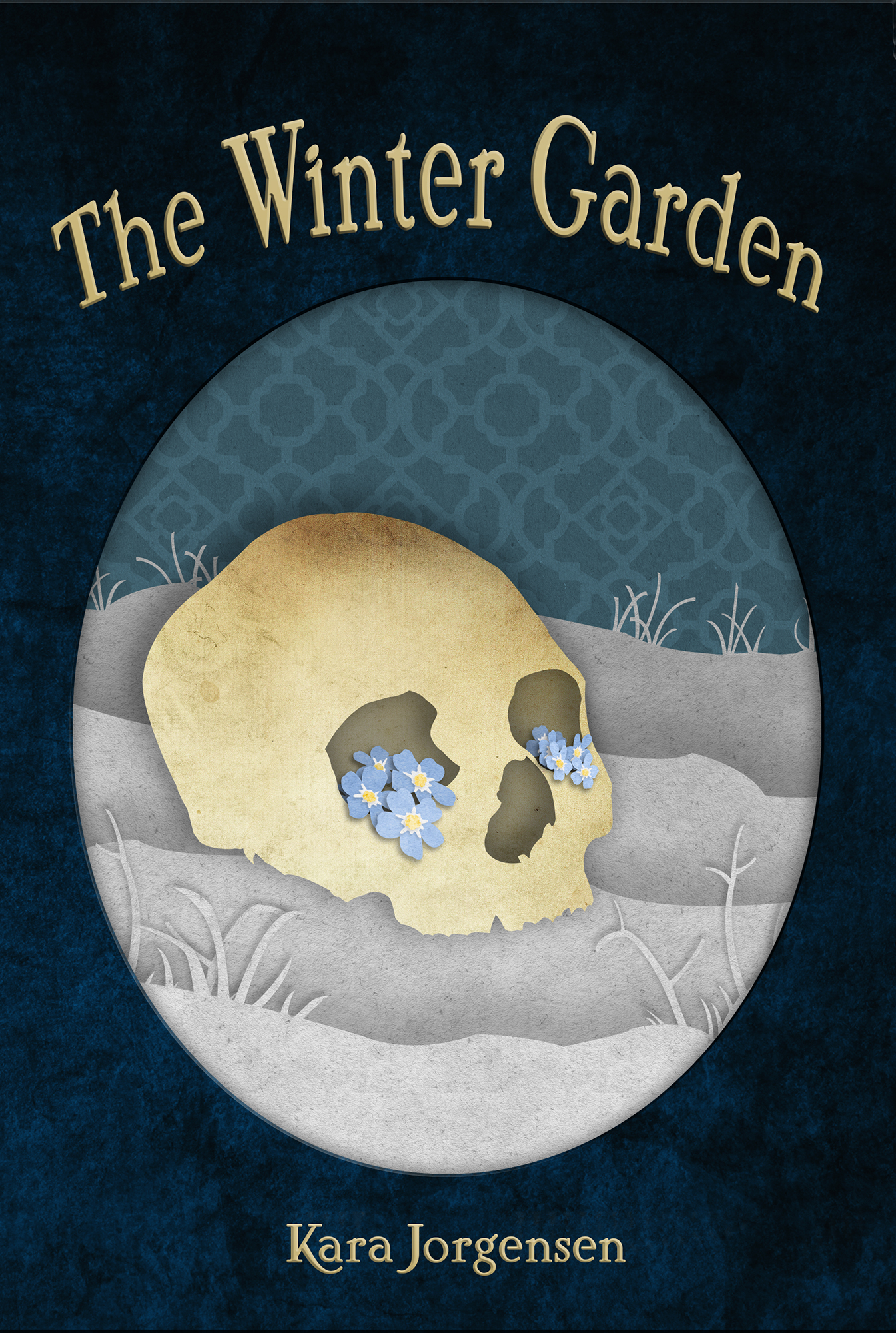
Cover Reveal for The Winter Garden: Book Two of the Ingenious Mechanical Devices

Real-Winter-Garden-Cover-Final-front

Well, my second novel finally has a cover! I am beyond excited to present the cover for The Winter Garden: Book Two of the Ingenious Mechanical Devices. The illustrious Javier Ruiz has created a lovely cover for the second time in the style of a paper theatre.  The book is slated to be out in early 2015, but it already has a Goodreads page found here.  The synopsis is as follows: Continue reading “Cover Reveal for The Winter Garden: Book Two of the Ingenious Mechanical Devices”

Writing

Character Preview: Immanuel Winter

im close up(Artist credit for this pic of Immanuel Winter goes to the lovely Fiammetta de Innocentis)

I put up a poll on my Facebook page asking the fans of my work what they would like to see next as a preview of The Winter Garden.  Only a few people answered (I’m not that popular and Facebook hides my posts), but it was unanimous that they wanted to see a character preview.  What I am going to reveal here will contain no spoilers and only contains information from before the events of The Winter Garden.  Down the line, I may release a few more of these along the way, but may I present to you, the leading man of The Winter Garden, Immanuel Winter.

Immanuel Winter was born February 2nd, 1870 in Berlin, Germany.  His family line can be traced back to the alchemists of Cologne, but during the time of the French Republic, his family migrated to Berlin.  This change of cities officially shifted their already changing identity from alchemists to scientists, but one remnant of their esoteric past remained in the form of a pendant: Continue reading “Character Preview: Immanuel Winter”

Personal Life · Writing

The Long-Term Goals of a Young Writer

Today I am heading back to graduate school to begin another semester studying creative writing.  Every time I start school anew, I feel my anxiety level rise tremendously as I worry my professors will not like me or my work, and the best way I have found for me to combat this is to look at the larger picture.  This year I achieved one of my major life goals, to publish a novel, and for this year and the beginning of next year, I would like to publish the second book in the Ingenious Mechanical Devices series, The Winter Garden.  I’m 73,000 words into it, so I hope to be done in a month or two since my writing slows down exponentially once the semester starts.  Editing hopefully won’t take too long, so it is supposed to be out some time in March or so. Along with finishing book two, I plan on getting book three underway or working on my master’s thesis project (which is a novel also but not in the Ingenious Mechanical Devices series though it is still laced with fantasy). Maybe even both. I haven’t tried to tackle juggling two projects at once in a while, but hopefully, I’ll manage. Continue reading “The Long-Term Goals of a Young Writer”

Writing

The Writing Process

One of the members of my Facebook author page asked if I would do a post about my writing process.  After I saw it, I sat back and scratched my head.  What was my writing process?  Like many things, when you live with it, it isn’t nearly as obvious as it is to others.


As with all writing, it begins with an idea.  Sometimes it comes as a smattering of dialogue or description while other times it comes as a topic or idea.  For The Earl of Brass, it began with the idea of a man needing automaton parts in order to survive, but this rapidly evolved into a man with a missing arm who needs a prosthesis.  In the beginning, I typically free write and put down anything that comes to mind.  Sometimes it becomes the first chapter of a novel while other times it gets completely rewritten or discarded.  Once an idea beginnings to take form, I make an idea map or an outline of what events will happen in the coming paragraphs.  For flexibility’s sake, I usually only plan five or so chapters ahead at any given time.  Typically, my characters are wayward and do what they want, so I need to alter my plans to fit them.  Forcing an agenda on my characters never goes well.  Sometimes when I have ideas but am not sure what order they should be in, I make index cards and lay them out.  I will move them around and ask my best friend/beta reader and see what she thinks to ensure it’s logical to others. Continue reading “The Writing Process”

Personal Life · Uncategorized · Writing

A Woman of Principle

On my blogs and page, I try as a rule not to get too political on my author page or blog, but a recent event has refused to leave my mind, leaving me to purge it through writing.

One of the authors I know from the writing groups I am a part of on Facebook sent me a link to a blog tour service that was hosting a tour for a steampunk novel and was looking for blogs that would be willing to do the advertising posts.  Obviously, I want to support and network with other steampunk writers, so I checked it out.  The book looked okay.  I’m not a fan of advertising something I haven’t actually read, but at that point, I was willing to give the author a chance based on the blurb.  The only thing was, I couldn’t figure out how to sign up for the tour, so I went onto the their contact and information page.  As I scrolled, I came across the thing that completely soured my feelings toward that book blog tour host, No M/M, F/F, or M/F/M.

For those who are unfamiliar with the terminology, that basically means no stories involving same sex or bisexual protagonists or love interests.  I couldn’t do it.  I couldn’t bring myself to sign up for the tour and quickly clicked off the web page.  From the time I understood what being gay meant, I have been a strong supporter of LGBT rights and marriage.  Many of my friends are gay, and two of my characters in The Winter Garden comprise a gay couple who is dealing with their relationship in a world that does not approve of them.  How could I, a supporter of the LGBT community, work with a company that outright excludes them?  I couldn’t.

When we exclude certain types of fiction, what are we saying to those who choose to write about their experiences or the experiences of others?  Your story isn’t worth telling. I don’t want to hear it. No one wants to read it if it’s about that. In this day and age, diverse books are a necessity.  By writing and reading about characters who are a different ethnicity, sexuality, or religion as yourself, you are learning empathy and stepping into their shoes as you go from cover to cover.  When you say no gay or bisexual protagonists, you are telling every bisexual or gay reader or writer that comes across that site that they are unacceptable.  The anti-gay sentiment from many book blogs and reviewers follows in the vein of the prejudicial sentiments of the 1960s. Diversity in characters and novels is a necessity, and having open-minded reviewers and book programs will only further that goal.  I hope you will not ignore books solely on the sexuality or ethnicity or a characters within.  I will not state the name of the blog tour and take away their livelihood or slander them, but I will boycott them.  I will not participate in anything that excludes those who are in need of support.

Writing

The Editor’s Eye for the Writing Guy

Whenever I tell other writers that I have written and published a novel, they often ask me about the editing process.  For many, editing seems like a daunting and seemingly insurmountable task, but with the help of a beta reader or two, the process can become much easier.  I would like to share my process.  It is far from perfect, but it’s what I usually do and what has worked for me.

There are certain things that are needed before going into the editing process: a finished novel, an open mind, a critical eye, and the drive to get it done. 

  1. A finished novel is fairly self-explanatory.  I suggest it being finished only because I can sit and edit constantly and not move forward for months.  If you think of things you know need to be fixed, make a list and keep it somewhere safe where you won’t lose it (been there, lost several).
  2. Many writers see their novels are their children. No one wants to hear their children being criticized, but when it is in their best interest, you may want to listen to your beta readers and what they suggest.  You don’t need to always listen to what they say, sometimes it won’t work or it’s a personal preference, but be open about fixing things. Try not to get too attached to a certain phrase or metaphor.  In the editing process, as much as you love that line, you may need to cut it or tweak it.  I clung to an analogy comparing England to dingy mashed potatoes but realized the entire chapter needed to be reworked and obviously, the potatoes had to go.
  3. A critical eye goes hand-in-hand with an open-mind.  You need to be able to look at your own work and see the problems in it. Where are you lacking? Where is there too much? If you wrote the story over a long period of time, did you style change from beginning to end? There is no way that after a first or second draft your book is ready for publishing.  Look harder for mistakes and issues that need tinkering with.  One cannot always rely on their beta readers to find every issue, so being self-critical will definitely help when perfecting it before it heads into your readers’ hands.  As a reader, what would make you annoyed or want to change?
  4. Seeing a stack of two hundred and fifty pages laying on your table can be incredibly daunting.  How will you get through all of it with all your other life commitments?  My suggestion is to set a manageable goal for yourself each day or each week.  You won’t always accomplish it and other days you will exceed it, but just try to press on and get through it.  if you are having a day where you reread the same line over and over, step back and do something else for a while or try reading a different chapter. No one said you had to edit the book cover to cover, you can skip around.

My process for editing, can be a long one and a repetitive one to many, but it’s like a rock tumbler.  Each revolution through the story polishes it more and more.

  1. My first editing process (if I hold off until the end of the book) is making the edits I have on my list, things I know need to be fixed, which can include changing characters’ ages or descriptions, changes in continuity or style, passages you have been eying since after you wrote them. I may go through this process more than once just to make sure I got everything.  **As a tip, I like to print out my entire manuscript, then make changes with a red pen by writing in the margins or attaching pieces of paper where I have rewritten chunks of a chapter or scene.  If you tend to miss your changes, go over the pen with a highlighter (I prefer pink) to make the changes stand out.
  2. Leave your draft alone for a while.  Putting away, get some distance from it and make it so you don’t recite the memorized phrases instead of actually reading them.  If you haven’t given your book to a few people to read, you should do so now. Their feedback will hopefully be helpful during your next session. Make sure they will give you honest feedback and most importantly, they will actually do it. Explain to them what you want them to look out for and be specific, write it down even.
  3. Read your story, make notes on areas that need correcting or altering and if any areas are boring.  As you go through and tweak things (mine tends to be wording and adding more since I’m an underwriter. If you are an over-writer, you may need to prune your manuscript), highlight them and mark them in a distinctive pen on your manuscript. Take the feedback from your beta readers and see what they suggest.  If it should be changed, do it now. If you are unsure, save it and wait until you are all done and reread the story again to decide if it needs to be done.  Typically, I go through this editing phase about twice. When doing historical fiction or anything that needs research, make sure you fact-check what you are unsure of still.
  4. Leave it for a week or two. Now, reread it. This is going to (hopefully) be lighter editing.  Read it aloud.  Are there words that need changing? Is any of the dialogue stiff or awkward? Sometimes it may be beneficial to have someone read it to you in order to catch awkward parts that sound fine in your head, and during the reading process, you may also come across typos. 
  5. The final stretch! I call this typo time. I was a writing tutor, so I am familiar with most rules of grammar and can correct most of my work (I still need to look up lay v. lie and a few other rules that always need refreshing). If you have certain rules you know trip you up, make an index card of the rule to keep with you while you go through it again, but if you would rather have someone else deal with grammar, I would suggest finding a proofreader online or a friend who is willing to take a look at it. I go over my work with a fine-tooth comb and often hand it off to my mom who is good at catching mistakes I miss.  At this point, you are done fiddling with your text hopefully. Word changes may still occur, but remember the point is fine polishing, not overhauling. If you are still unhappy with it, I would go back to step 3 or 4 for another round or two of edits.

The point of this post is hopefully to empower you to be your own editor.  The input of others is important, but first and foremost, you should be writing a book you want to read. Take the process into your hands and be self-critical without being self-defeating.  It is your work, your book, and while an editor is a great tool, you should ultimately be responsible for perfecting your writing as it is a process through which you will grow to understand your flaws and what you need to do to become an even better writer.

progress

Personal Life · Writing

Portrait of the Artist: From Biology Major to MFA

write quote

Last week I was gruching about a scene that was giving me trouble to my aunt, and she said, “You know, you don’t have to do this if it isn’t fun anymore.”  For a moment, I just stared at her.  Just because I’m complaining about writing being difficult doesn’t mean I want to throw in the towel.  The idea of stopping never even crossed my mind.

As with many writers, I don’t write because I want to please my fans or make money off it but because I feel compelled to.  It’s a compulsion, an itch that can only be silenced by reading and writing.  During the semester when graduate school has taken over my life, I feel the unmistakeable misery of not being able to scratch that itch and write (usually I end up foregoing reading for class and write a bit throughout the day).

From the time I was about ten years old, I have been writing stories. Over the years, the amount I write has waxed and waned depending on my circumstances, but it has been present over the last thirteen years.  When I was in high school, I had a few lousy English teachers who killed my love of writing and reading to the point that I never thought of becoming an English major in college. Creative writing was kept under the wraps since I didn’t write about teenage-appropriate topics like sports, romance, and angst.  If the guidance counselor saw my stories full of epic battles or the one about a young woman who deals with her friend’s suicide attempt, I would probably would have been sent to counseling.  Somehow I feared college would be the same.

  It wasn’t though.  I went into college as a biology major with dreams of becoming a doctor who specialized in reconstructive surgery, and honestly, I did well in my biology classes and even earned an award from the department.  In my freshman year, I met a wonderful professor who happened to be the head of the English department.  She took me under her wing and nurtured my insecure talent until finally in the second half of my sophomore year I chose to double major in English as well.  During my time as an undergraduate, I contributed to the school’s literary magazine as well as worked on it, was a writing tutor, and spoke at two literature conferences (one on scifi and fantasy and one on Medieval literature).

Much to my father’s dismay, becoming a doctor faded away the moment a Norton anthology was put in my hands.  I finished my degree in biology but immediately applied to a graduate school with an MFA program in creative writing.  While biology could have provided me with a stable income should I have pursued it, I knew I would have been miserable.  I needed to write, I needed to read. It pulled me and compelled me and was the one thing I did that felt completely natural.  Call me hedonistic, but my life has been guided by what makes me happy and so far it has worked for me.  My mom has a job that pays well, but she isn’t truly happy there.  If I see how doing what is expected can lead to misery, why should I follow the trail of money if I do not have to?

My question is, do we do what makes us happy or do we try to live up to the status quo?