Monthly Review

April 2022 Wrap-Up

And now we have reached the end of April. I don’t know about all of you, but April felt short yet incredibly long at the same time. That may be because I’m teaching and it’s the end of the semester, though. Here are the goals I laid out for myself last month:

  • Read 8 books
  • Start work on fixing my room/office (this is a giant project)
  • Writing Goals
    • Minimum goal: 12k to reach
    • True goal: 15k to reach
    • Stretch goal: 18k to reach
  • Blog weekly
  • Monthly newsletter released
  • Make blurb for The Reanimator’s Heart
  • Brainstorm the newsletter freebie (since that didn’t happen in March)

Reading

I set out to read 8 books, and in April I read exactly 8 books, lol.

  1. Proper Scoundrels (#1) by Allie Therin- 4 stars, I really enjoyed her first series (Magic in Manhattan), and this continuation didn’t disappoint. Grumpy x sunshine is always a favorite
  2. How to Read a Dress by Lydia Edwards- 4 stars, really fantastic resource for period costumes. While not comprehensive, it provides good info about the shifting trends and repurposing of fashion.
  3. How to Write a Sizzling Synopsis by Brian Cohen- 5 stars, if you are a writer, I cannot recommend this book enough.
  4. Saga Volume 1 by Brian K. Vaughn and Fiona Staples- 4 stars, I have read it so many times (since I teach it in two classes) but I’m rereading the series in preparation for volume 10’s release this fall
  5. Saga Volume 2 by Brian K. Vaughn and Fiona Staples- 5 stars, it just gets better. The world is expansive and the characters richly human (and awful)
  6. A Lesson in Vengeance by Victoria Lee- 4 stars, really great dark academia, psychological horror(ish) type story, but I feel like this would have been better as New Adult instead of Young Adult as it would have been more believable
  7. Heartless by Marissa Meyer- 4 stars, an interesting and clever retelling using Louis Carroll’s body of work, also made me sad
  8. The Forgotten Dead (#1) by Jordan L. Hawk- 4 stars, a contemporary paranormal mystery with romance between a ghost hunter and an academic studying paranormal phenomena, also yay for trans rep

Admin/Behind the Scenes Author Stuff

  • Reached the midpoint of The Reanimator’s Heart (and then some)
  • Sent the book so far off to my cover designer, so we can get to work on that
  • Created a blurb for The Reanimator’s Heart, which you can read in one of the blog posts listed below
  • Worked on the idea/outline for the free newsletter short story that will come out later this year (you can join my newsletter by clicking Newsletter in the top menu)
  • Finished the vast majority of grading for my class this semester
  • Made a significant dent in my room/office revamping (mostly cleaning, sorting, tossing, but it’s LONG OVERDUE)
  • Researched marketing my book on TikTok, but I’m not sure if I want to wade into that cesspool
  • Edited the first half of The Reanimator’s Heart
  • Commissioned couple art of Oliver and Felipe (thank you @Bloodwrit on Twitter)
  • Was significantly less anxious than usual this month, so I’m putting that here as a win. It’s something I have been struggling with, but I think I finally found some things that actually help.

Blogs Posted


Writing

In total this month, I wrote 15,000 words, and I am really happy with that, especially since I tend to write fairly clean drafts. Secretly, I had hoped I could hit 17,000 words by the end of the month, and I was on track to do so until I sort of burnt/spun out at the very end of the month. I have officially hit and gone past the midpoint in The Reanimator’s Heart, so we are on the downward swing, tying up lose ends and such. Aka watch Kara get stuck on and off til it’s over, lol. I’ll definitely update you all during the month about how it’s going.

  • Week 1- 1,505 words and 0 missed days, 502 words/writing day (3 day week)
  • Week 2- 2,855 words and 2 missed days, 571 words/writing day
  • Week 3- 3,955 words and 1 missed day, 659 words/writing day
  • Week 4- 4,685 words and 1 missed day, 781 words/writing day
  • Week 5- 2,000 words and 3 missed day(s), 667 words/writing day (6 day week)

I did so well in the middle of the month, and then I just faceplanted week 5. I fried myself a little bit trying to edit the first half of the book and then write profusely after. That worked for like a week before I tanked myself. I feel better now, but I need to remind myself to not knock myself out by overdoing it daily. Exponential monthly writing group isn’t really possible, and that’s fine.


Hopes for May

  • Read 8 books
  • Word count goals
    • Minimum goal: 15k
    • True goal: 17k
    • Stretch goal 19k
  • Blog Weekly
  • Monthly Newsletter
  • Finish majority of room/office clean up
  • Play video games and craft more to unwind
  • Do a craft for fun (I’ve been slacking)

Now that the semester/teaching is nearly over, my hope is that I can devote more free time to more crafty, artistic pursuits than I have been lately.
Let me know in the comments what you have planned for May!

Writing

Keeping Characters Consistent

This past week as I was knee-deep in working on The Reanimator’s Heart, I put out a call for blog post ideas because I was tapped. Someone asked how I keep my characters consistent. I’m not sure if this is from book-to-book or from beginning to end of the same book, but today’s post will cover both.

As with all writing, this is covering my process and what works for me. If my way of doing things doesn’t jive with you, luckily the world is full of resources that will hopefully work better. *shrugs* It happens.

My Character Development Process

I want to cover this [briefly] because I do think the way I create characters affects how I deal with consistency later. I am not a planner, at all, when I write, so the thing my stories really start with is the characters. Usually, I have a vague idea of who these people are and what issues they might have.

For instance, Eilian Sorrell from The Earl of Brass began as archaeologist who loses arm and gets a new one that is steampunk in some way. From there, it was an easy jump to say what if the other character/love interest was the person who made the prosthesis. That’s where Hadley came in. I stewed over Eilian for a while. Who in the Victorian Era could afford to be an archaeologist and travel all over? Well, someone who is wealthy, so maybe he’s titled. But would he like being titled? His family probably wouldn’t like him being a globe-trotting archaeologist, so he might not have the best relationship with his societal status or family. These attributes set the core issues the character has, and from there, I can usually see a personality starting to develop. He’s the eldest son but the black sheep of the family. He loves archaeology not for the prizes or accolades (he already has wealth and status) but because he finds learning about the past to be a giant puzzle. It also takes him far away from familial expectations, which is an added bonus.

Now that I have some of the core features of this character, I pick what they look like (sometimes I have that before I get too deep into their personality), but the minutiae of them as a character comes from writing them. Often I just start writing the story and see where the characters take me, and if someone is being particularly stubborn or not forthcoming (*cough* Adam *cough*), I’ll do some free-writing or use scene prompts to see how they would react or what might be lurking underneath. I don’t use DnD character sheets or those 100 question sheets about characters before I start writing them. This is partly because I tend to think of my characters as real people, so I don’t necessarily know everything about them and that’s okay with me. I’d rather give them the room to let me find out more as I work with them. It also keeps you from writing yourself into a corner later.

I can already hear someone say, “But if you don’t know everything about them, how do you keep them consistent?”

Well, you don’t. Not exactly.

Consistency, Not Uniformity, is Key

From the beginning to the end of a story or the beginning to the end of a series, a main character should change**. They shouldn’t be wildly out of character, but there should be a difference in them between the beginning and end, that’s why they’re the main character.

**If you’re writing detective fiction or a thriller or something pulpy with the same main character, this might be less true as they tend to be more static or change far slower than typical 2-5 book series.

When we talk about consistency, we have to be careful that we don’t mean the character must be uniform throughout a story or series. Their experiences in the story should and would change them. They should be affected by what happens to them and their friends, for better or worse. If your character is exactly the same from the beginning to the end, there is a problem. Sometimes this is because your story is following the wrong character, and you need to reorient the story to follow someone else’s journey. Other times, this is because you haven’t looked far enough into the psychological and emotional changes that would befall a character making this journey.

The question you should have is what change is consistent with who they are? Let’s continue to use Eilian from The Earl of Brass.

When Eilian finds out his father has died suddenly and he is now the earl, his reaction is shock. He’s shocked and terribly upset because he and his father never got along, never made up, and he’s grieving for the closure and support he’ll never have while also grappling with the fact that the life of traveling he loves may be over forever due to familial duty. He isn’t a fighter, but his flight reaction is hampered by the fact that he does love his mother and doesn’t want to make things harder for her. Instead, he agrees to go home and deal with it. He’s doesn’t like being the black sheep of the family, so while he won’t conform outright, he won’t make things worse either. Eilian returning home is consistent with who he is. Eilian marrying whomever he pleases (his middle class, independent, capable, masc-ish partner, Hadley) is also very on brand for him, but him standing up for himself to his family is his major change by the end of the story. It’s his experiences in the desert and see what he could lose that gives him more of a backbone. Even having this new title/position adds to that strength in the moment, turning a hindrance into an asset.
Is he still consistently the antithesis of what his family wants? Yes. Does he still do what he wants? Yes. But does his willingness to now face his family instead of fleeing judgment make sense after what happens in the story? Yes.

Confirming Consistency in a Story or Series

  1. Read the entire book over again once you finish. Pay attention to how the character is at the beginning, how they act after the first point of no return, at the midpoint, at the climax, and at the end.
  2. Looking at those points in the story, does the character’s emotional/psychological journey make sense? Do we see a logical behavioral progression? They should be becoming better people or overcoming their issues or even becoming more horrid, but we should see change.
  3. This does not mean we can’t have some backsliding in the middle. Often, there’s a 50-80% plot point where the characters panic and revert to hold habits, which makes sense because progress tends to be 2 steps forward, 1 step back.
  4. If there are moments where your character acts wildly out of character, reel them in. At the same time, make sure all your characters are not reacting the same way. For instance, a quiet character may have a high threshold before they start yelling while a more extroverted or short-tempered character might react more swiftly.
  5. Remember that every major plot point should have some reaction or impact. Some will be long lasting, others temporary, but there should be a ripple effect all the same (some may take longer to come out depending on the character, trauma, etc.).
  6. In terms of a series, all of the above applies, but you need to pay attention to the progression from book to book while still maintaining the core of who this person is. If you have a trilogy or five book series in mind, you might want to think ahead of time where you want this character to ultimately end up. Each book should be incremental change toward that. After each book, see where they came from to get a better idea of where they’re heading in the next installment. I read my entire series/books with those characters before I start working on the next book. It helps to reacquaint me with the characters.

The key takeaways are: reread your work from start to end. Reread it often (with each new book or even when halfway through your current project). Make sure the progression is logical and that there are reactions to actions. And finally, don’t force your characters in a direction they wouldn’t go because it doesn’t make sense for them.

I hope this helps as you all write your characters and work on your series! If there is any topic you would like me to talk about, please leave a comment below.

The Reanimator's Heart

Writing Update TRH #1

I promise the next blog will contain some helpful info about writing, but between allergies kicking my butt, stepping up my writing, and other random life goings-on, my brain is not working. Instead, I wanted to talk a little about The Reanimator’s Heart, which is my current work-in-progress.

Since we last spoke about The Reanimator’s Heart, several exciting things have happened. The first being that I finally finished the synopsis/blurb!

A reluctant necromancer, a man killed before his time, and the crime that brings them together.

Felipe Galvan’s life as an investigator for the Paranormal Society has been spent running into danger. Returning home from his latest case, Felipe struggles with the sudden quiet of his life until a mysterious death puts him in the path of enigmatic Oliver Barlow.

Oliver Barlow has two secrets. The first, he has been in love with the charming Felipe Galvan for years. The second, he is a necromancer, but to keep the sensible life he’s built as a coroner, he must hide his powers. That is until Oliver finds Felipe murdered and accidentally brings him back from the dead.

But Felipe refuses to die again until he and Oliver catch his killer. Together, Felipe and Oliver embark on an investigation that will take them to the darkest corners of New York to uncover a plot centuries in the making. As they close in on his killer, one thing is certain: if they don’t stop them, Felipe won’t be the last to die.

If you are a writer, you understand the head-on-desk weeping that is involved in writing a blurb. Shockingly, this one came together after only about three drafts, which makes me incredibly happy. I highly recommend How to Write a Sizzling Synopsis by Bryan Cohen if you’re struggling to write your blurb. Right now there isn’t a preorder link for The Reanimator’s Heart as I am waiting on the cover from my cover designer first before I set it up, but you can add it on Goodreads if you’re so inclined.

Speaking of the cover, I have been talking to my cover designer for this book and I am super excited to see what he comes up with for this story. His artwork fits the aesthetic perfectly, and he’s done the covers for one of my favorite authors, so I am very excited.

In the meantime, I’ve been writing, playing catch up, and writing some more. Everything around my house is in full bloom, so I am in allergy hell. My body likes to overreact to things I’m allergic too, even with the medicine I’m on that is supposed to tamp that down, so my brain is swimming through the fog most days. April has been frustrating to say the least. I set my word count goal at a very manageable 500 words a day since I’m still restretching my writing muscles, and I managed to fall behind within a few days of the month starting. It took until last Friday to finally hit my current target word count, so now all I have to do is stay on track. Cue the panicked laughter. Truthfully, all I want to do is watch Our Flag Means Death (hooray for the gay pirate romcom we all deserved) and play video games, and if I get a day ahead in terms of word count, I’m taking a day off to rest my brain. During my procrastination time, I also made these character mood boards for Felipe and Oliver, respectively, and commissioned character art from @bloodwrit on Twitter (thank you, Vic!)

Art by Bloodwrit/Vic

I know I’m biased, but I really love Oliver and Felipe. Oliver is brilliant but reserved and sort of sheltered. Felipe is worldly but deeply unsettled about what his life has become though he won’t admit it. Together they’re a fantastic team with enough knowledge to take on almost anything, but can they manage to help each other find a way forward toward the life they want is the question. What I’m also loving about writing this is where future books in the series will go. Oliver’s necromancy really only starts to bloom in book 1, so there are so many places it can go while the specter of past necromancers looms large over him. The Tim Burton’s Sleepy Hollow meets Pushing Up Daisies feels are ever present in this story, and my hope is that the strange mix of gruesomeness and tenderness are something you all are into.

I think this is where I will leave you all today. If you want a little more of The Reanimator’s Heart to tide you over, you can check out its Pinterest Board and playlist.

Personal Life

Rediscovering Your Weird

Growing up, I was always a weird kid. If you’re neurodivergent, you won’t find this nearly as odd, but for those of you without autism or ADHD rewriting the brain script, you know the kids. I loved Ancient Egypt as a tiny child. I was obsessed and would pour over the pictures in my uncle’s books and prattle back the names of gods and pharaohs. Then the obsession switched to dinosaurs, and little Kara dreamed of being an archaeologist or a paleontologist. Since then, I’ve had many obsessions/passions, some weirder than others. For a while, I was very into Sherlock Holmes (the original books and the Basil Rathbone movies from the early 40s), anatomy and diseases (with a brief foray into poisons), Phantom of the Opera, Vincent Price, and I’m sure there have been many micro-obsessions along the way. When I get into something, I get into it hard.

At some point, adults assume you will grow out of the weird shit you like or you become a closeted weirdo. I’ve never exactly been good at hiding things or being subtle, so as much as I tried to hold the weirdness inside of me, it always trickled out. When you’re a weird person, it can be hard because you know you are one bout of public weirdness away from people thinking you’re a total pariah, so there’s a constant pressure to perform normalcy. As a queer, nonbinary person, normalcy is already a very flimsy word, but there is the eventual expectation that you will put away your black hoodie with skull print and don a blouse and slacks and let your weirdness die in an unmarked beige grave.

In graduate school when I was in my early to mid-twenties, I tried to be more normal. I wanted to be taken seriously, to be seen as professional, and on some level I was. At the same time, normal people still seemed to sense the underlying not and I was growing more miserable. By the time I graduated and started teaching, I was sailing into burnout. Trying to maintain my job, my writing, and my mask of normality was exhausting and something had to give. Writing caved first, but writing is how I maintain my sanity on a more regular basis. So I needed to get that back and employment is necessary, so I let normalcy finally slip from my fingers.

After roughly three years of letting that mask slip, I can safely say that I highly recommend it. In that time, I have embraced the fact that I am nonbinary and feel better about my body, my clothes, my persona, etc. I enjoy teaching more because I don’t feel the need to project something stiff and lofty. I can just be Professor Jorgensen who is a bit strange and quirky, but that’s what makes a good creative writing professor. I feel like a warmer person, a happier person, and a person who is, generally, more fun to be around because I’m not sitting there like a shaken soda bottle ready to explode. And the people who are put off by the real me are people I don’t particularly want to be around. If you see me referring to people are “normies” on Twitter, I mean people who are enforcers of normality who give you the wtf face for deviating at all. The normies can stuff it because I’m having a grand time and creatively, mentally, and emotionally profiting from my newfound enjoyment of life.

On top of all that, I feel like my creativity has flourished, especially once I started finding more Gothic/weird artists and authors on social media. It had been drilled into me that I would grow out of my love of black and bright colors, and that skulls and anatomical hearts are icky and to be ignored. But that’s what I love. At heart, I am a little autistic science Goth who loves learning about diseases and anatomy and how that all fits into the larger picture of humanity (those degrees in English and biology still come in handy). Now that I’ve started embracing my favorite things and consuming them in larger quantities, I can see a change in my art. I’m more excited about my stories, I connect better with my characters, and I know there’s an audience for it because I have found equally strange people online.

That’s probably the best part, finding others who seem to like me even more now that I’ve stopped hiding the strangeness. People who like my pics of bejeweled skeletons from German catacombs or are eagerly anticipating The Reanimator’s Heart because Oliver sounds adorable. People who like me for me is really all I’ve ever wanted, and in the past, I thought muting who I am would do that when instead it put me in the path of people who wanted to mute that side even more or would absolutely hate the real me. By showing who I really am online and in real life, it scares off the weak and lures in those who find my eccentricities charming. My partner always has, even if he doesn’t fully understand them, but it’s nice to have people who also like those things as I do.

The point of this really is, if you’ve been hiding your strangeness or a fondness for something out of the ordinary, this is your sign to let it out and enjoy it. Holding it in will hurt you in the end, and you might be cutting yourself off from some great friends or even art that can’t happen until you embrace who you are.

Weird has a second definition besides strange. Weird’s archaic definition is destiny or fate (wyrd in Old Saxon, Old German, etc.). I like to think of it as embracing my destiny. I am destined to be a strange person who likes strange things. I am destined to be a queer, nonbinary person. Some of us are fated to be weirdos, and that’s a good thing because we appreciate and see what others don’t.

If you’re someone out there who feels out of place or that you have always been a bit different from everyone else, embrace your weird. Embrace who you are and hold tight to it. Doing that gives you that special spark, that bit of green fire that will help you attract those who will love you for you and scare away those who would seek to change you. I, for one, plan to be hella weird from now on.

Monthly Review

March 2022 Wrap-Up

Back in February, I made a list of things I wanted to accomplish in March. Let’s take a look at that before moving forward:

  • Read 8 books
  • Finish Sarra Canon’s Publish and Thrive Course
  • Brainstorm a short story for my newsletter
  • Writing Goals
    • Minimum 10k to reach 30k words
    • True goal 15k to reach 35k words
    • Stretch Goal 20k to reach 40k words
  • Blog weekly and send out a monthly newsletter
  • Crochet something

Let’s see how March went.


Reading

I set out to read 8 books in February, and I read 9.

  1. Where There’s a Kilt, There’s a Way (#2) by Ella Stainton- 4 stars, greatly enjoyed seeing their paranormal adventures continue in Sweeden with even more queer characters
  2. Gallant by V. E. Schwab- 4 stars, sort of a Secret Garden meets Crimson Peak
  3. Save the Cat! Writes a Novel by Jessica Brody- 5 stars, super helpful, would definitely teach creative writing from this in the future
  4. Lakelore by Anna-Marie McLemore- 5 stars, connected with me as a neurodivergent, queer, nonbinary person. Might be a little biased as A. M. is an auto-buy author for me.
  5. A Spindle Splintered (#1) by Alix E. Harrow- 4 stars for a Sleeping Beauty, multiverse story featuring a chronically ill character (closer to 3.5 stars but it was different and enjoyable)
  6. A Thousand Beginnings and Endings collected by Ellen Oh- 4 stars, as with most anthologies, it’s a mixed bag, but I found quite a few authors I definitely want to read more of
  7. Meet Cute Diary by Emery Lee- 4 stars (more like 3.5 but the ending saved it), a trans teen realizes the realities of relationships and figures out how to be a better friend and partner
  8. Lamb to the Slaughter by Joanna Chambers- 3 stars, a interesting but fairly generic short paranormal fantasy story with a minor twist
  9. Her Favorite Rebound (#4) by Jackie Lau- 4 stars, Jackie’s books are always an auto-buy for me, billionaire boyfriend is the villain this time and the main character finds someone better and more self-worth

Admin/Behind the Scenes Author Stuff

  • Finished all 5 weeks of Sarra Canon’s Publish and Thrive course (highly recommend it, btw)
  • Created a series page for the series associated with The Reanimator’s Heart (not live yet)
  • Created the Works in Progress page on my website
  • Worked on my goals for the second quarter and prepped my kanban board
  • Made some spreadsheets for my author business stuff, like books sold per month organized by book, rolling monthly ebook royalties, and royalties in general
  • Outlined more of The Reanimator’s Heart

March was more of a writing month than an admin month, and I am totally fine with that. At some point, you get really sick of doing annoying little time-consuming tasks. My allergies are also starting to kick my ass, which is killing my productivity right now.


Blogs Posted


Writing

I’m actually really proud of how much writing I’ve done in March. In February, I was still struggling to get into the groove of writing consistently, but by the beginning of March, I had gotten far enough into the story that I got on a roll and was able to write most days without issue. I struggled with some fatigue due to allergy season starting, but I wrote 16,000 words total this month. My minimum goal was 10k, which I hit a little over halfway through the month, and I ended up exceeding my true goal of 15k.

Here are my weekly writing stats:

  • Week 1- 3,675 words and missed 2 days of writing, 735 words/writing day
  • Week 2- 3,455 words and missed 3 days of writing, 864 words/writing day
  • Week 3- 3,755 words and missed 2 days of writing, 751 words/writing day
  • Week 4- 4,145 words and missed 1 day of writing, 690 words/writing day
  • Week 5- 1,485 words and I missed 1 day of writing, 495 words/writing day (this week was 4 days only)

Can you tell which week my allergies were the worst? Looking at you week 5! We also had family events earlier in the month, which totally threw me off, but I’m very happy with 16k words. I feel like my allergies are going to be a problem at the beginning of April since everything is blooming. Let’s see how long I can manage not looking totally ill and bedraggled.


Hopes for April

  • Read 8 books
  • Start work on fixing my room/office (this is a giant project)
  • Writing Goals
    • Minimum goal: 12k to reach
    • True goal: 15k to reach
    • Stretch goal: 18k to reach
  • Blog weekly
  • Monthly newsletter released
  • Make blurb for The Reanimator’s Heart
  • Brainstorm the newsletter freebie (since that didn’t happen this month)

What are your goals for April? Let me know in the comments!

organization · Writing

Adding a Works In Progress Page

So you may have noticed something new in the upper menu of my website. It’s a “Works in Progress” page!

What is it?

I’ve been talking about potentially adding a works in progress page for a while but was hemming and hawing because I didn’t know if people would actually care. When I posted about it on Twitter, my friends and readers seemed enthusiastic, so here you go.

I also wanted to make this because it holds me accountable in my writing, and I think it adds a little more excitement surrounding my forthcoming projects. It’s basically a catch-all for the projects I am working on or intend to work on. And it’s a place where readers can keep an eye on what I’m doing and where the books they’re excited for are in their production.

If you want to, now may be a good time to check out the WIP page before I talk about it (I’d suggest opening it in another tab if you’re interested).

How does it work?

This page is broken down into currently in production, on deck, and backburner.

Currently in production is pretty self-explanatory. It’s the projects that I have started or am actively working on. Right now, I’m actively working on The Reanimator’s Heart and I have some words on Trousers and Trouble. In that section, I’ve also included a progress bar, and a slated release date. Since I’m not that close to being done yet, I do not have a specific date, so seasons/years will do. Right now, I plan to update the progress bars once or twice a month. I’d like to say twice a month, but I may forget (my apologies in advance). There will be a date for when the progress was last updated.

On deck is comprised of works that I know for certain I am working on soon. Typically I have plot ideas for these or know at least somewhat where they are going. I also want to specify that if there’s a series and there’s only a finite number of books listed, that is subject to change. I mention book 4 of the Paranormal Society Romances with a “the end?” because that’s the last book I have in mind now. That doesn’t mean that some character won’t steal my attention and become book 5. So don’t get sad if you see less books in a series you like. These books are also not in any sort of production order. Now that I have more than one series going, I don’t know which series’s book will grab my attention next, so I make no promises as to the order of completion (if only I could be so regimented).

Backburner projects are not shelved,they’re projects that are still marinating. I would like to work on them, but they’re still underdeveloped in my head. I don’t like to work on stories until I have a decent idea of where I want to go with them and who the characters are, so I make note of them and let them sit until they start to gel. I’m super excited about everything on this list, but I have to segregate them from my on-deck projects because I get overeager and scattered if I don’t have a semi-regimented to-do list. Having 10 series going at once is fun but not the best business decision.

How Often Will This Be Updated?

I’m aiming for twice a month. I would like to update it every two weeks or so because there should be a substantial change for my current project by then. As mentioned above, I may forget, but I promise I will update it at least once a month. If you’re very interested in this new page, do not check it every day, it will not change that often, lol. You also get to see how slowly I write.

Slowly but cleanly! Don’t panic when I don’t drop 50k words in a month because I tend to not need to do major edits on books, which is a perk of writing like a snail. Once I finish a draft, the updates will change from word count to editing progress.

Going Forward

Going forward, I will add more details as projects are fleshed out and come into themselves. So as I have titles and blurbs and links, those will appear on the “Work in Progress” page as well. Of course, I will still post about these things in regular posts, but that page will be a nice catch-all for things you may have missed on the blog.

Let me know what you think of the new WIP page!

organization · Writing

What I’d Do Differently as a New Author

Hindsight is always 20/20 as they say, and there are plenty of mistakes I made early in my career that I would not suggest new authors repeat. We also must consider that I published my first book back in 2014 when there really wasn’t a whole lot about indie publishing online and nothing as organized as we have now. Since 2014, I’ve published 7 books, 2 boxed sets, and 2 short stories, and have learned quite a bit about what not to do. My hope is that some brand new authors or authors early in their indie author careers will learn from my mistakes.

For simplicity’s sake, I have decided to number these:

  1. Start a newsletter before I published– A lot of authors resist having a newsletter because it’s more work or they don’t know what to say, but just keeping a very basic release update newsletter will help you down the line. Building a newsletter can be a slow-go, so having people involved from the beginning and funneling them to your newsletter in case your social media goes bust is a fantastic idea. I know this from personal experience after having my FB and IG hacked, locked, and eventually deleted. Any social media account can disappear at any moment, but a newsletter list can be downloaded regularly just in case.
  2. Know what constitutes a good audiobook narrator before producing one– This goes for any part of the publishing process you don’t understand. Ask others who do like that thing and see if they think it sounds good. I don’t think my first audiobook narrator was necessarily the best because I didn’t listen to audiobooks and didn’t understand what people like in an audiobook narrator. My narrator was more suited to nonfiction than fiction. I’ve since learned.
  3. Ask people involved in a program, promo, etc. about their honest experiences- sometimes a program sounds fantastic on paper when in reality it has a a lot of problems or limitations. For instance, Kindle Unlimited sounds like a great idea (exclusivity as a trade off for voracious readers). If you’re in the right genre, it can be great, but if you aren’t in a genre where people read voraciously, you may not gain the same traction and your exclusivity may not be the pay off you think it is. There’s also the trade-off of losing traction or not gaining it as fast when you go wide because you don’t have the same preorders and release push that you would if you published your books there for the first time.
  4. Invest in good covers that fit the genre from the start– I was lucky enough that my partner is an artist, and he was able to make me a halfway decent cover for my first few books. While this was great for my budget, they were not the best in terms of marketing since they didn’t fit the genre at all. If I was doing it over again, I would definitely invest in a professional cover that fit the genre conventions (aka look at Amazon best seller listings and comp titles ahead of time instead of making something I liked).
  5. Not publish a large series as a first project/publication– When I first wrote The Earl of Brass, I had no idea how long the series would be, especially since I started branching off into other couples. I don’t think I ever anticipated it being 6+ books long. The problem is that people need to read book 1 to read the rest of the series, and by the time you hit book 6, you’re writing is A LOT better and readers are still judging your series based on book 1’s writing. I definitely wouldn’t suggest going beyond a trilogy for your first/early major project because you will improve a lot and the difference will be stark from the beginning to the end of the series.
  6. If you were in an MFA program, you may need to do some re/de-programming– I graduated from an MFA program where some professors were very supportive of me writing genre fiction because, to them, good writing was good writing, but there were others who were vocal about how they thought it was garbage and that literary fiction was the pinnacle of art. Despite writing and publishing genre fiction out of spite during my time in grad school, I definitely picked up some bad habits and self-loathing. If look back at old blog posts from 2015/2016, I definitely got hung up on “upmarket” fiction and speculative fiction, which are nice ways that lit fic authors/publishers relabel what should be genre fiction. I came out of grad school ready to start fights over genre fiction’s merits only to find most people were totally cool with it and loved it. The difference was stark, so I wasted a lot of time trying to make my writing (as a product) sound good to lit fic people when they were not my audience at all. I think no matter the program, there will always be bad habits or bad thoughts you will need to un-learn as you grow.
  7. Learn that other writers are your coworkers, not your competitors– What I mean by that is, don’t treat other writers like people you have to one-up or beat. It just sets you up to feel like shit and to potentially treat others like shit. Early in my career, I felt jealousy keenly when other writers who started around the same time I did got traditional publishing deals or appears at cons or had opportunities I couldn’t get. When I started to have some success and felt people do the same to me (being bitter and suddenly treating me differently) as I did to others who got ahead of me, it was a wake up call to knock off the behavior. It was ugly and unnecessary, and I shouldn’t have had to feel it turned back on me to stop. It’s perfectly normal to feel pangs of jealousy, but you have to remind yourself that they may be ahead in their career overall, they may have different connections, or what they have looks good but wouldn’t be good for you. You have to feel that jealousy but still be happy for them. Trust me, you don’t want to be that person who alienates their writing friends when they get a whiff of success.
  8. Have a plan before publishing– This one seems like it should be obvious, but oh, dear reader, it is not. As someone who struggles to plan things because I have zero chill, I have launched books early or with little preamble because I was so excited for other people to read it. That was not a solid business plan. If you’re just publishing as a hobby, that’s fine, but if you’re trying to grow your readership and make some money off of it, publishing on a schedule or launching a series x amount of months apart is a much smarter idea than releasing a book because you cannot contain yourself. A lot of indie authors now have made videos and resources about creating a pre-launch plan and how to best utilize the push from pre-orders and pre-marketing. I wish there was more of that when I was a baby indie back in 2014. It would have been a major help to me.

There are plenty of other f-ups I have made along the way, but these are the ones that I think have had the biggest impact, whether I realized it or not at the time. I hope these help you if you’re a newbie or just starting on your indie publishing journey.

If you’re already an indie author, what are some things you would tell new indies to do differently? Drop your suggestions in the comments.

The Reanimator's Heart · Writing

Introducing The Reanimator’s Heart

You may have seen me talk about my current WIP, The Reanimator’s Heart, but I realized I really haven’t gone into what the story is truly about. Today, we’re going to change that, especially because this month’s author newsletter will include a never before seen snippet of The Reanimator’s Heart. If you’d like to join my monthly newsletter, you can do so by clicking here.

I started writing The Reanimator’s Heart, or at least toying with the idea, while I was struggling with my mental health getting worse during covid and losing my dad. At the time, I had been working on Trousers and Trouble, which is such a joyful book that I was struggling despite knowing where I was going. This book, on the other hand, is definitely a reflection on loss, autism/neurodivergence, chronic illness, grief, and the things left behind after death. At the same time, this book is actually coming out far funnier and lighter than I expected. Are there heavy themes and a high body count? Yes. Are these characters having a grand old time and incredibly charming? Also, yes.

First off, where does The Reanimator’s Heart fit in the Kara Jorgensen extended universe?

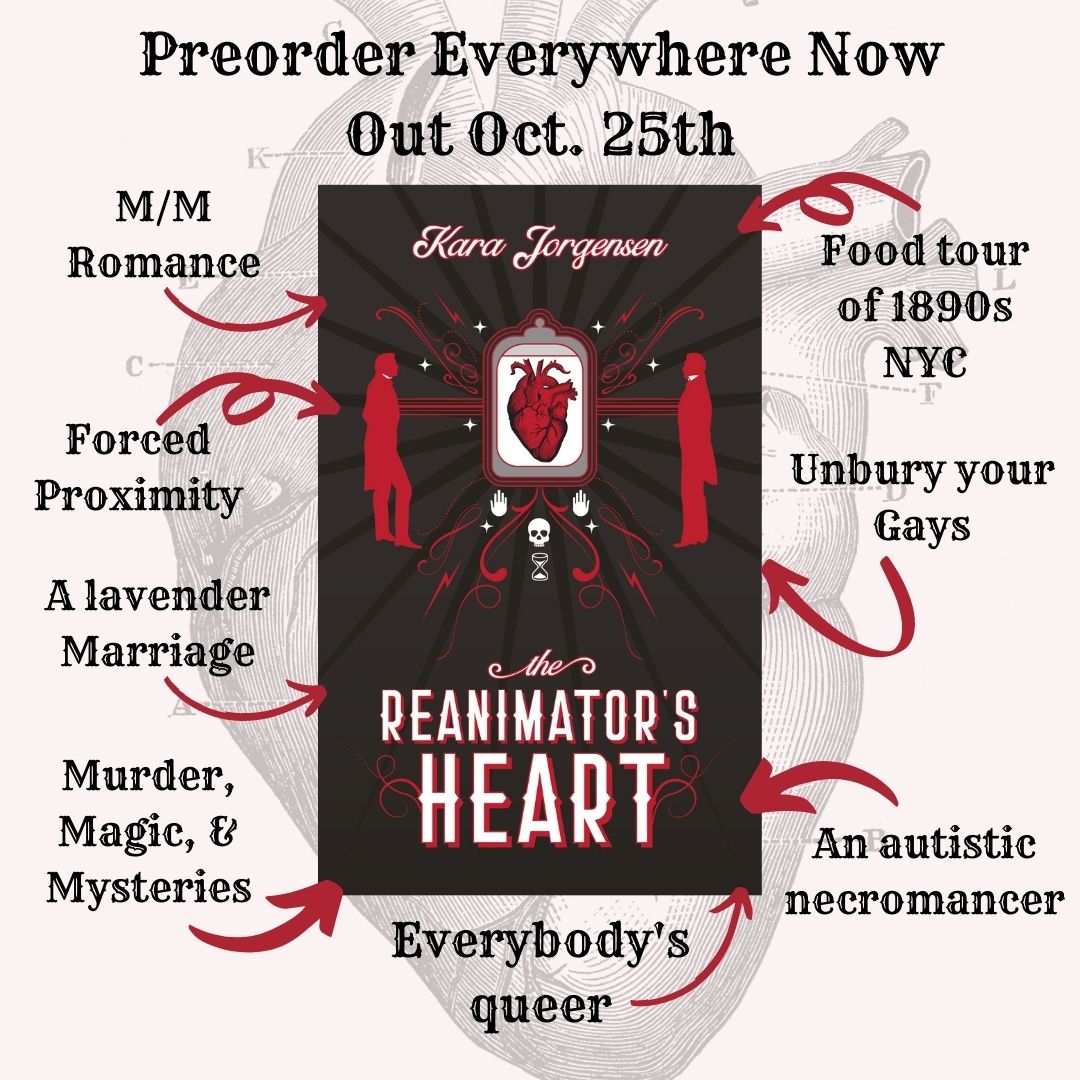
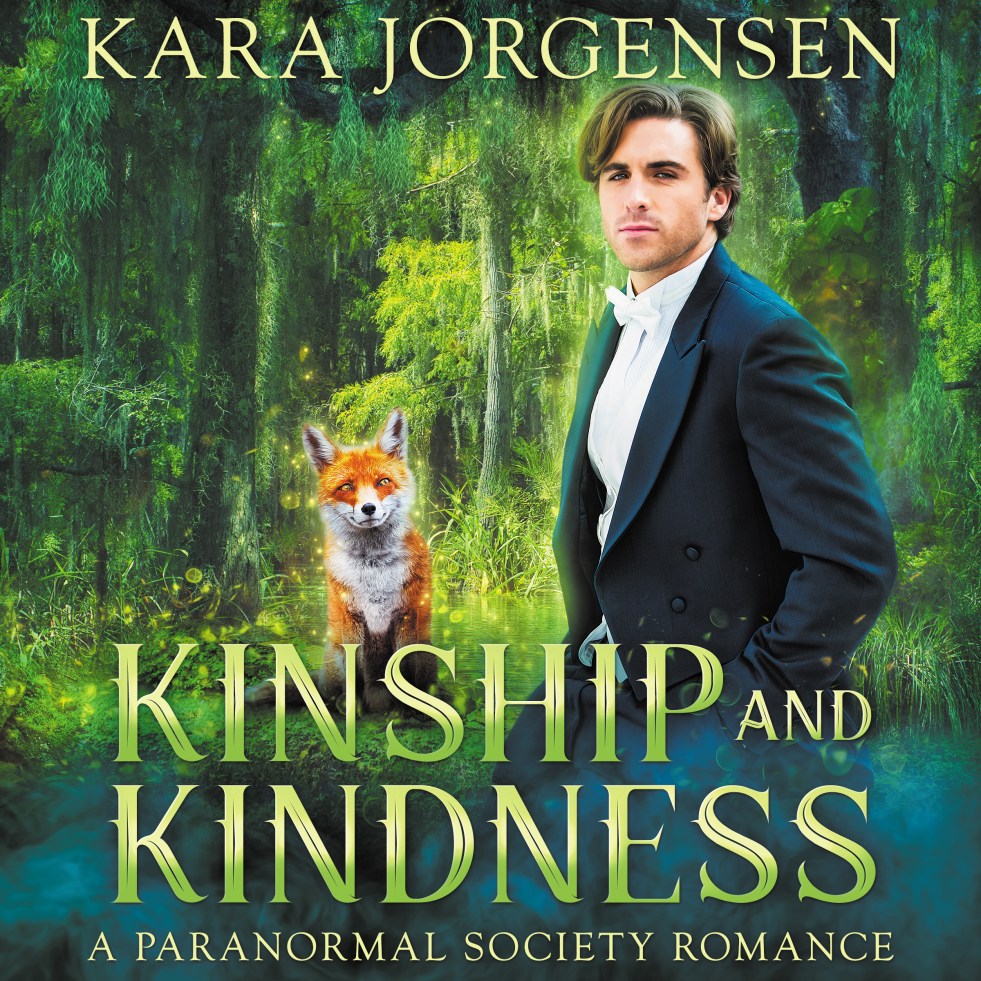
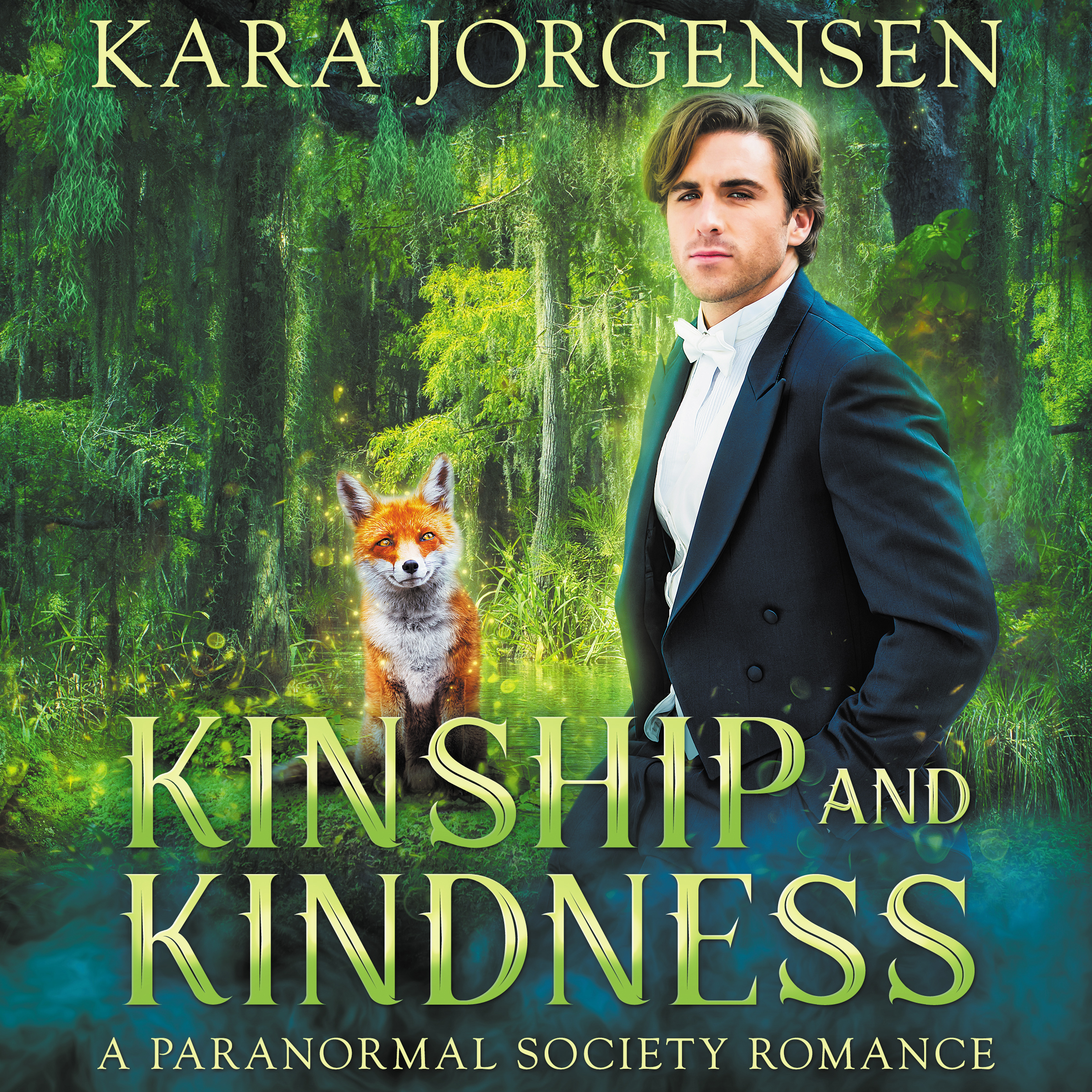
It is technically an off-shoot of The Paranormal Society Romance series. The story takes place in the New York Paranormal Society as mentioned in Kinship and Kindness where Bennett works. Originally, I debated including this book as part of the Paranormal Society Romance series since it runs concurrently with what I already have planned, but neither of the love interests are trans (and there’s a trans MC in each of those books) and the book is a bit more mystery than romance. Like a lot more of a mystery than romance. Then, as I was brainstorming The Reanimator’s Heart, I realized I had an idea for a second book with the same couple. It just made sense to split this book off into its own series, which will be titled, The Reanimator Mysteries.

What is The Reanimator’s Heart about?

The Reanimator’s Heart is like Penny Dreadful meets Vienna Blood with a healthy dose of Tim Burton’s style of levity (like Pushing Up Daisies). That sounds incredibly contradictory, but my work is generally on the Gothier side of dark complete with at least some of the campiness that makes the Gothic so much fun.

Here is the rough working blurb:

Oliver Barlow is the coroner for the New York Paranormal Society, and he has been harboring a secret from his coworkers: he’s a necromancer. He often solves cases by briefly reviving the dead, asking them a few pointed questions, and sending them back to the great beyond. Anything more and he could be treading into dangerous territory. His life working (and living) in the basement of the Paranormal Society has been going smoothly until Felipe Galvan returns to the Paranormal Society after a bounty hunting mission across the country. For years, Oliver has had a crush on Felipe, and they soon find themselves working on a case together involving a murdered nun. All is going well until the same person who murdered Sister Mary Agnes comes for Felipe. When Oliver finally musters up the courage to ask Felipe Galvan out, he finds him dead, and accidentally reanimates him. But Felipe will not go quietly. He refuses to die until they figure out who murdered him and solve the case. Things far worse than murder are afoot in Manhattan. Oliver and Felipe soon find themselves facing a cabal ready to unleash something horrific into their world.

As you can probably tell from the blurb, this is probably a little closer in tone to my Ingenious Mechanical Devices series with murders, monsters, and m/m romance.

Why am I so excited about this book?

Because I love Oliver and Felipe. Oliver is the science goth of my heart. He’s sweet yet awkward, and a lot of what he deals with comes directly from my experience as a neurodivergent person. If you’ve ever wondered what it feels like to be in an overactive, overthinking brain, you’ll definitely get it in his point of view. On the other hand, Felipe is dashing, courageous, but much like Oliver, he presents a mask to the world. He has plenty of his own issues that he’s running from. He grapples with what it means to be undead and to suddenly have one’s powers and life suddenly change (cough chronic illness analog cough).

Speaking of Felipe, his extended family has been one of my favorite parts of writing this book. Felipe is in a lavender marriage with his wife, Louisa, who is a relationship with a trans woman, Agatha Pfeiffer. Together they have a daughter, Teresa, who is in college studying art and design. Felipe, Louisa, and Agatha raised her together. I really enjoyed working in another trans character, especially one who would have been part of a growing trans culture back in Germany (if you’ve never heard of this, please look up Willi Pape or Magnus Hirschfield) and who has a child/family.

The details.

The Reanimator’s Heart will probably be out in the fall of 2022. I’m not setting a date or preorder until I completely finish the manuscript, but you can add it to your Goodreads TBR by clicking here.

At the end of the month, I will send out the first sneak peek of the story exclusively to my newsletter subscribers, so if you’re interested, you should sign up here or by clicking the button below. You may also want to sign up in order to get the first look at the cover in the future and to get some interesting weirdness packaged and emailed to you every month.

organization · Writing

How I’m Getting Back into Writing

As you may have gleaned from my posts since I started blogging again in the latter half of 2021, I have had a lot of trouble writing since the pandemic started. It was difficult before that, but it really worsened during the pandemic due to stress, worsening of my OCD symptoms, and what I now realize may have been covid brain fog (this seemed to greatly lessen after getting vaccinated). At this point, I’m in a much better place mentally than I was a year (or more) ago. Not 100% but at least 80% of the way there.

Since 2022 started, I have tried to really get back into the groove of writing like I did in 2019, so I’ve been trying to figure out how to optimize my writing routine and do things that make it easier to get work done. Before we get into this, I want to make it clear that I am not into the hustle grind, write a million words a day mentality. I’m literally just trying to get words on the page in a way that doesn’t feel like absolute torture.

Sprints

Something I started doing at the end of 2021 is using sprints. Sprints are setting a timer and writing for that amount of time. This is a branch off of the Pomodoro Method, which uses 25 minutes of work followed by a few minutes of time, followed by another “pomodoro” or 25 minute sprint. I found several authors on Youtube who do live sprints online, and I started joining those to help get started. Even if I found the videos too chatty at times, the synergy of writing at the same time as other people helped a lot. It took me a bit of trial and error to figure out what sprint length works best for me. 20 minutes seems to be my sweet spot. I can do two 20 minute sprints pretty easily and clock in a couple hundred words each time. I’m slowly trying to strengthen my creative muscles and do a bit more writing, so increasing from two sprints to three or even four in the future. I’m not there yet, but it’s a hope of mine.

Tracking Progress

With sprints, I’ve also started tracking my sprints with a printable chart that I got off Sarra Cannon’s website. You can see them in the picture below. Using these sheets and making note of the minutes long the sprint was helped me to find my sweet spot with sprint length. I also liked to see how much I got done each day and how the word count was increasing. Seeing progress makes me believe that it’s happening because adding words feels rather amorphous.

I also use a spreadsheet to track my daily word count. I take the total from the sprints and add it to an excel sheet. These spreadsheets also track my overall monthly goal (which we’ll get to in a bit). The monthly spreadsheets add everything up for me, let me track my progress, and the one I bought can track more than just my WIP. That way I can see that if I have a low word count on my WIP it may be because I wrote a 1,000 word blog post instead. If you’ve ever done NaNoWriMo, the word count trackers are a lot like what they have on their website, but this one covers more than one project at a time.

While tracking my progress has been good for me because I have the visual pay-off, something I struggled with greatly in January was not punishing myself for not writing on a certain day. I originally colored in the days where I didn’t write. That ended up becoming a self-fulfilling prophecy where one writing-less day perpetuated more writing-less days. The colored bands stacked up, and my positive feelings surrounding my work plummeted. In February, I stopped coloring in the days I missed. I tried to treat the new month like a clean slate, and with each successive week, I tried to have less writing-less days if possible.

Realistic Goals

Let’s put a big neon, bolded sign around REALISTIC.

I somehow managed to be under the delusion that in the past, I could write like 30k a month despite logically knowing I didn’t write more 1,000 words a day. I actually went back through my blog and found my old monthly check-ins, which had my word count totals for the month. Most were 10k-20k depending on the month and where I was in the story.

This is also something I had to calibrate within myself. The beginnings of new books are a SLOG for me. I tend to have false starts, have a lot more pauses, and I can’t power through the beginnings when I don’t know where I’m going like I can in the middle of a work. What I am having to remind myself is that if I’m working on the beginning of the story (first 10k-15k), I need to be mindful that it’ll take me a lot longer than months where I’m in the middle or end of a book. I may only write 5k a month when I’m starting a brand new story and still feeling out where I’m going.

In January, I wrote 2,800 words, and in February I wrote 10k with the word count increasing each week. This leads me to my March goal. I decided that I’m going to have a good, better, best goal for my March word count goal. My good goal is 10,000 words, which is fairly modest and very doable if things continue as is. My better goal is 15k, and the best goal is 20k. I don’t think I’ll hit the 20k, but it would be amazing if I could. Instead of shooting for the fences and saying 20k for March, I have the lower goals which are more realistic and very doable. Basically, this is positive reinforcement as I stretch and rebuild my writing muscles. I have these goals written down on my sprint sheets and my word count spreadsheet along with how many words per day I need to reach each.

I’m a very visual person who likes data, so having all these spreadsheets and sprint sheets help me manage my goals while tempering my expectations (aka not being totally unrealistic because I can’t remember my past creative thresholds). Not everyone will like this, and I know some will actively hate that everything involves tracking because it has the opposite effect on them. But if you’re like me and need that sort of regimented, goal-oriented, piece-by-piece breakdown, some of what I’ve done these past two months may be helpful to you.

Monthly Review

February 2022 Wrap-Up

So last month in January’s monthly wrap-up post, I made a few goals for myself, which I promptly forgot. Let’s go over what those goals for February were:

  • Read 8 books
  • Write 20k words with a stretch goal of 30k
  • Finish a syllabus for a future class
  • Finish a proposal for that same class
  • blog weekly and send out my monthly newsletter
  • crochet more because I haven’t since before Christmas

So let’s see how that went.


Reading

I set out to read 8 books in February since my goal for the year is 100, and I read 9.

  1. Leather and Lace (#1) by Magen Cubed (4 stars- monster hunter x vampire with a cute dog chase down monsters and accidentally fall in love)
  2. A Southern Gothic Summer Vacation and Other Stories by Magen Cubed (4 stars- see above)
  3. A Southern Gothic Holiday Special by Magen Cubed (4 stars- see above)
  4. A Bloody Little Valentine by Magen Cubed (4 stars- see above)
  5. Six Figure Author: Using Data to Sell Books by Chris Fox (3 stars- much more useful for people who are churning out books very fast and using Kindle Unlimited. For those that don’t, not very helpful)
  6. Newsletter Ninja 2 by Tammi Labrecque (4 stars- very helpful in regards to creating a reader magnet or cookie)
  7. We Free the Stars (#2) by Hafsah Faizal (4 stars- a lovely ending to an epic fantasy the duology)
  8. Rest in Pieces by Bess Lovejoy (4 stars- didn’t love it as much as Caitlin Doughty’s books on the same subject, little too sensationalized for my taste)
  9. The Son of Neptune by Rick Riordan (4 stars- greatly enjoyed RR’s books as always)

Admin/Behind the Scenes Author Stuff

  • Finished the syllabus for the class on monsters (basically went through what I had, changed some books, tinkered with dates)
  • Finished the course proposal for the class on monsters (justifying why this class should exist beyond Kara wants to teach it)
  • Finished another hypothetical syllabus for a literary magazine class that I put off for months
  • Listened to and approved the first 15 minute sample of the audiobook for Kinship and Kindness as read by Jack RR Evans
  • Updated the keywords for all my books on Amazon, though I may still tinker with this in the future as I’m not sure if I actually did a good job or not
  • Completed 3 out of 5 weeks of Sarra Canon’s Publish and Thrive course (it runs through mid-March)
  • Added the proper Amazon categories to all my books in the US ebook store (I still need to do this for CA, UK, and all the paperbacks *quietly weeps*)
  • blogged weekly
  • sent out my February newsletter, you can read it here
  • Permanently set The Earl of Brass (book 1) to free and The Gentleman Devil (book 2) to $0.99 (make sure to grab them if you like queer historical-fantasy with a hefty dose of magic and the gothic)

Blogs Posted

If there is anything you ever want me to write/talk about, leave it in the comments! I will never complain about suggestions.


Writing

So if you read last month’s wrap-up post, you know January was a STRUGGLE when it comes to writing. By the end of the month, I had only written about 3,000 words. Luckily February was much better, and I ended up writing 10,000 words. For a lot of people, that really isn’t much, but between starting a new story (which is were I struggle most) and grief shit and current events, writing has not been easy for me. Here are my weekly stats (not including blog post word counts):

  • Week 1- 1,130 words and missed 3 days of writing, 377 words/writing day
  • Week 2- 1,160 words and missed 2 days of writing, 232 words/writing day
  • Week 3- 2,700 words and missed 2 days of writing, 540 words/writing day
  • Week 4- 3,615 words and missed 1 day of writing, 602 words/writing day

This doesn’t include Monday’s/February 28th’s word count since it runs into the new week for me, but I have reached 20k words in this draft *cue the flaming Elmo gif* and I’m feeling good about it. I’m also very happy to see the days off decrease and the word counts increase. I just hope I can keep this going in March.


Hopes for March

  • Read 8 books (to reach 25 total by the end of the quarter)
  • Finish Sarra Canon’s Publish and Thrive course
  • Brainstorm a short story for my newsletter subscribers (click on the newsletter tab at the top of the screen to join)
  • Writing goals
    • Minimum goal 10k to reach 30k words (323 words/day)
    • “True” goal 15k to reach 35k words (484 words/day)
    • Stretch goal 20k to reach 40k words (645 words/day)
  • Blog weekly and send out a monthly newsletter
  • Craft/Crochet something

Well, I never got around to crocheting really anything in February, so I will at that to March’s list. I do want to get into my craft projects again. It’s just been hard when I have a lot of writing to catch up on. I’m also trying to be realistic with my writing goals, so as not to overwhelm myself or set myself up to fail. I’ll do a post about writing goals in the near future.

So let’s see how March goes. What are some of your goals this month?