Writing

My Editing Process

Two weeks ago, I posted about my writing process. This was originally going to be one GIANT post, but at some point, readers lose interest. It also made sense to me to break this up into before the end and after the end for simplicity’s sake. If you haven’t read the first post, you can do so here.

The End? Nope. Editing Time.

So the writing process typically takes me anywhere from 4-6 months, depending on how long the story is and how long it took for me to get past the beginning stage to start fully drafting. This is why I try to get the gooey beginning part started while finishing up another book if I can.

From there is the major editing stage. Something I started doing a few books back (I think while writing Selkie Cove) is to stop at the 33% to 50% mark and do some major edits early. This way, I tidy up the beginning, I make sure the characterization makes sense, and reacquaint myself with the beginning of the story and early stakes before moving on. This helps me a lot in terms of consistency, especially because it takes me longer to write the first half than the second half. Also, remember that I edit as I go anyway, so my book isn’t terribly messy after I’ve done the minor tidies throughout and the more major tidy at the halfway point.

Big Picture Edits

When I finish the entire book, it is time to do big picture edits. Typically, I don’t have anything too monumental because I edit as I go and do that 50% edit, but I do often have a list of things I need to fix or change but didn’t feel like doing while writing. I’m not someone who usually has to rewrite their entire book from scratch or move too much or insert whole scenes. This is probably because I go so slowly and have a lot of built in thinking time. An example of what I might fix is making sure character descriptions make sense, deleting unnecessary dialogue or lines of description, reorganizing scene breaks in a chapter to make it more dynamic/flow better, breaking a chapter in a new place, beefing up description if it seems lacking, etc. If I spot typos along the way, those get fixed as well.

Beta Readers and Round 2

Next, I send the book off to a beta reader if I have someone who is willing to take a look. I don’t always anymore, so if I don’t, then I put it aside for a few days while I work on something else and then dive into round 2 of edits. If I have a beta reader, I will still dive into round 2, but I may need to do another round of edits with their feedback. If anyone hasn’t heard of a beta reader, it’s typically a trusted friend or critique partner who is willing to give you feedback on your work. At this point, my hope is that their feedback won’t include major changes. As with any feedback, you should listen to what your beta reader(s) have to say, especially if more than one person tells the same thing, but if their feedback goes against what you’re trying to accomplish or just feels wrong in your gut, don’t use it.

Round 2 edits are line-level edits. Making sure things sound good, they’re clear, everything makes sense, etc. Smoothing lines, breaking out the thesaurus or double checking that words aren’t anachronistic. Inevitably, I will miss something, but I try. At this point (or after beta feedback), the book should be in pretty good shape and there shouldn’t be any massive changes.

Round 3 Edits (where the most weeping occurs)

Round 3 edits are copy edits. I tend to do this twice because I miss typos no matter how hard I try and something always manages to make it into the book, usually more than one. I read chapters out of order at this point to keep my brain from numbing out and not reading the words. I also use Microsoft Word’s speak feature to have it read me back my work a paragraph at a time to catch typos. It will miss homophones, though, so if you know that’s a problem you have, be like me and make a list of words you might screw up and use ctrl F to find them and double check (that and the verb tenses for lie/lay). Once I have finished rereading my work for what feels like the 800th time, we’re ready to format.

I will not go into the formatting process here, but I do my own formatting for paperbacks and ebooks. The good thing is, putting the book in either form also makes it easier to catch typos, so if you feel like you’re eyes are crossing looking at your computer screen, print it off on paper or read it on your phone/tablet to catch errors better. The change is format seems to help a lot.

I will admit that copy editing is my least favorite part. By the end, my eyes feel like their bleeding and knowing that despite reading my work so many times I still will miss things hurts. If you have enough money to do so, I highly recommend sending your work to a copy editor to find all those typos and grammar errors for you.

A Final Word

But yes, dear reader, we have come to the end of the writing and editing process. I’m sure some of you are appalled that my process goes against the usual advice you see online for writing books. Write a lot, write fast, but if you are like me and thinking about writing 30k, let alone 50k, in a month makes you feel ill, this may be a better process for you.

I will also add that I am a monogamous writer, meaning that I typically write one book at a time until I hit the later editing phases. Then, I might have an edit going and the early drafting process started. In order to keep my characters consistent, I need to be able to keep my projects separate in order to mold the best story I can. Some people just aren’t built for writing 3 things at once or writing 2k a day, and that’s totally fine. The point is that you need to find what works for you.

My process has evolved over time to become a process versus me just doing my best, feeling it out. I’m still feeling it out with projects, and over time, I’m sure how I write will change too, but as of 2022, this is what works best for me.

See you all next week!

Monthly Review

June 2022 Wrap-Up Post

June was an oddly good pleasant and productive month for me. Things, of course, were rocky with everything *gestures to the world* going on, but I think I’ve thrown myself into my work in order to cope. I will say, at this point, I’m feeling a little fried. With productivity comes the back swing of fatigue and minor burnout, so I’m starting July mindful of that. Here were my goals for June:

  • Read 8 books
  • Word count goals
    • Minimum goal 13k
    • Real goal 15k
    • Stretch goal 17k
  • Finish the room/office destruction/cleaning
  • Blog weekly
  • Monthly newsletter
  • Approve cover design
  • Work on new reader magnet story
  • Play a video game/do some crafts

Books

I set out to read 8 books in June, and I read 9 books total.

  1. By Pain of Death by Suzanne Clay- 4 stars, a trans retelling of Hades and Persephone where the latter is a trans man. It was a tender hurt-comfort sort of story.
  2. Briarley by Aster Glenn Gray- 5 stars, an MM Beauty and the Beast retelling featuring a vicar and a dragon man in a cursed manor. I loved this so much, like I was upset when I finished because it was the right amount of tenderness and angst.
  3. I Kissed Shara Wheeler by Casey McQuiston- 5 stars, a mystery mixed with romance featuring tons of queer characters in a conservative school and how you can still find community and make change.
  4. Saga Volume 4 by Brian K. Vaughn and Fiona Staples- 4 stars, rereading Saga in preparation for volume 10 in October
  5. The Perfect Crimes of Marian Hayes (#2) by Cat Sebastian- 5 stars, Robin Hood-esque story following a prickly woman who murderers her horrible husband to save her family/friends and the soft, animal-loving blackmailer who loves her.
  6. The Jade Setter of Janloon (#0.5) by Fonda Lee- 4 stars, a prequel story set in the same world as Jade City.
  7. Will My Cat Eat My Eyeballs by Caitlin Doughty- 5 stars, a nonfiction book about the strange questions kids want to know about the dead. As always, Doughty doesn’t sensationalize things and her authorial voice is *chef kiss*.
  8. Deceiver of Minds (#3.5) by Jordan L. Hawk- 4 stars, John, Caleb, and Grey try to find others who went through the same horrible experiments as John and end up in the crossfire as loyalties are tested and relationships turn out to be more than they appeared.
  9. Total Creative Control (#1) by Johanna Chambers and Sally Malcolm- 4 stars, a boss x personal assistant romance centering around a TV show about vampires. I love a prickly, complex character. Much like Sebastian’s book, it’s a bit of grumpy x sunshine romance, and I’m here for it.

Admin/Behind the Scenes Author Stuff

  • Nearly completed the entirety of my room/office clean-out. At this point, I’ve stalled out because I need to put a lot of stuff into the garbage and only have so much room in the can per week. But the bulk of cleaning and tossing is done.
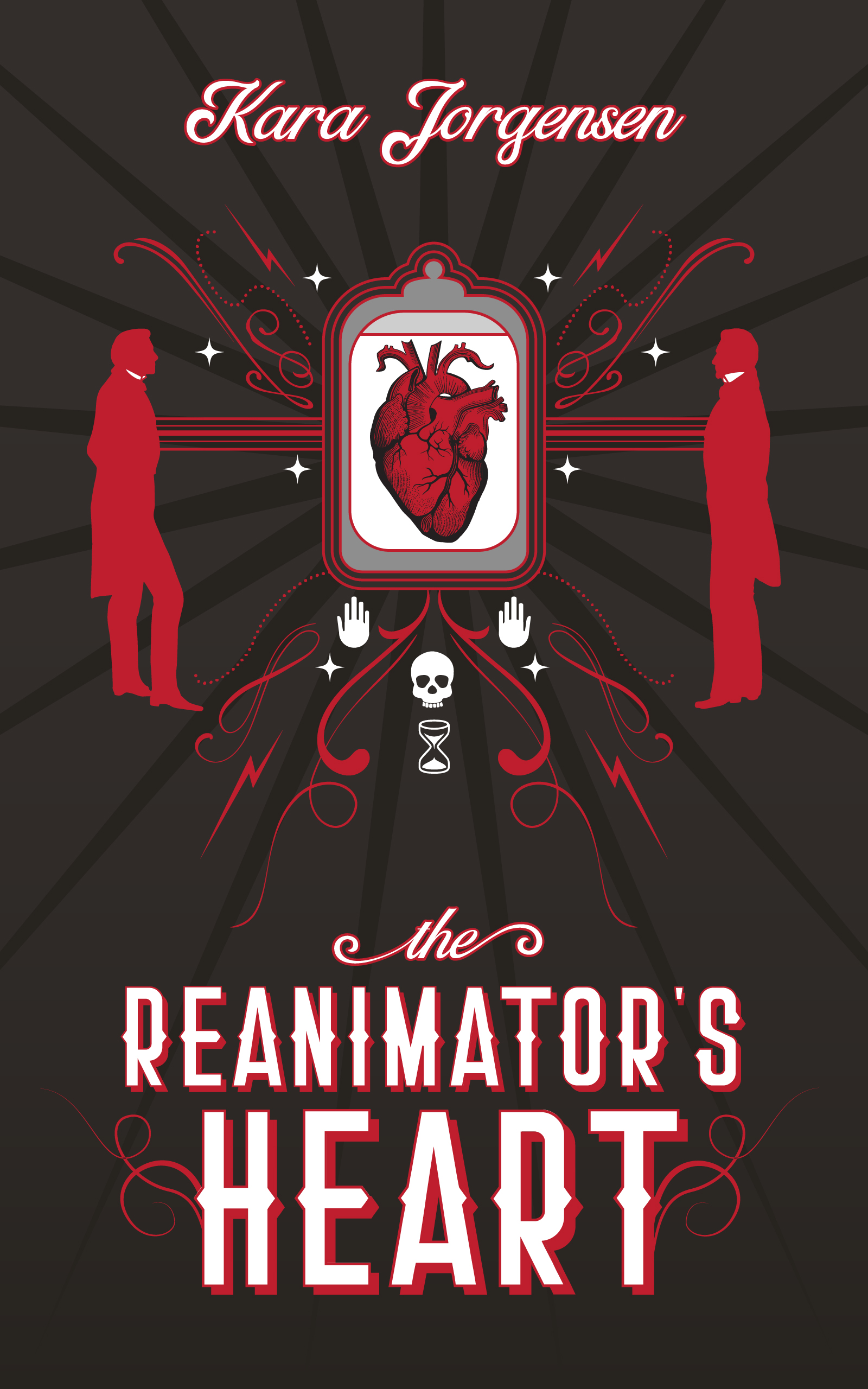
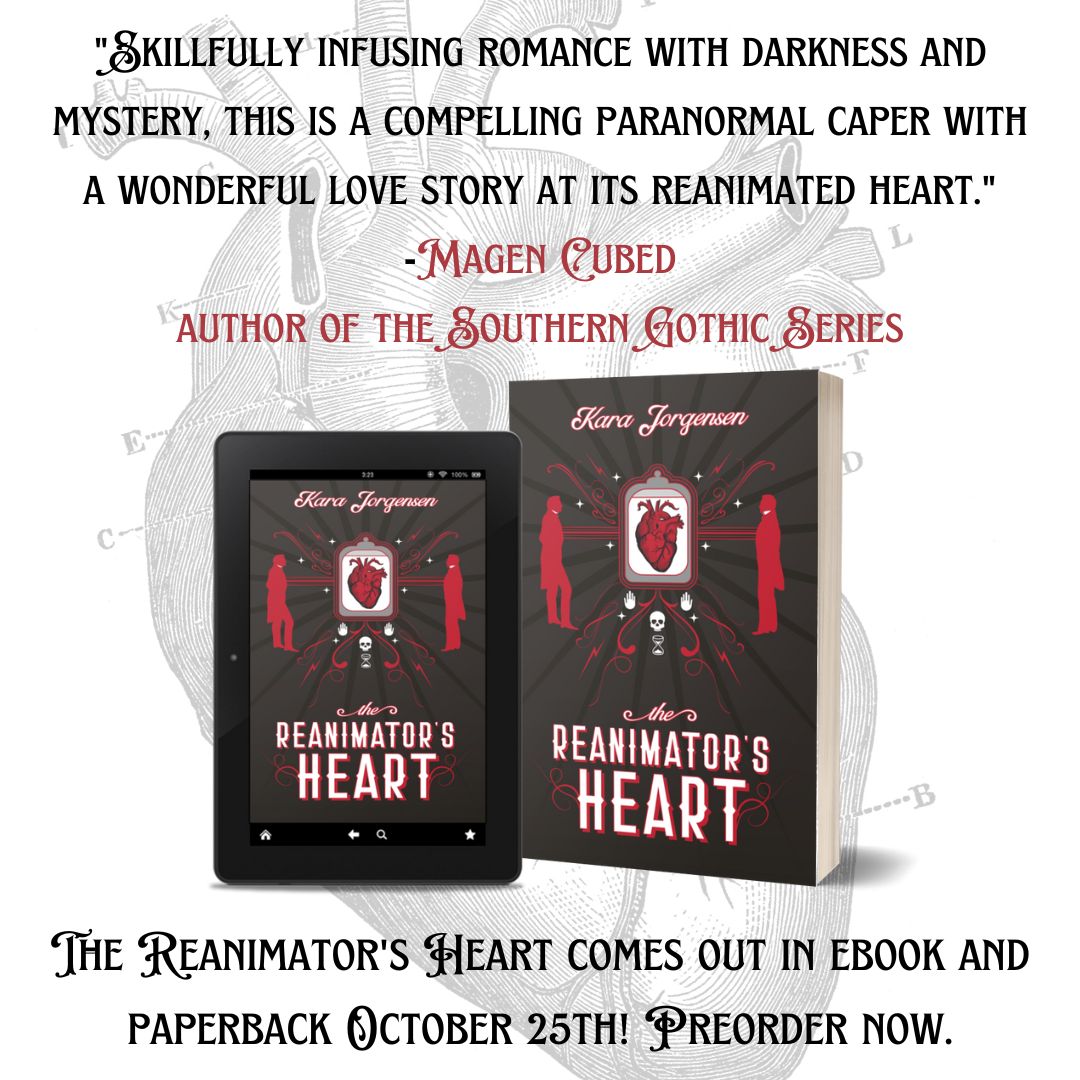
  • Chose the direction for the cover design of The Reanimator’s Heart with my designer, and it is BEAUTIFUL. I’m waiting on the final mock up from my cover designer, but once I have that in the next few weeks, the preorder will go up. I can promise you that it is absolutely lovely and fits this book so damn well it hurts.
  • Created a detailed release plan that scares the shit out of me to look at for The Reanimator’s Heart. It is the most thorough plan I have had in years, and that scares me a bit since my last release was in the middle of the pandemic while I was running on fumes mentally.
  • Played/finished TWO video games. I have been trying to make an effort to actually play some games to help recharge, and I finally succeeded. They weren’t the games I initially bought, but both were good.
    • Unpacking is quite short, but it is super low stress. It tells a story through the objects a person brings from house to house as throughout their life. It is cute and sweet.
    • The second I played was Strange Horticulture, which takes place in a creepy British town where you run a horticulture/plant shop that sells rare and strange plants. You need to figure out what people need while also helping/hurting a strange figure take over. I don’t want to giveaway too much, but if you like puzzles, plants, and murder towns, it’s really good.
  • Made a list of Amazon genres for The Reanimator’s Heart when it comes out
  • Outlined the entirety of the newsletter freebie, which has a new title, “Flowers and Flourishing.” I did not start writing yet, but that’s fine because I’ve been focusing on The Reanimator’s Heart.

Blogs Posted


Writing

My minimum goal for June was to write 15k words, and shockingly, I wrote 18k! I was amazed at how much I wrote. It’s an exceptionally high number for me as I tend to be a put-put writer, but once I hit the middle of the book, things tend to speed up a little (thank god).

  • Week 1- 2,500 words and missed 1 day, 625 words/day (5 day week)
  • Week 2- 5,000 words and missed 0 days, 714 words/day
  • Week 3- 3,000 words and missed 1 day, 500 words/day
  • Week 4- 4,600 words and missed 1 day, 767 words/ day
  • Week 5- 2,900 words and missed 0 days, 725 words/day (4 day week)

I would like to know how I managed to blow my goal out of the water, but I do sort of know. Hit the right part of the book, not teaching any classes right now, and plenty of alone time to work. I feel like my writing muscles are finally coming back to how they were circa 2018. If I could keep them going while avoiding burnout, that would be magnificent.

I really like how this book is shaping up, so fingers crossed, the editing process should be fairly smooth. If you’re interested in my writing process, check out last week’s blog and stay tuned for next week’s blog, which is about the editing process.


Hopes for July

  • Finish Writing The Reanimator’s Heart
  • Start Editing the beginning of The Reanimator’s Heart
  • Figure out what to do with old room furniture/prep for reno
  • Start drafting newsletter freebie, at least a little bit
  • Do the cover reveal
  • Start making release graphics
  • Read 8 books
  • Crochet something?? Or do some other art project??
Writing

My Writing Process

This week’s post was inspired by Magen Cube’s newsletter, Notes on Monstrosity, where they discuss their writing process. Finding out how other writers writer is something I find incredibly interesting, to the point that I will watch Youtube videos of writers trying famous authors’ processes or daily schedules. It’s fascinating how what works for one author would probably trample my brain into exhausted dust. In my creative classes, it’s a topic my students ask about and how they can best streamline the process. I’d like to make it clear that you will need to figure that out on your own and try what different writers do or venture out on your own and see what your brain jives with.

Some of you are going to read my process and be mad. So be it. My process is not what is preached by many writers. I do not hurdle to the finish line as fast as I can because, frankly, I am not fond of cleaning up the mess after. That’s it. I’m lazy. I do not have the mental fortitude to clean up the same draft 6+ times because I decide to speed through it the first time and now have a 100+ things I need to remember to fix AND do copy edits and such after. That’s not how this is going to go, so if you’re looking for how to write a book in 30 days or write 5k a day or whatever else the hustle culture is pedaling these days, this is not the blog post you seek.

Consider, I have written and published 7 (going on 8) books this way, so it works for me *shrugs*

The Beginning

Typically, my ideas start off with two characters or a single character, and everything sort of grows out of that. I spend a lot of time at the beginning feeling out who they are, what’s wrong with them, what they want, what their core personality is. From there, I think about how these characters would meet and interact because that will be the majority of the story. Then, I get stuck for like 2 weeks trying to figure out the conflict/plot. How do I figure this out? Usually thinking how I can best traumatize these characters. At the same time, I tend to start making a Pinterest board because I’m a very visual person. Once I start throwing together what they look like and where they are, more concrete aesthetic and plot things start to gel for me.

During this part, I’ll often try to start the story to better feel out the characters and have a few false starts. This happens more often with brand new characters than when I’m adding on to a pre-existing series, which makes sense because with new characters, this is more exploratory writing, not word count writing. During this early stage, I need to remember to be kind to myself because my first month or so of working on a book is SLOW. There is a lot of feeling in the dark until things make sense. At some point during this process, I can mentally see the ending or something toward the end to work towards. With that in mind, we get into the drafting stage.

Drafting

I want to make it very clear that I am a “slow” writer. Slow in comparison to the people who can bang out a 60k book in 2 months and have it ready for publication 2 months later. My books are usually 90k+, and I only write 500 to 1500 words a day with the latter being a *really* good day or me playing catch up because I skipped a day or two due to not feeling good. My monthly word counts average around 15k with the first month or two of a new draft often having less. Early on, I tend to write in 20 minute sprints, something akin to the Pomodoro Method. It forces me to write and move forward when I’m feeling hesitant.

But here is my cardinal sin, according to other writers. I EDIT AS I GO.

Yes, dear reader, I go back and edit what I wrote during my previous session as a warm-up. I do this because

a) I am an underwriter, so I need to add more detail. Often, after I’ve written a scene, that detail becomes clearer, and it makes more sense for me to add it now while it’s still fresh in my mind than 2 months from now when I don’t remember what the hell the room is supposed to look like. My brain is like a sieve or a browser with 25 tabs open and you can’t figure out where the music is coming from. I try not to over-complicate it if I can.

b) It’s less work for me later. Future Kara doesn’t appreciate it when Past Kara leaves cryptic messages in a draft that make no sense. [ADD CHAIR] For what, Past Kara?? Why and for what purpose do they need a chair?? I know some people can do this, I cannot. It just frustrates me. Then again, I am not a perfectionist, and as someone is who at least somewhat full of themselves, as many artists are, I tend to read my work and think it’s pretty good and editing it is just tumbling that shiny rock further. Ego is key for this process to work. I am self-conscious about many things; my writing is not one of them.

Once I have reacquainted myself with where I left off, it is time to write. As I said, I tend to write 500-1500 words a day, and this is either done in the morning around 10 AM or late at night with little in between. It’s when my brain works best.

Outlining or the Lack of

You may have noticed I didn’t mention making an outline. That is because I don’t make a traditional outline before I start writing. I do make a retroactive outline covering what I’ve already written, so I can go back and reference it as I move forward, which has been VERY helpful to me. I have a blog post about it here. Something I have been doing with The Reanimator’s Heart is using Sarra Canon’s Three Act Structure outline, which is based off Save the Cat! Writes a Novel and a few other structure books. I have been filling in scenes I think fit into the general structure to help me figure out the order of things and where I’m going, but I do this one act at a time. Act 1, then Act 2 part 1, Act 2 part 2, then Act 3 and not a moment ahead of time if I can help it. It is a very loose outline that is subject to change, but seeing everything laid out helps me keep the flow going.

Ironically, if I’m writing a short story, I tend to make a loose outline, but I think this is because, at most, I can hold about 30k words worth of direction in my head. Beyond that, my brain gets overwhelmed and sort of melts. My process is avoiding the brain melting stage at all costs.

To be continued…

Originally, this was going to be one MASSIVE blog post, but I have decided to break this up right here before the editing process. Truthfully, the drafting process and editing process feel very different to me, so it’s a good place to stop for now. In 2 weeks, the post on my editing process will come out, so I hope you will come back to read it.

Personal Life

On Supportive Partners

Be forewarned that this will probably be a little gushy. Today is my 17th anniversary with my partner, so the thing that is first and foremost in my mind today is how much I love him and how much he supports me on a daily basis.

First off, let me introduce my partner a little. He is a programmer who also does cosplay and art, though his creativity really lies in 3D mediums (like cosplay armor). He is incredibly handy, a loving dog parent, and my goblin wrangler (I am the goblin in the relationship, every good relationship has one of each or that’s my theory). The Morticia to my Gomez, blah blah blah. I love him immensely and will happily gush about his many positive attributes, but I will spare you all for now.

I feel like today’s post is a no-brainer, but one of the best things that has happened to me is finding a partner who supports me and my creative endeavors. I should probably also define support in this case. I don’t think your partner needs to share all your interests. My partner and I certainly don’t. I don’t cosplay, he doesn’t write stories, but we’re both artists. We both respect the creative activities that we’re interested in. Earlier in my life, I thought my partner had to like the same things as me. I tried to get him to read my work or read books, and my poor ADHD-brained partner just couldn’t do it. At first, I was mad. How could my partner who loves me dearly not be actively involved in my projects? Was that not what support is?

Well, not really. Just as I am not hot gluing helmets made of foam, my partner doesn’t need to read my work in order to help. For one, he is the person I bounce ideas off of the most. Often, he’s just a sounding board because talking an issue out tends to speed up the process of figuring out where I’m going. He’s been helping with The Reanimator’s Heart and my other projects so much that he asked me to draw out a relationship diagram in order to keep everyone straight when we talk about them. While he isn’t likely to sit down with my book and read it cover-to-cover, he is the person who helps me the most on a daily basis, and I’m kind of glad he doesn’t because there are spicy scenes and part of me would be mortified if he read them. Don’t question the logic of it; it’s just embarrassing.

This past year or so, I’ve struggled a lot with self-worth and whether or not I can get my writing career back on track and try to rely more on that income. My partner has been the one to constantly remind me not to get down on myself and that I can eventually get to the place I want to be. It just might take some time. Whenever I mention wanting to learn some new craft or potentially trying to get back into more traditional types of art, he always agrees that I should. Trust me when I say my partner is not a yes-man. He will happily bring me back to earth when I start to spin off, but when it comes to my art or trying different things, he’s the first to tell me I should if it’s calling to me. I think part of it has to do with us both being artistic people who are also neurodivergent. We understand the siren call of a new skill or craft.

I posted this on Twitter the other day, but I think it’s very apropos for this post:

I found someone who appreciates me and all the weird shit that comes with loving me. He listens when I gush on and on about Our Flag Means Death and looks at the thousandth piece of cool pottery I’ve found on Instagram. I’ve been remodeling my office, and he’s gone along with every idea I’ve had in order to make it the perfect gothy oasis I’ve dreamed of. I don’t think there’s ever been a time when my partner acted like what I loved was cringe-worthy or weird or juvenile. I’ve seen a lot of people’s partner’s say things or roll their eyes when the other person starts gushing about their special interest or a new hobby. Or they’ve fully bought into the capitalist notion that every hobby should be profitable, and if they aren’t, they should be abandoned for more serious pursuits. Whatever those are.

It made me immensely sad to think about people who are in relationship where their partner doesn’t love them for all their weirdness and silly hobbies or their special interests. They don’t have to love that thing too, but they have to love and respect you enough to understand that you love them and that it is all a part of you as a person. While my partner doesn’t crochet or write or like arcade carpet, he would never dissuade me from my pursuit of those things. He knows the weirdness is what comes part and parcel with the things he loves, and trust me, he’s a fan of the weirdness too.

Happy anniversary, Peaches! I hope he knows how much I love and appreciate him and how he’s been the tent pole that props up my dreams when I struggle under their weight.

Book Reviews

12 Queer Books to Read Now (Pt 2)

Last week I posted a list of 12 Queer Books to Read Now (Pt 1), and because I read a shit ton of queer authors, I wanted to do a second post full of authors you can check out. I may also do a list of authors I have on my to-be-read pile but haven’t gotten to yet. We shall see. You may have also noticed that I changed the title from queer authors to queer books because I don’t think an author needs to be out to write a queer book, so this is more inclusive.

  1. Anna-Marie McLemore– McLemore’s books are an auto-buy for me because their books are so rich with texture, magic, and queer characters. Many of their characters are also neurodivergent and/or trans, which speaks to me. I highly recommend Lakelore or When the Moon was Ours.
  2. Tehlor Kay Mejia– Mejia has teamed up with McLemore before, but I also really enjoyed her dystopian, Latinx fantasy duology We Set the Dark on Fire, which has a really interesting sapphic couple at the center of the story.
  3. Keito Gaku– Gaku’s 4 volume manga Boys Run the Riot is the first I’ve read featuring a trans masc character by a trans masc author. The story is about friends, fashion, and going after who you are and what you want to be.
  4. Margaret Owen– I adored all three of her books so far (with Little Thieves being my favorite), which all feature lots of queer characters and have asexual rep as well. If you like heroines who are a bit rough around the edges and softer, dorkier love interests, her books are for you.
  5. Talia Hibbert– While Hibberts Brown Sisters series is M/F romance, Dani Brown is bi and Hibbert is nonbinary, and that queerness shows in the books. Hibbert’s books have queer side characters with the promise of future queer stories. Also, great neurodivergent rep in the Brown Sisters series!
  6. Lara Kinsey– Kinsey writes quite a bit of f/f romance, and I absolutely loved Budding Romance and Blooming into You. She manages to cram so much development into novellas. They’re perfect if you need a short, compelling piece.
  7. KJ Charles– I would be remiss if I didn’t include KJ Charles’s books on the list. Her queer romances are *chef kiss* and run from magical fantasy to political intrigue.
  8. Joanna Chambers– Chambers’s work is reminiscent of KJ Charles’s as they both write historical, political/historical focused MM romance. My favorites from Chambers are the Winterbourne series, which are shorter and follow different characters. They’re soft and sweet and just warm.
  9. P. Djèlí Clark– I don’t think Clark has a single book that doesn’t have a queer character. The main pair in A Dead Djinn in Cairo is sapphic, and his books have complex characters, amazing stories, and interesting magic with lots of rich texture.
  10. Yuki Fumino– Fumino’s I Hear the Sunspot is one of my favorite manga series. It features a very slow-burn MM pair and talks a lot of deafness and what it’s like to be hard-of-hearing with an immense amount of detail. One MC is losing his hearing and the other works for a company that tries to make things more inclusive for the deaf community.
  11. E E Ottoman– Ottoman is a trans masc author who writes some really fantastic romance featuring trans characters. They’re smart, cozy, and usually have quite a bit of heat.
  12. Nina VarelaCrier’s War and its sequel were books that I read and sort of sat there in a daze after because I enjoyed them so much. A robot princess, a human girl in the midst of starting a rebellion, and the collision course that brings them together. Who can ask for more?

This is by no means an exhaustive list, but I hope you have a bunch of new books to add to your TBR pile and stay tuned for EVEN MORE authors to add in a future post.

Book Reviews

12 Queer Authors to Read Now (Part 1)

I am deep in the writing trenches this week, so today’s blog is going to be a little different from the usual fare. Since June is Pride Month, now is the perfect time to share some queer authors/books that I think you should read. Not just in June, but all year long. Today, I’ll be posting the first 12, and I will do another 12 next week as well since there are way too many amazing queer books/authors for one post.

  1. Jordan L. Hawk– Jordan’s books are a lot like mine (gay, monsters, mysteries), so if you like my work, you will love Jordan’s. I highly recommend all of his series, but I particularly enjoyed Widdershins as well as his latest book The Forgotten Dead.
  2. A. E. Bross– Bross’s The Roots that Clutch is a fantasy story set in a desert world with lots of queer characters, found family, magic, and interesting world-building.
  3. Magen Cubed– Magen’s Leather and Lace is the buddy cop/monster hunters in love kind of story that has a ton of action that is balanced with tenderness and silliness. Dorian and Cash are a hoot.
  4. Cat Sebastian– Cat’s books are notoriously tender, and what I love most about her work is that even the MF romance is queer. If you love historical romance with a heavy dose of queerness, hit up her work, especially Tommy Cabot Was Here.
  5. Suzanne Clay– Suzanne’s work is new to me, but I read By Pain of Death, which is a Hades and Persephone retelling where Persephone is trans (Seph) and Hades is disabled/dealing with chronic pain.
  6. Aster Glenn Gray– I just finished Gray’s Briarley, which is a MM Beauty and Beast retelling where the beast is a dragon man who has been trapped in his castle for 100 years (set during WWII). Gray’s work appears to be mostly historical and very queer, so you know I’ll be buying more.
  7. Arden Powell– Powell is one of my favorites right now, especially with their Flos Magicae series. Interconnected historical-fantasy stories with lots of queer characters and interesting magic/world-building.
  8. Allie Therin– Therin’s Magic in Manhattan series and the spin-off series is so good. Magic, relics, kick-ass main characters with complicated pasts and relationships.
  9. Ella Stainton– A Scottish nobleman who talks to ghosts teams up with a non-believing psychologist, what could be better than that? Snarky and passionate with plenty of adventure and surprise, Best Laid Plaids is worth a read if you like MM historical romance.
  10. Olivia Waite– The Feminine Pursuits series is F/F romance that is to die for. Feminine yet feminist with an incredibly varied cast in interesting jobs (weaver, beekeeper, etc.), circumstances, etc. I love all 3, so no playing favorites here.
  11. Lee Welch– Lee’s M/M fantasy romances are filled with great world-building and complex characters. The latest, Seducing the Sorcerer, also has a ridiculous enchanted fabric horse that I adore.
  12. Nghi Vo– I love all of Nghi Vo’s work, especially since there is a sapphic edge (overt or more covert) in all of her work. If you like complex, layered books, I highly recommend The Empress of Salt and Fortune, or for old Hollywood glamor mixed with magic, Siren Queen is for you.

That’s it for today’s Pride Month book list. Come back next week for 12 more books/authors to add to your to-be-read pile!

Monthly Review

May 2022 Wrap-Up Post

Ah, May. The month when my allergies beat me up and steal my lunch money every year. But the semester is over, the grading is done, and I can fully invest my time in my work. I know we aren’t completely done with May, but I think the end of the 29th is good enough to capture most of what I have done. If anything earth-shattering happens those last two days, I’ll edit and add them. Let’s take a look at what my goals were for May.

  • Read 8 books
  • Word count goals
    • Minimum goal: 15k
    • True goal: 17k
    • Stretch goal 19k
  • Blog Weekly
  • Monthly Newsletter
  • Finish majority of room/office clean up
  • Play video games and craft more to unwind
  • Do a craft for fun (I’ve been slacking)

Let’s see how it went.


Books

I set out to read 8 books, and I read 8 books in May.

  1. The Hellion’s Waltz (#3) by Olivia Waite- 4 stars, wonderful sapphic historical romance between a union activist/weaver and a piano teacher
  2. Along the Saltwise Sea (#2) by A. Deborah Baker (aka Seanan McGuire)- 4 stars, a middle grade story with a sort of Wizard of Oz style voice and adventure
  3. Love Bites (Southern Gothic series) by Magen Cubed- 4 stars, origin short story for the Leather and Lace series. It’s interesting to see how the story developed and expanded
  4. How to Train Your Pet Human (Southern Gothic series) by Magen Cubed- 5 stars, erotic short stories attached to the characters from Leather and Lace. As always, Cash and Dorian are hilarious and wonderful
  5. Siren Queen by Nghi Vo- 4 stars, a sapphic historical-fantasy story set in pre-Hayes Code Hollywood, horrific and glorious
  6. The 7 Days Author Guide to Book Advertising by Matthew J Holmes- 4 stars, useful in deciding what sort of ads to use and how they differ, not very specific or fleshed out
  7. Saga (#3) by Brian K. Vaughn and Fiona Staples- 4 stars, rereading in preparation for volume 10’s release in October
  8. Fevered Star (#2) by Rebecca Roanhorse- 4 stars, fantastic second book in a Meso/Indigenous American inspired world

Admin/Behind the Scenes Author Stuff

  • Researched AMS ads and ran one (yay for trying new things)
  • Made a book trailer and posted it on TikTok
  • Ran a free book ad with Free Booksy that was a FLOP, as far as paid promotion goes
  • Created a book launch/pre-order checklist for The Reanimator’s Heart
  • Made a list of keywords for The Reanimator’s Heart
  • Finished grading and posted my students’ grades
  • Brainstormed the future newsletter freebie “Jasmine and Jaguars”
  • I have been working on my disaster of a room/office. I have organized all my clothes/purged the ones I don’t want, thrown out a metric shit ton of my childhood toys and junk, organized my books and purged the ones I no longer want. I have the vast majority of the work done. The only things left to tackle is some more childhood stuff that needs to go and getting rid of old furniture.

Blogs Posted


Writing

My goal this month was to add 15,000 words at a minimum, and I am currently on track to hit that if I write 1,000 words a day for the next few days. I think I can do it, but it might be close or I might fall slightly short. Either way, it’s fine. My stats below do not include the 30th or 31st of May.

  • Week 1- 2,700 words and 2 missed days, 540 words/writing day
  • Week 2- 2,600 words and 3 missed days, 650 words/writing day
  • Week 3- 2,700 words and 3 missed days, 675 words/writing day
  • Week 4- 5,100 words and 0 missed days, 729 words/writing day

So this month has been a mixed bag as you can see from above. I’m not 100% sure what sort of went wrong this month, but I have a few ideas. First is that I hit the second half of act two. In terms of plotting, that is the hardest spot for me because it requires weaving all the threads you’ve created and load them up for act three where they must tie together and make a satisfying, coherent ending. This is where I end up pausing the most while working to make sure I’m staying on track. The second issue was my mom being home several days due to it being her birthday month, which threw me off along with the post-semester change in schedule. That transition period always trips me up. Ultimately, the tragedies toward the latter half of the month have been hard to deal with. I alternate between throwing myself into my work to deal and being so numbed out that I can’t do anything.

Shockingly, I’m very happy with what I’ve written so far this month, which I hope will continue as I move into June. The Reanimator’s Heart should be fully written by the middle of July, fingers crossed. I edit as I go, so the hope is that there will be minimal large scale issues to fix.


Hopes for June

I still haven’t done any crafts or really played any of my video games this month. I’m hoping I can find better balance in June and actually do some things to refill my creative well besides reading. I have a few needle felting kits that are small projects, so I may try doing those to see if I can at least complete one project this quarter. Below are my goals for June.

  • Read 8 books
  • Word count goals
    • Minimum goal 13k
    • Real goal 15k
    • Stretch goal 17k
  • Finish the room/office destruction/cleaning
  • Blog weekly
  • Monthly newsletter
  • Approve cover design
  • Work on new reader magnet story
  • Play a video game/do some crafts
Personal Life

When You Don’t Recognize Your Face

Today’s post is probably going to be a little on the odd side as this is, I think, a niche experience. I hope it’s a niche experience because it wasn’t a very pleasant one.

If you’ve followed me for any length of time on social media, you may have seen me post about how my eczema used to be really bad until I started taking Dupixent in 2020, and it finally was brought under control. When most people think of eczema, they think of a crusty, red patch on someone’s arm or the back of their leg, but I had severe eczema. What qualifies as severe eczema? Treatment resistant, over a significant portion of your body, impairs quality of life, and flares last a long time. I had all of that.

As soon as I hit puberty around 11, the eczema patches that were on my arms and legs basically took over my entire body. I had angry, red skin that weeped over most of my body, and at the time, the doctors prescribed cream, which helped but wasn’t enough to bring down the internal inflammation. Steroid pills helped while I took them, but within days of stopping a course of steroids, the eczema came back worse. Nothing I did worked, no amount of avoiding triggers was enough. My body was raging from the inside out, and I was consumed by pain and fatigue.

It feels so dramatic to say that, but until I felt better, I didn’t realize how awful I felt at the time. My skin cracked and burned constantly. The inflammation made me exhausted (like having HORRIBLE allergies or a cold 24/7 for weeks or months on end). And my self-confidence plummeted because I looked and felt ugly. I didn’t bother to try to cover up the open wounds on my face because makeup made it more irritated. Between not having enough spoons to care and fighting a loosing battle with my skin, I gave up on giving a shit about how my face looked and stopped looking in the mirror beyond checking specific body parts (teeth, eyes, nose, etc.).

Even the clothing I wore required me to work around my eczema. I wasn’t hiding it so much as covering it in fabric that could act as a wick for sweat. In summer, I ended up wearing long-sleeve t-shirts or light hoodies and long pants because when the open wounds were exposed to the air or sweat on a hot day, they burned and got more inflamed. I was never someone who enjoyed showing skin, but what I wanted to wear and what I could wear didn’t always align. The open wounds also liked to bleed at random, so I ruined many a t-shirt that way.

When I started taking Dupixent back in 2020, I was hopeful but skeptical. My dermatologist was convinced it would help me, and I wasn’t opposed to trying an expensive medication if my insurance was willing to cover it since nothing else worked. Shockingly, it worked incredibly well. Within weeks of starting, there was marked improvement on several fronts. It turns out what I thought was a deviated septum making it hard to breathe was inflammation in my sinuses. The Dupixent calmed my whole body. My skin cleared up, my sinus passages deflated, and my asthma has all but cleared up. I no longer sound like Darth Vader when I breathe (thanks, family, for pointing that out repeatedly when I couldn’t control it). I had no idea how miserable I was since I had been suffering with such heavy inflammation for over 18 years, but now that it’s better, I can’t imagine going back to feeling that shitty. At this point, I’m paranoid about my insurance no longer covering my meds, but a post on the failings of the American healthcare system is for another day.

Now, here comes the weird dilemma: I didn’t know what my face really looked like.

I can hear some of you now. “Kara, you had a mirror, and no one swapped out your head when no one was looking.” Yes, but I have literally had eczema covering my whole face since I was 11 years old in 2002. I never really understood what my adult face looked like with clear skin and without heavy inflammation, which causes your face to look puffier than it is. My face shape has changed, my nose looks different, my skin (obviously) looks different, and now, when I stare at my face in the mirror, I have to remind myself to zoom out and see my face as a whole rather than parts. When I try to do a Tiktok or take a selfie, my brain still rebels at seeing my face. It’s simultaneously closer to the person I have in my head and incredibly jarring because I’m not used to seeing it like this. I’m not the person who is riddled with eczema and miserable. I still have inflammatory problems that like to pop up (stiff or achy joints, the occasional small eczema patch, IBS), but my quality of life is so much better that it’s painful to think of how many years I wasted feeling horrible. Not that, that could have been helped without access to Dupixent.

So, now, I’m thirty years old, and trying to figure out my face and get used to it. I’m happy that I have so many trans friends because I think they understand this feeling of suddenly not recognizing yourself but also being happy with the results. In their case, it’s hormones. In mine, it’s a lack of inflammation. I think it helps, too, that I’m nonbinary, and I don’t feel the need to cram my face into a feminine box because it certainly doesn’t fit. The other day, I made a goofy face, and my partner looked at me and was like, “You have a nice face. Your face looks very neutral, like not too girly or masculine.” Somehow, that made my day because, ultimately, I fall somewhere in the middle. Having my body cooperate with that feeling for once in its itchy, angry life still feels strange, but I’ll take the weird small victories.

Writing

Fighting the Process

I love writing.

Now, picture me grimacing as I say it. I do love writing, but toward the second half of a book, I find myself fighting the process as it changes.

To me, there’s a big difference in how I write the first half versus the second half of a book. Think about the first half as laying down railroad tracks. I need to set everything up, I’m building, I’m adding. It all has to make sense and get me to a certain destination. Now, the second half is driving the train on those tracks. It’s more dangerous, it requires more focus, and I need to slow down around certain turns or I might run us off the tracks completely.

Every book I resist the slow down in the second half of the book. I know that the second half of act two needs the most careful attention because it’s where everything gets more complicated, but those complications have to rely on things I’ve already laid down in act one and the first half of act two rather than new things. Loose ends must be braided together, they have to make sense, and some mysteries even need to be tied up before the third act. It’s a complicated balancing act, and as someone generally lacking in forethought, it creates a bit of a problem because I need to parse out where I’m going before I start writing.

This leads to the bottleneck problem. I don’t want to just write anything to get my daily word count in, so I get stuck, stop writing for a few days, and fall behind. This leads to me freaking out that I’m falling behind and things are horrible. I start questioning the quality of the book or if I’m smart enough to figure out how to get it to the end. I become a mess. Sadly, this is also part of the second half of act two process. Don’t worry, I’ll think I’m brilliant again in act three when words pour forth with relative ease. But for about 20,000 words I’m very annoyed at myself because bridging the gap between all I’ve built and where I know I need to end up isn’t easy.

I would argue that the second half of act two is the hardest part of writing a book. It runs from midpoint to climax/final battle, and everything you build in the first half of the book needs to come to an emotional and physical head here while still making sense. The third act is probably the easiest for me. It’s all downhill from there. Everything I’ve written is coming to a crescendo, and typically, I know where I want the story to end up fairly early on. It’s the amorphous middle that causes me the most stress.

Something I’ve noticed with my last few books (because I’ve been trying to pay more attention to the process aspect of my writing) is that what works in act one and act two part one does not work in act two part two. At the beginning, I just sort of wing it, then tidy, then wing it, etc., at the halfway point I do a major edit, and while I write, I create some semblance of organization by creating an outline of what I’ve already written (I have a whole blog post on this). This helps me to avoid rereading my book over and over as I move forward. This is a process I’ve been doing since I started writing. It feels natural and works for me. The problem is that none of this works in the second half due to all the loose ends.

I struggled really hard with the second half of The Wolf Witch and Kinship and Kindness, and unfortunately, The Reanimator’s Heart is following in their footsteps. What I’m trying to do now is not fight the process and do what might actually help in the moment. There’s often a disconnect in my mind of what will help and what I think will help. I tend to assume I don’t need to make a small outline or I don’t need to take notes, I’ll remember (famous last words from someone whose brain is like a colander). What I’ve found that is helping is, shockingly, TAKING NOTES on what I need to make sure I incorporate in later chapters or things that I’ve introduced that need to be tied up later. My other go-to is making index cards with scenes on them because I find it difficult to figure out the order of operations with the major moments I need to hit.

I’d like to parse out why I suddenly become resistant to changing tactics in order to move forward. Part of it is I don’t want to admit that I am struggling with a particular part of the book. There’s a lot of internal chanting of “the words will come if I just relax, refill the creative well, and let them flow.” If it’s been more than a day and they haven’t come, they need to be forced out (unless you’re burnt out). The first step to writing more is admitting you are stuck. The other issue, I think, is a little more convoluted. Sometimes I think not changing tactics is almost self-punishment, like I can’t not be trying to write. How dare I take time away from staring at Word to do anything else! I catch myself doing this a lot.

What I’m trying to do now is when I feel myself getting stuck but pulling toward a certain tactic, I lean into it. Subconsciously, I must know I need it or that it might help, but I’m always afraid that I’m just procrastinating by making cards or writing out bulleted notes, etc. I’ve noticed that often when I get stuck, it’s because my subconscious has realized I messed up and my conscious brain needs to catch up. The problem is trusting that inner voice and actually listening to it because the part of my brain focused on productivity just wants to plow through.

This post is really me trying process what I’ve been dealing with these past few weeks as I dive headfirst into the second half of act two.

I must trust the process.

I must be willing to put in the time to create aids that will make writing easier.

I must understand that refilling my creative well and those aids are necessary for my process.

Finally, I must understand that the writing process changes depending on the stage of writing I’m on, and that I must be willing to be flexible and adapt to what is happening me in the moment.

Personal Life · Writing

When a Happy Ending is an Act of Defiance

I’ve been struggling to think of what to say this past week. Or really the past month or so, because most of my thoughts amount to “I have lots of feelings, none of them good.”

Living in the US, I have been constantly surrounded by headlines about overturning reproductive healthcare/abortion, attacks on queer relationships, and transphobic laws that seem to want to stamp out our existence. It’s so much all at once that it’s mind-numbing. I’m a nonbinary person with a uterus, and while my reproductive health is somewhat secure due to steps my partner and I have previously taken, this is all a lot. I think for anyone who gives a shit about other people, this past month has been a lot.

I’m tired, my brain feels pulled in a hundred directions, and I feel the negativity creeping through my veins because a very loud minority has decided I shouldn’t exist and many of my friends shouldn’t exist. Or if they do, it’s only on their terms.

And it has made it very hard to write lately. The weight of hatred and uncertainty looms over me constantly, but it reminds me why I started writing in the first place.

Back in 2014, we were still fighting to have same-sex marriage recognized. States were facing lawsuits after banning it even after it was legalized country-wide. Anti-queer sentiment was overt, loud, and just as painful as it is now. I remember staring at my books with their cast of queer characters and wondering if there was still a place in the world for me. Publishers were still pushing queer characters to the sidelines or cutting queer plotlines all together unless they were not on the page. I’ve written before about why I self-published, so I won’t stay on it too long, but the sidelining of queer characters/relationships was why I decided to self-publish. No publisher or company or anyone but me could make my characters straight.

Writing queer characters who eventually got their happily ever after was an act of defiance. In romance, marriage is the usual happily ever after because that’s what cis het M/F couples do. It’s recognizable, it’s legally binding, it’s overt. I wanted that for my characters even if that wasn’t legally possible in the 1890s. The next best thing was a faux wedding (as seen in Dead Magic‘s binding ceremony), but having queer characters find each other, love each other, live closely, and be recognized as a couple by their friends and family was still defiance.

When you write anything involving historical elements and queer characters, reviewers will toss back in your face that “being gay was illegal” back then. Well, so was prostitution, adultery, theft, and murder, yet all those happened as well and no one complains when they read about those things in historical romance. The double standard is eye-roll inducing, but each of those obnoxious reviews spurred me to write more queer characters and eventually more trans characters.

In the back of Kinship and Kindness, I even included a short further reading section about trans people in the 1800s. So many lived normal lives where they worked regular jobs, socialized, and even married. Often, the weren’t even outed as trans until after death, but people don’t want to take into account that people could blend in or that their communities protected them or at least looked the other way if they knew. We all know of famous supposedly straight historical figures who had a “roommate they were really close to” or “a dear friend” they often holidayed with in the South of France that people still refuse to believe were some flavor of queer.

When we write queer characters during times that feel fraught, it is an act of defiance. Writing their lives is a declaration of our existence, our struggles, our love for each other. The stories don’t have to be happy. Their lives don’t have to be (and shouldn’t be) perfect. But writing queer characters into existence as complex, real people is hammering home that we cannot be stamped out. We will not disappear.

I’ve been trying to remind myself of this as I work on my writing. My projects matter even when the world feels like it’s pressing in. There’s always the hope that someone will see themselves in my characters and feel better for a time or lose themselves in whatever drama is playing out. The Reanimator’s Heart has a society of paranormals where people are more likely to be queer than not, and there’s also a lavender marriage where each participant has a partner of their own (one of which is a sapphic trans woman and the other is an autistic gay man). Even if it’s the mid 1890s, everyone manages to live a fulfilling life and eventually find happiness, and that matters.

If you’re writing queer books right now, no matter how bleak it feels, it still matters. Someone out there is clinging to your work in this storm.