Writing

The New Book Blues

I have a confession: I hate starting a new book.

This probably sounds weird from someone who loves writing, their characters, stories, etc., but the actual starting part is the absolute worst for me. I’m not one of those writers who gets an idea and immediately dives headfirst to bang out 10,000 words in a few days before hitting the wall when they get to the middle. No matter how hard the spirit of inspiration strikes, I never get that sort of burst at the beginning of a story. The beginning is always the slowest part of the writing process for me. I’m constantly having false starts, stalling, reworking or clarifying things. The beginning of a book is about feeling things out and trying to get the shape of it in my mind before I get too far. My process is probably closest to a sculptor using a piece of a marble. They have to inspect the veins and natural curves and weaknesses of the rock before they get too far, lest they ruin it.

I’ve said it previously in other posts about my writing process, but I hate mess. I’m not the kind of person who can speed-run through a draft and deal with the problems later. If I have a super messy draft, there’s a 90% chance I will just chuck it in the bin and move on instead of dealing with it. Because I am mess averse, I tend to be a slower writer but a quick editor. My writing has been gone over so many times by the time I reach the editing stage that the draft is fairly clean. At the same time, I don’t have hyper-productive days with astronomical word counts because that would mean cleaning up a lot of mess later. Occasionally, I do have these days, but they’re often toward the very end of the story when I know exactly where I’m going and what needs to happen.

The beginning of a book is like standing at an eight-way intersection. I have too many choices and I haven’t puzzled out where they all lead yet, so I get decision paralysis. Some people will say just pick something and deal with the consequences. Yeah, no, I’d rather take a few hours or days to figure out what won’t work before charging down a certain path and making a mess for myself. I’m a careful writer, and the fact that the slow start is part of my process is something I need to remind myself each time I start a new project.

I often scare myself when I start a project because I am so slow at first. There’s a little, panicked voice inside of me that’s like, “At the rate you’re going, it’ll take two years to finish this book!” and then, I freak out more and freeze up. This time, I’m trying to remind myself that the speed at which I write exponentially goes up the further along I am in the book. The first five to ten thousand words are the slowest because my brain is still grappling with all the setup and moving pieces that need to be nailed down early on. This is part of the process, even if I don’t like how it feels, and at some point, I need to make peace with that.

The beginning of a book is like a road with nearly limitless paths, and the further I get into that draft, the more side streets are closed to me. The path becomes clearer, and the chance of getting lose diminishes. For now, I will keep going, albeit slowly, and try not to get lost.

The Reanimator's Remains · Writing

Introducing The Reanimator’s Remains

This week’s blog post is a sort of title reveal/blurb reveal/preorder reveal for book three of the Reanimator Mysteries series.

The title of book three is The Reanimator’s Remains! Book three will be out October 29th, 2024, and you can preorder it in ebook form now at most major retailers. Paperbacks will come closer to release day.

The cover reveal will be later this summer, but for now, you can read the blurb below.


An autistic necromancer, his undead love, and a town built on secrets

When the dead start rising and wreaking havoc in the small town of Aldorhaven, no one at the Paranormal Society wants to take the case; no one but Oliver Barlow. While he knows little of his parents’ lives, he knows he was born in Aldorhaven. Perhaps there, he might finally find out what happened to them or if he has any family left.

The last thing Felipe Galvan wants to do is go to a strange town in the middle of the woods, but for Oliver, he’ll go. From the moment they arrive, Felipe is haunted by memories better left buried and reminded that one misstep is all it would take for him to lose control and become the monster he was always meant to be.

But it isn’t merely the dead plaguing Aldorhaven, something far worse lurks in the woods and in Oliver’s blood. Together, Oliver and Felipe must untangle the magic hidden in the town’s past and destroy it before it can claim Oliver’s life.


What can you expect from The Reanimator’s Remains?

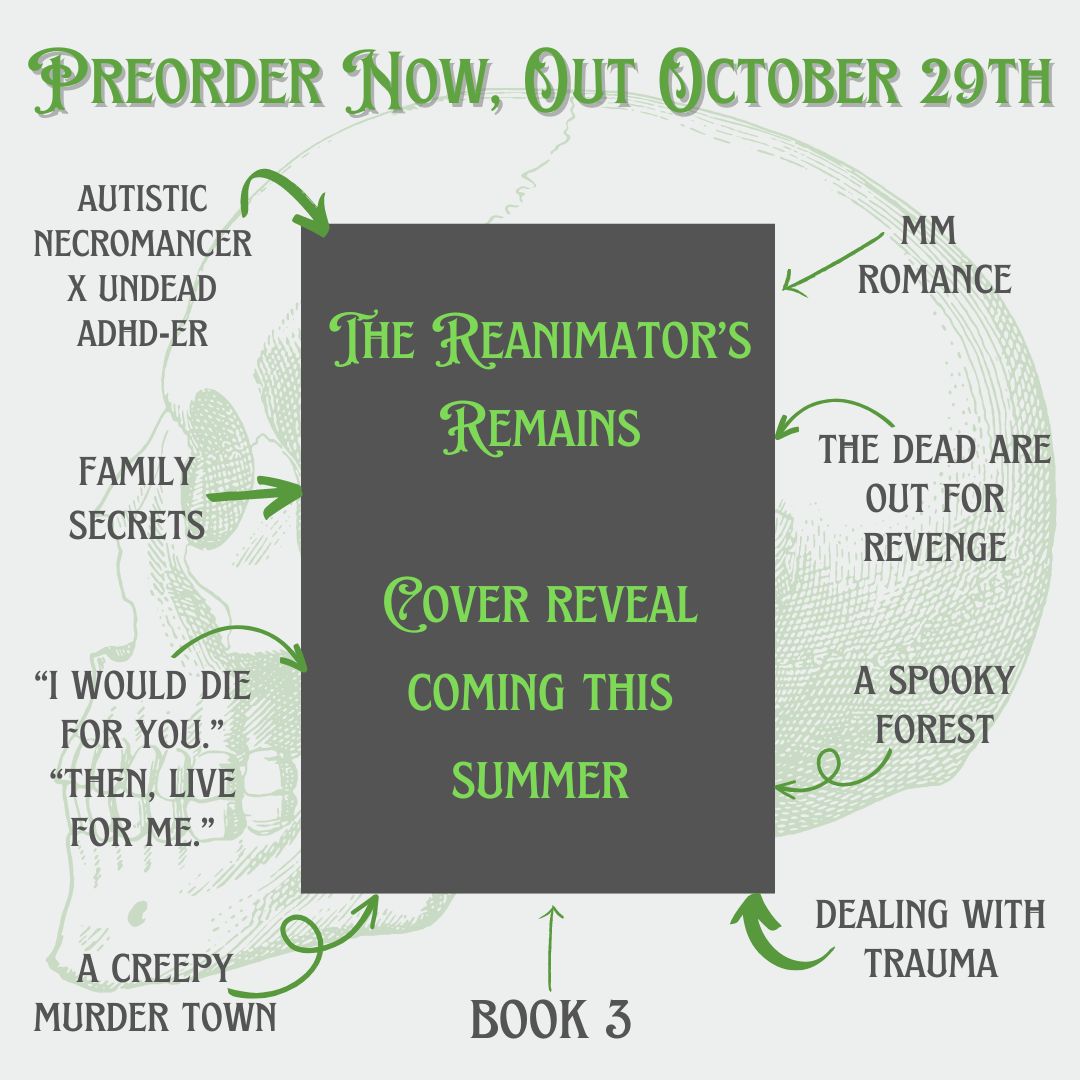
The Reanimator's Remains by Kara Jorgensen, cover reveal coming this summer. Preorder now, out October 29th.
autistic necromancer x undead adhd-er, mm romance, family secrets, the dead are out for revenge, "I would die for you" "Then, live for me.", a spooky forest, a creepy murder town, dealing with trauma, book 3.

I will definitely talk more about The Reanimator’s Remains (TRM #3) as I work on it, but at its core, it’s a story about fighting fate and expectations and breaking cycles. I hope you all will enjoy reading it as much as I’m enjoying writing it. You can preorder The Reanimator’s Remains at most major retailers, and if you haven’t read The Reanimator’s Heart or The Reanimator’s Soul, you still have time to do so before book three comes out in late October. You can also add it on Goodreads.

Writing

Research & the Discovery Writer

Something I greatly enjoy is learning about other writers’ processes for coming up with ideas and actually writing their books. What fascinates me most are writers who can seemingly research everything they need before starting a book. Every time I think about it, I laugh. That is certainly not my process.

The problem is that I am a discovery writer who plans their books out only a little at a time. For people who are more consistent outliners and planners, researching in advance might come far easier since they, generally, know what’s going to come up in their stories. I have no idea beyond broad strokes of what’s going to come up. For example, when I was working on “An Unexpected Question,” I knew I needed to research Coney Island, the amusement parks there, and 1890s men’s bathing suits since I knew the characters were going to Coney Island for vacation. What I didn’t realize was I would also need to research restaurants that were there in 1897, the ocean life around Coney Island, whether horseshoe crabs would be on the beach in August, street food in the 1890s, bathing machines, and a bunch of other minor stuff I hadn’t anticipated.

This is typical of what happens when I start writing a story. I have some very general idea of things that I need to research either because I know I will need the info or because I need to nail down what I think I want to do and have to eliminate things. While working on each of the Reanimator Mysteries books, I’ve read up on various occult things or aspects of medical cannibalism in order to decide the direction I wanted the books to go. Research is not strictly clarifying what I need to know but closing paths the story will eventually take.

The true issue is that I enjoy doing research. Someone once asked me, “How do you know when you’re done researching for a book?” My answer: you aren’t until the book is done because something will always come up that needs to be double checked, especially in historical fiction. As someone who is an eternal student and hoards special interests like a dragon hoards treasure, I’m okay with that because research is one of my favorite parts of writing, so I will do it the second I have an excuse to do so. I have gone down ridiculous rabbit holes over minor details that ultimately added up to one or two sentences.

The thing is, it’s probably only going to be a sentence or two, but some of the best ideas I’ve ever gotten came from doing random research. Knowing these minor details, especially in a historical context, helps to enrich a story and create greater depth than if I did all the research upfront. Even if the majority of readers have no idea, I know and some astute readers will pick up on it. It’s like throwing in Easter eggs, and it brings me joy.

This past week I decided to write a scene that involved a horse. I did not anticipate writing a horse scene and have actively avoided having horses in my stories by moving up the timeline for steam powered cars. The problem with horses is that it is very easy to screw them up. Horse enthusiasts will happily tell you that you royally screwed up a scene involving a horse, and I did not want to get an F in horse rep from the horse people. So what did I do? I did a deep-dive on horses in the 1860s for a 3 page scene because I was not getting it wrong. Then, I ran the idea past several people who confirmed I did not royally f up the horse in my book. If you’re a writer, horse people and historical gun people will happily tell that you messed up, and from my experience, the horse people are more than happy to help you get it right.

Some of you might be intimidated by having to do research for a book, but the time and effort it takes is worth it when you can put out a book that feels well constructed and thorough. It’s basically world-building, just world-building based in deep research or the past rather than constructed in your imagination. If you thinking about doing research for a book, I highly recommend not just looking at what you definitely need to know but things you may not use, and of course, read widely by getting works from scholars who are of marginalized backgrounds and/or research about people of those backgrounds. In regards to historical research, there are chunks of history that aren’t taught in schools, and it’s important to remember that when constructing your own books/worlds, so do you homework.

Writing

Social Media and the Devaluation of the Arts: Part 2

Last week in part 1, I discussed how video-based social media has screwed over artists and the artistic process. While you don’t necessarily have to read part 1 to understand part 2, I will be building upon those arguments today.


Scrolling through Tiktok, a woman making miniatures flashes across my screen. With a pair of long tweezers, she places a dozen tiny books onto a bookcase, one after the other. The cuts are evident, but I know that even someone with a deft hand and lots of practice picking up tiny things would struggle to put these itty bitty books on a shelf and have them look artfully arranged. I wonder how much time has gone into creating this video. Was this a time lapse or a rehearsed arrangement of books? Have the other books been glued down to avoid accidentally dumping or upsetting what’s already been placed down in this diorama of a library? But I’ll never know. The moment the last book hits the shelf, the camera pulls back to reveal a quaint, cozy library done in 1:12 scale. It zooms in on a few details before looping back to the beginning.

There’s something about miniatures that I love, though I don’t make them myself. It’s a replication of real life but on an inhuman scale. It’s a very human thing to build houses for ghosts. To decorate them to honor some unseen presence. We relish the work and time we put in making something the hypothetical inhabitant would like. Dollhouses pick up where our temples or homemade altars left off, and it’s comforting to know humans never truly change.

I follow a bunch of people who make miniatures on Instagram and Youtube. Miniaturists often make their own pieces for their dioramas or buy them from independent creators who specialize in a very specific niche like making tiny, lifelike vegetables or weaving itty bitty carpets on a bracelet loom. Under a video of someone rolling out and painting a clay cabbage, a commenter asks how much they cost. I wince at the responses to the creator’s honest answer. “FOR A CLAY CABBAGE?? I COULD MAKE THAT FOR $3!” says the questioner, and others quickly chime in to tell the craftsperson what a rip-off their price is.

The Price of the Aesthetic

If you’re an artist of any type, I’m sure you’ve heard someone complaining about the price of your work, whether it’s a $5 ebook or a $300 full color art commission. People don’t understand the amount of work that goes into making something. It isn’t just the cost of the materials or even the time it takes to make it. You’re paying for skill. It’s the same reason you can make yourself a cheeseburger and fries at home, but you pay $15 for the same thing at a restaurant. The chef knows what they’re doing, and you’re paying for their expertise. Yes, you could make that clay cabbage at home for $3, but do you have the experience to know what clay works best or how thin to roll it without tearing it or how to paint things in a way that makes them seem lifelike? In the amount of time, effort, and material you used to figure it out, you’ve probably spent more than you would have if you bought it from a professional.

When I commission artwork of my characters from my favorite artists, I do so because I know they can do a better job than I ever could. I’m paying for their skill, and usually, I’m underpaying for that skill. Most artists I know do not charge what their work is worth, and even then, they still get told they’re overcharging or trying to rip people off. No matter how little a creative charges, it will always be too much for someone. With the way social media algorithms demand artists to perform in videos, I wonder how much worse this will get.

As someone who crafts and writes, I know the time a project takes, the toll repeated motions can have on the body, the costs of materials, and the amount of energy it takes to learn a skill and hone it over years, but what about those who don’t? I think back to that Tiktok video of the woman placing tiny books on a shelf. I wonder how many people watching the video understand how much work goes into making each of those miniature books. Yes, they look uniform and nearly perfect, despite there being several dozen of them, but that is due to hours of labor and years of skill. They don’t look perfect because it’s easy. They look perfect because the artist knows what they’re doing. And now that work is been distilled into thirty seconds of “content” on Tiktok, being watched by people who may have no interest in miniatures or how they’re made or anything this artist is doing beyond consuming shifting pixels on a screen. The ratio of people who know what they’re looking at to the people who don’t is getting worse the further the video goes outside its target audience, and the more that happens, the more the demeaning comments flow in.

The shift to splashy thirty seconds or less videos is doing a disservice to the arts. A very common format on Tiktok is someone making something with half second sharp cuts between steps in the process. Thread the needle, needle into fabric, row, row, row, row, progress shot, tada. It forces the artist to condense their work and process into what I like to call the aesthetic of productivity. It flattens the creative process to the bare bones of each step, making it almost prescriptive when the art of creating the piece is not meant to be a tutorial. This format doesn’t leave room for contemplation or mistakes or reevaluation, just forward progress, a march to the finish before it’s onto the next Instagram worthy piece. It’s slight of hand that hides the work in favor of the sparkly product, but when we hide the work, we hide the skill, the meaning, the way we’re truly supposed to experience art.

Bob Ross wasn’t a cool artist because he made a shit ton of paintings; it was because he made the act of painting accessible and enjoyable. He took his skill and time and taught others how to make art and be fulfilled by the process of adding happy trees and embracing mistakes. What we’re seeing now is antithesis to this. It’s all product and capitalist consumption, no process or joy or fulfillment. When we take out the most fulfilling parts of creating and what allows us to express ourselves, we not only devalue what makes us human but the skill that artists have cultivated through years of practice and work.

Who Let the Tech Bros in?

I won’t get into my long winded rant about how the devaluation of the humanities lies squarely with white supremacy and its besties, capitalism and fascism, but for now, trust me when I say that the greater accessibility of higher education, online tutorials for nearly anything, and the ease of sharing marginalized voices via social media coinciding with a massive devaluation of the arts and humanities isn’t a coincidence. And as if smelling the blood in the water, tech bros have caught wind of the devaluation of the artistic process and sought to capitalize on it.

First, it was NFTs plaguing the art community, and now, it’s AI generated “art.” “Art” because art requires a certain level of humanity that a computer can never emulate. “Art” because it’s a plagiarist, and plagiarists don’t deserve credit for their work. And most importantly, “art” because it isn’t art; it’s an approximation of what the unskilled, uncaring, and uninterested think art should be. The worst part is, we’ve helped them get there with each high production value, no substance video.

For years, we have been devaluing the humanities. It started again in earnest more recently with the championing of STEM fields above all else and was compounded by the mass denigration of people who majored in the humanities (despite the fact that their skills make them more employable, even outside their respective fields). This has all been further heightened by the well-established misogynistic feelings in regards to needle crafts, clothing design, and artisanal products. Many of the crafts or types of art we see on Tiktok or Instagram were considered “women’s work” and were taken for granted or not seen as serious art for centuries, and now, that the queerness of many masc traditional artists is more obvious, there wasn’t enough “traditional masculinity” left to uphold the arts against the patriarchy. Techno grifters quickly realized they could cash in on those who wouldn’t dare debase themselves by dabbling in the arts and being vulnerable enough to be bad at something.

AI tech bros, whether they know it or not, are selling hyper-capitalist, patriarchal art. It requires no skill, no talent no practice, just stealing the hard work of legions of unseen (and probably marginalized) people. You can’t get more capitalist than that. At the core of it is instant gratification and accolades with none of the process or emotion that goes into actual art. And where do they show off these new masterpieces? Social media. Because as long as we’re quickly scrolling and haphazardly liking, we won’t notice the woman in the painting has seven fingers or that the pattern on her dress makes zero sense or that the piece has no emotional impact or intention. All that truly matters is that the tech bros have colonized a space that was inhabited largely by marginalized groups and filled it with easily consumable trash.


If the process no longer matters and the product barely matters beyond how many follows, likes, and retweets we garner, it’s no wonder that AI “art” has proliferated like a fungus. AI “art” is the culmination of the devaluation of art on social media because all that matters is pulling as much “content” and money from a piece as possible. Unfortunately, I don’t know what the solution is besides legislation cracking down on AI due to copyright issues, but there needs to be major push back from artists and art appreciators alike against the shiny-fication of the arts and the way it flattens the process and the meaning of the pieces themselves. Only by pushing back against the hyper-capitalist algorithms and trends can we truly move toward something more equitable and sustainable for artists.

If you want to help your artist friends, show off their art, like their quieter posts, and support things like UBI and other social safety nets that allow artists to more comfortably flourish. It isn’t too late to turn the tide.

Writing

Social Media and the Devaluation of the Arts: Part 1

I have a love-hate relationship with those “romanticize your life” videos you often see on Youtube or Instagram, especially when they’re paired with the arts.

On one hand, who doesn’t love seeing video clips of beautiful leather notebooks perched on an iron cafe table in some picturesquely autumnal town? On the other hand, 99.9% of the process does not look like that, and it makes me fear that social media is giving people very unrealistic expectations of what “the process” looks like in regards to art.

Eating with your Eyes

There have been plenty of articles recently that have discussed the burden social media marketing has put onto artists, writers, and craftspeople (I’m going to refer to everyone as artists from here on out because that’s what we all are, whether we want to admit it or not, and this may be part of the problem). Social media marketing for artists sucks. The main problem stems from the commodification of every single thing an artist creates. A fickle algorithm decides whether or not your video or photo is worthy of attention based on your keywords (or lack of) and whatever trend du jour is on order. This means art is being created with algorithms in mind instead of being created for art’s sake or for the artist or even for the artist’s intended audience. This is especially true on sites like Instagram and Tiktok where the idea is to get a post widely disseminated rather than it reaching the artist’s intended audience as one would encounter on Twitter, Bluesky, or author/genre specific forums. Tiktok especially expects the artist to find the audience rather than the audience go looking for things they actually care about. In order to get their work in front of more eyes, artists have to become actors and performers, and as the algorithm shifts further and further in favor of those who are better at this, then the rest of us are forced to become trained seals in their wake.

If you’re thinking, “Oh, well, you just have to get better at talking in front of a camera and selling your product,” you’re wrong. If it was that simple, my teaching skills would come in handy for once outside the classroom. The problem with these hyper visual platforms is that the artist becomes irrelevant except as a vehicle to take B roll or set up an aesthetic time lapse. Half the time, the product barely batters. What truly matters are the aesthetics. Does the artwork look good on camera? Can I put it somewhere aesthetic and film outdoors? Can I show the process at a cafe or in a dark academia-esque study lit with candles while I type nonsense on my very clean Mac Book in my Sunday best? It’s all smoke and mirrors to catch the algorithm’s attention and to get others to buy into that aesthetic delusion as well.

Viewers/followers are eating with their eyes. They are consuming a brand rather than a piece of art. They spend however long the video is taking it in before scrolling onto the next video and the next and the next with no end in sight. Artists are creating visual input that leaves little room for discussion, exploration, or even just the lingering one might do at a museum. You have to be changing camera angles and creating ambience; there is no time for contemplation. That isn’t the viewer or platform’s aim. But if no one is truly seeing a piece, what’s the point? Once the product is barely relevant, a blip on a phone screen, what does that mean for the process?

All Polish, No Process

Back when I was growing up, before Tiktok or IG or even Youtube, there was DeviantArt. It still exists as a place for artists to post their work, but it was a far different space than it is now. One of the things I appreciated about it was how there was a section specifically for artists to post their sketches or scraps. The main part of the site was all the polished works, but artists let you peek behind the curtain at their pages of rough sketches. There would be chunks crossed off, random scribbles, repeated anatomy practice (cough mistakes cough). Artists would post the vulnerable parts of art: the mess. Even then, it was often a curated mess, but it still looked like my best friend’s sketchbook pages. When I would grab his sketchbook and flip through it, it would be pages upon pages of sketchy mess. Places where he worked on anatomy, half-finished pieces that were abandoned, pieces that looked perfectly fine to me but were scribbled out in bright blue marker. But now, when I see a sketchbook tour on Instagram or Tiktok, it’s a notebook filled with picture perfect drawings that might be simplistic but blemish free. The emphasis is on the filling of space aesthetically rather than learning.

On one hand, I don’t think outsiders need to be privy to the process of creating. The creative process leaves us vulnerable. When people see the process, the underpainting, the handwritten outlines, they often don’t understand what they’re looking at. There’s no way to do it wrong, yet so many of us are hesitant to show the unfinished, unpolished product for fear of judgment. What if they think it’s the finished piece and think I suck as an artist? It’s a reasonable fear. At the same time, it isn’t a good idea to curate the artistic process so heavily that all people see is the shiny, Instagram-worthy final product because people will assume if it looks easy, it is easy.

The more concerning question is, what are young artists seeing when they look at the Instagram or Tiktok feeds of the people they look up to? If all they see is the final product or those highly edited four-weeks-of-work-in-thirty-seconds videos, they might assume that that is what the artistic process is actually like. It may sound silly, but how are they supposed to know about all the false starts, practice, and frustration that can go into a piece of art if they never see it? Young artists who don’t have other artists in their lives will get a false perception of how the process is supposed to look. If they assume there are no false starts or messiness, will they assume that, because their early work is messy, they’re a talentless hack and give up on art before they can get to the point of even having a true process? Artists are already lacking in community. This sort of alienation from the process will only make that worse.

But it isn’t just new artists who are being affected by the Tiktok-ification of the artistic process. Because artists can’t just toss their work up on social media in text or pictures, they need to document the process in video if they have any hope of gaining traction on Instagram or Tiktok. Instead of settling into the flow of a piece, artists need to think about whipping out their phones at every step, setting up the perfect lighting, making sure the process looks aesthetic enough to catch the attention of those who don’t already follow them. And what happens if they miss a step in the process because they get engrossed? What if the memory card runs out of story or the app crashes? Was the entire piece a waste of time if it didn’t yield the max amount of social media fodder?

The way social media has forced artists to turn the creative process into a made for TV process should be alarming to all creatives. While filming his show, Bob Ross produced three copies of each painting: one that was sort of a rough draft, one he made on TV to show the process, and a more perfect final version that was used for display. Will that become the expectation for creatives online? That we’ll have to hide the mess in favor of production value and work three times as hard for nearly no tangible reward. Julia Child, one of the most famous TV chefs, often dropped things or burned food on air, yet I can’t tell you the last time I saw that in a cooking Tiktok. We are no longer allowed to roll with the punches and recover when performing before an algorithm.


Social media promotes capitalistic exponential growth, and to achieve that, the algorithm requires flashy, picture perfect productions made digestible for the masses. But if we reduce hours of work to trending music and an aesthetic montage of productivity, what are we saying about the value of our labor?

Tune in next week for part two where I talk about the devaluation of the arts, the branding of artists, and how all of this has led to the rise of AI in the arts.

The Reanimator's Heart · the reanimator's soul · Writing

“An Unexpected Question” is Coming!

If you follow me on social media or have read past blogs, you may have seen me talking about “An Unexpected Question.” Well, this short story/novella is coming to my newsletter subscribers this month!

It is set about three months after the events of The Reanimator’s Soul, so you should read that book (and book one) before reading “An Unexpected Question” to avoid spoilers. It is the story of Oliver and Felipe’s first vacation together, and of course, things don’t quite go as planned.

An Unexpected Question by Kara Jorgensen, TRM #2.5 coming to newsletter subscribers in January.
Oliver & Felipe, Coney Island, Gothic Book club, first vacation, fireworks, fun, food, about 20k words.

Felipe has spent weeks planning a vacation to whisk Oliver away from the Paranormal Society for a few days. The problem is he still needs to convince Oliver to go.
Notoriously vacation- and change-averse, Oliver is dubious about spending a few days in Coney Island, but when Felipe’s plans start to fall apart, Oliver refuses to let Felipe’s hard work go to waste, even if it means a less than romantic trip.
There is one surprise Oliver doesn’t know about, the true reason Felipe wants to have him all to himself. Can Felipe pull it off or will all his scheming be for nought?

“An Unexpected Question” is a 20k novella that comes three months after the events of The Reanimator’s Soul (TRM #2). Please read book 2 before reading this story to avoid spoilers and confusion.


CWs: Brief allusion to past sexual trauma, on page sexual intimacy, depictions of anxiety, mentions of the ocean


Once again, this will be a freebie for my newsletter subscribers and will go out with January’s newsletter next week (probably on Friday). I’m really excited for you all to read it as I think it’s a lot of fun.

If you want to read “An Unexpected Question” for free, you can join my newsletter by clicking the link in the top menu that says “newsletter” or by clicking here.

Personal Life · Writing

My 2024 Goals

Some of you may know that I do quarterly goals and use the HB90 system, but this year, I also wanted to make a goal list for my year overall. I’m not a fan of making wild or grandiose goals that assume you are magically a new person when the new year starts, so I try to keep my goals realistic or at least doable. I’ve broken these goals down into writing goals, publishing goals, personal goals, and other.

Writing Goals

  • Write more consistently- I have been struggling to get into a writing routine this past year, so in 2024, I want to be better about writing more days than not and doing more sprints than I am currently doing
  • Finish, edit, and send out “An Unexpected Question” (The Reanimator Mysteries #2.5) to my newsletter subscribers in January
  • Write and edit The Reanimator Mysteries #3
  • Write The Reanimator Mysteries #3.5 short story
  • Start brainstorming The Reanimator Mysteries #4

Publishing Goals

  • Publish The Reanimator Mysteries #3 in October
  • Have a good launch/preorder period for book #3
  • Make REDACTED in sales overall (about 15% more than I did in 2023)
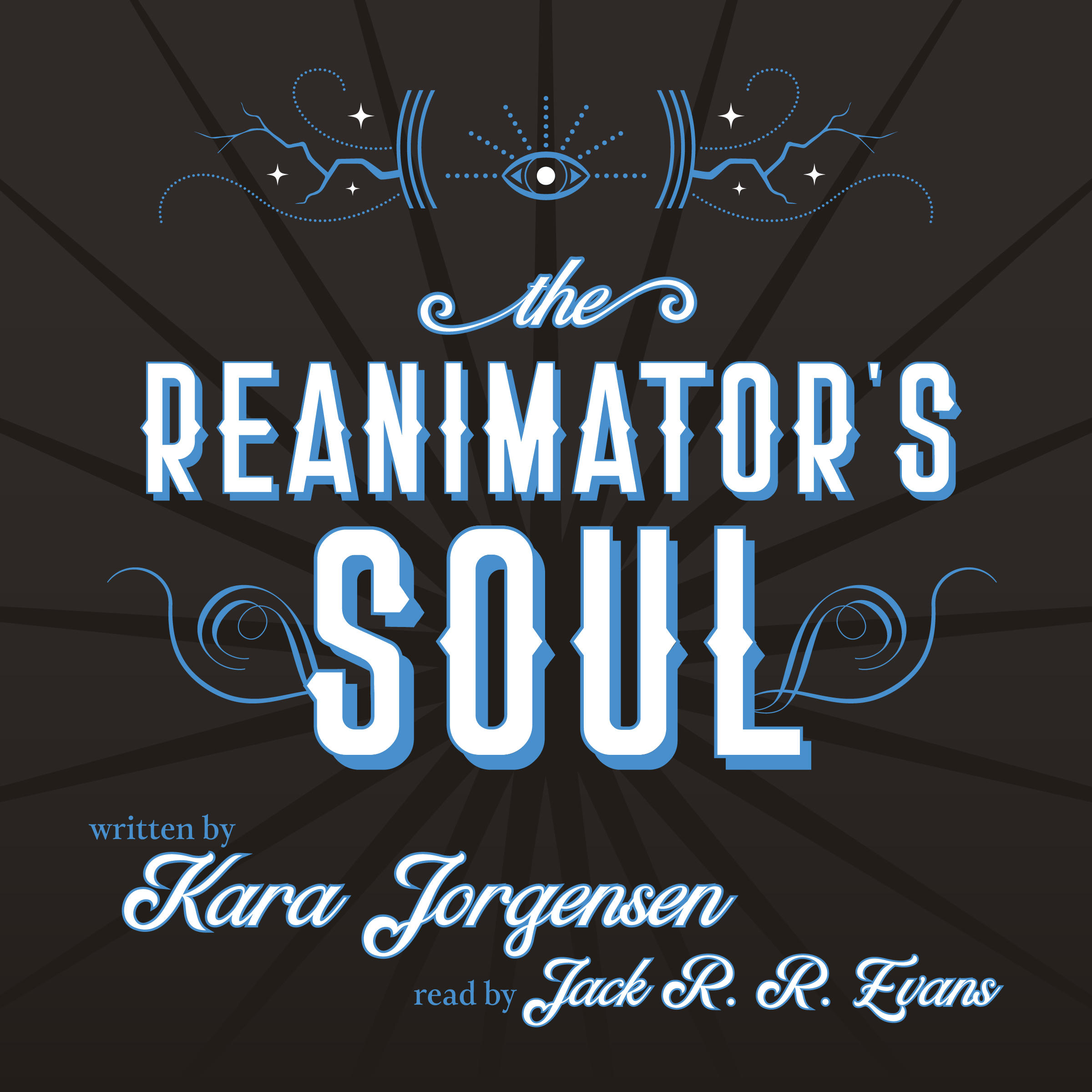
  • Proof and publish the audiobook for The Reanimator’s Soul
  • Look into selling books directly on my website/Etsy
  • Publish 1-2 books

Personal Goals

  • Assemble and use the elliptical I bought months ago (oops)
  • Stay out of other people’s chaos
  • Be more mindful of my mental health and do more to support myself before it gets bad
  • Work more on my office renovation (that has been basically shelved since last summer)
  • Be better about refilling my creative well with things like crafts, movies I enjoy, reading, art, etc.
  • Take a trip to HMart with my partner

Other Goals

  • Read 100 books (which is my usual goal and includes graphic novels, manga, short stories, etc.)
  • Play extensively/finish 2 video games
  • Have 5 2,000+ word writing days
  • Have 2 5,000+ word writing days (I’d really like to work my way up to having large writing days. Out of all my goals, these two are probably the least attainable, but I can try)
  • Keep crafting and/or learn a new craft skill
  • Continue to blog weekly and send out monthly newsletters
  • Commission more art of my characters, as a treat

I’m sure for some people this looks like a lot while for other authors, this is nothing compared to how many book they publish. At this point, I think I can only publish 1-2 books a year, and while I’d like to be able to write more or get ahead of my publication schedule, I am trying to be conservative and/or realistic with my goals. Nothing makes me feel worse than dreaming wildly and completely missing the mark. Overall though, I think this is very doable.

My hope for all of us is that 2024 will bring a very boring, peaceful time. I hope for Palestine to be free, for people to take public health seriously, for all of us to have more public safety nets and prosperity that isn’t at the expense of others.

Personal Life · Writing

My End of 2023 Reflection

I’m not going to lie, I have been putting off writing a yearly review of 2023. By and large, this year has been awesome. My book won awards, I had a record number of preorders on The Reanimator’s Soul, I wrote a whole book, things have gone well– more than well. On the other hand, there were things that happened that upset me and have continued to grate on me all year. My fear is that this reflection will come off as unnecessarily bitter, which I don’t want for you (my readers) or for myself. I don’t want someone else’s assholery to poison my soul and that is something I will be working on as we move into 2024, especially since so many great things happened this year. Without further ado, let’s get into it.

Things That Went Really Well

This year has been awesome, and I want to thank my readers for that. Without you all, I wouldn’t have had nearly as good a year. You all were so enthusiastic about The Reanimator’s Soul‘s release in October, and you all put up The Reanimator’s Heart for a bunch of awards/categories. As someone who is a bit self-deprecating when it comes to awards, I was shocked to see my books repeatedly put up. Seriously, thank you all. The Reanimator’s Heart won third place in BBNYA 2023 (Book Blogger’s Novel of the Year Awards 2023) out of over 250 entries. My books are also up for the Indie Ink Awards in several categories, and The Reanimator’s Heart won “best historical fiction” in the Queer Indie Awards.

The Reanimator’s Heart was also Meet Cute Bookshop’s LGBT romance read for September. Hell, MY BOOK WAS IN A PHYSICAL STORE! That alone just blew my mind. I was also interviewed by Geeks Out about my books/writing. More importantly, my books got more fan art! I love artwork so much, and every time I find out that someone was moved to create something based around my characters I am just over the moon. Few things make me happier than fan art. I also commissioned art from OblivionsDream and really want to do that again in 2024.

I don’t want to go into sales numbers and all the nitty gritty of that, but I had a good year in that regard. I’ve been trying to build on the momentum of The Reanimator’s Heart‘s release with book two, and I think I achieved that. I had the most preorders I have ever had, which I did not expect at all. My sales overall have been strong (for me), and I’m hoping I can keep that up in 2024 as well. I’m also hoping that the various awards and such will sort of keep stoking that fire.

Things That Didn’t Go As Great

I need to get better at writing consistently. It’s something I have struggled with this year. Overall, I wrote quite a bit, but I often feel like my attention is all over the place. Stretching my attention muscles is something I really do want to work on going forward as well as getting into a more consistent writing routine. This year had some chaos that I know messed specifically with this. If I’m mentally doing not great, my writing suffers first, and when my writing isn’t going well, I can’t get mentally balanced. It is a vicious cycle.

When I was called for jury duty in July, my OCD kicked up. This was compounded by some assholerly caused by another author who repeatedly made my life miserable by being a bully to me and others I know. The first instance of this didn’t cause me that much angst back in February because, while angry about how they treated someone else, I muted/blocked them, deleted my reviews of their books, and said good riddance. Unfortunately, several months later (when my OCD was already acting up) they reappeared when they got in a beef with someone else I know. The bullying person somehow got access to conversations where several of us talked about our shared experiences of them being weirdly passive aggressive or being a straight-up bully, and they made our lives miserable. I ended up having to lock my Twitter for a bit because I was getting cryptic replies and ghost rts, despite having the other person blocked everywhere. It was stress I neither needed nor wanted.

Going forward, I need to move on. I know I have been stewing on this because this person hasn’t been negatively impacted at all, despite bullying ND people several times this year that I know of, because they sick their followers on anyone who even mentions they have behaved poorly. If you follow me on social media, you may have heard me mention that my hair fell out from stress; this was why. My brain doesn’t want to leave it alone, but it isn’t healthy to dwell and frankly, calling them out on it will only backfire on me. I have to accept that and focus on maintaining my mental health in 2024 and working on my stress levels. Taking care of my brain is something I need to get better about. My plan in 2024 is to forget they exist and wait til karma catches up with them or they pick a fight with the wrong person.

Things I’m Thankful For

Let’s clear the air of negativity by ending with talking about the people and things I am very thankful for this year.

All of you. Seriously, every one of my readers who have read my books, suggested them to others, left reviews, made art, replied kindly to my posts, you all have made my life so much brighter this year. I wish nothing but the best for you in 2024, whether that’s success, prosperity, peace, healing, I hope you get it.

My partner. My partner has been going on a journey of their own with their gender, mental health, neurodivergence, etc. This year has been tough for both of us, but my partner has been nothing but supportive, kind, and loving, even when dealing with their own stuff. I love them immensely and cannot wait for another year with them.

My author friends who are my social network, my moral support system, and vast wells of knowledge. I couldn’t ask for better peeps to hang with than all of you. I plan to keep cheering you all on in the coming year.

And of course, my students, who make my daily life so much brighter, richer, and sillier.


Overall, this was a really fantastic year, and I just wanted to thank all of you [again] for making it one.

I’ll be posting a goals for 2024 post soon, so stay tuned for more on that in the coming weeks. I hope you all have a safe and happy new year!

Writing

My Books are in the Indie Ink Awards!

This is a semi unscheduled/unplanned post because I just found out that my books The Reanimator’s Heart and The Reanimator’s Soul are both in the Indie Ink Awards and voting has officially opened!

The Reanimator’s Heart was nominated for

  • Best audio narration
  • Best friendship
  • Best setting
  • Wittiest character
  • Writing the Future We Need: LGBTQ+ Representation
  • Writing the Future We Need: Neurodivergent Representation by a Neurodivergent author

The Reanimator’s Soul was nominated for

  • Best friendship
  • Best use of tropes
  • Writing the Future We Need: LGBTQ+ Representation
  • Writing the Future We Need: Mental Health Representation
  • Writing the Future We Need: Neurodivergent Representation by a Neurodivergent author

I am so grateful for everyone who nominated my books. If you’re willing, I would greatly appreciate it if you could visit the site and vote for my books, especially The Reanimator’s Heart in the “Neurodivergent Rep by a Neurodivergent Author” category as the autism rep in my books is very important to me.

To vote, you need to make an account on their site (this is done to avoid cheating/multiple votes or vote spamming). Then you would click into the categories, click the book cover, then scroll to the bottom and hit save. If you don’t hit save, the vote won’t count.

Once again, thank you all so much for nominating my books, and I hope you will vote for The Reanimator’s Heart, especially in the ND category and The Reanimator’s Soul in the mental health rep category! Voting is only open until the end of December

Writing

On Being Your Own Cheerleader

Let me tell you a little secret: no one will be as excited about your project as you are.

This might sound harsh, but ultimately, it’s true, and for newer writers, I think it’s better to learn this early than to learn it the hard way as you give up on projects because no one seems interested. Despite what others may say, writing is, generally, a solitary pursuit. You are the writer. You are the omnipotent god of your fictional world. And while others might be cheering you on, no one should be as excited about your project as you are, and expecting others to be your constant hype men is setting yourself up for failure.

I don’t want to say you can’t rely on others, but frankly, you can’t rely on other people. It isn’t your current or future readers’ responsibility to sustain your interest in a project.

When I first came across this sentiment of “No one seems interested in my work, so why bother,” I was a bit confused because I thought, “Well, the book isn’t out yet. Why would they be excited, especially if you are a new writer?” I forget that people actually show others their work while they’re writing. I tend not to. Not due to being squeamish about showing my unedited work but because I have a don’t bother anyone complex. It also slipped my mind that when people write fanfic, they tend to post things a chapter at a time and build an audience along the way. That tends not to happen with original fiction, unless you’re posting it on something like Wattpad or Ream as you write it, or you share your work in progress with an alpha-reader.

I can see how that would be a rough shift, having that built-in audience from posting your work on a piece-by-piece basis to having no one knowing what you’re working on or being excited about it until people read it and start to spread the word. No matter what though, if you abandon a project because your hypothetical audience isn’t hyped for it, you’re shooting yourself in the foot. I would definitely take a second and think if your knee-jerk reaction is self-sabotage to avoid feeling like a failure if that book isn’t popular.

I’ll let you in on another secret, first books rarely sell well. At least not until you have several other books out.

You need to find some sort of motivation to keep you going, whether it’s for the love of the story or for money, you need something that’s wholly you to keep writing when things get hard and it seems like no one cares. Above all, I care about my characters. I love them and want to see what happens to them, and my first audience member is me. If I like them, I assume others will too, but you’ll have to market the book to people like you in order to find those other readers. Look at what other people in your genre (or other writers you enjoy who are similar to you) are doing and try to emulate that when marketing your own work. Don’t go rogue with that first book. Don’t think you’re the exception. Don’t assume you’re a failure if book one is sort of a flop because that’s normal, and there’s a good chance it’ll get better.

As I write this, the thing I regret is that I can’t make you care about your work or about your characters enough to maintain that level of “screw you” needed to make art. Every artist who finishes something has a healthy (or unhealthy) amount of screw you in their system. It’s the little voice that pops up to tell off the world when someone devalues the humanities or says, “who would read that?” ME, that’s who. Over the years, I feel like my screw you voice sounds more and more like Anthony Bourdain, but I’m okay with that. When I need to summon the strength to tell my brain or the outside world to f-off because my work matters, I channel the spirit of a disgruntled, slightly world-weary chef, and it does the trick.

Whatever works to help stoke your artist ego to get your art done, do it. It may seem silly or pointless, but trust me, it isn’t. In the darker times when things aren’t going smoothly or you feel like no one gives a shit, that inner voice will get you through. In the end, you need to be your own cheerleader or disgruntled chef because no one else will.