Writer Rambles

Writer Ramble #1

I apologize in advance if this post has typos as I am writing it with what I think is the beginnings of a migraine, and my ability to coherently string together sentences is always what goes first.

I’m starting a new blog post type that I’m dubbing a writer ramble. This is going to be a sort of catch-all for what’s going on, author updates, things on my mind, etc. Basically, things that are not long enough by themselves to constitute a full blog post on their own.

The Indie Ink Awards

On Sunday, it was the awards ceremony for this year’s Indie Ink Awards, and I found out that The Reanimator’s Remains (TRM #3) won in the following categories: LGBTQ+ Representation, Mental Health Representation, and Neurodivergent Representation.

I am so thankful for the readers who nominated it and who voted in the opening round and for the judges that read all of the books for the second round. I am honored and grateful for any and all attention my books get, and in a world where people like RFK Jr. are demonizing autistic people, this feels like vindication for myself and for my readers who love Oliver and Felipe.

A Preorder Coming Soon

The preorder for The Reanimator’s Fate (TRM #4) will be up for preorder soon. I have been putting off setting up the preorder because I need to readjust the blurb a bit, but I’m thinking the release date will be January 27th, 2026. With the semester starting and there being personal life chaos, it has been hard to focus on fixing it. I swear, blurbs take far more brain power than actual writing.

I know it’s a ways off, but I think this book will be long and the wait will be worth it. I want to give Oliver and Felipe the best send-off I can. There will also be an epilogue #4.5 story published after, and at some point in 2026, I plan to publish a collection of the between short stories along with a few new short stories sprinkled in.

Personal Life Rambles

I have been grappling with my “the world is hateful and on fire” anxiety lately, which I think is understandable. At the same time, I think the internet is a giant part of that because it’s like negativity concentrate when trolls and awful people bombard you and get shared widely across your timeline. In reality, the world is not nearly as on fire as it appears online. It’s still bad, but the pace of the horrors is slower. I’ve been trying to be better about not staring directly into the void for too long, so I don’t utterly fry myself. I still want to be in the know and able to share resources and such, so I’m trying to look away from the chaos more often.

The nice thing is that despite all the transphobia in the world, I am watching my partner bloom into her true self, and I am so glad that I get to be along for the ride with her. I have thrown myself into being the most helpful and supportive partner I can as she feels out what she likes and grows into the person she sees in her mind. I’m so proud of her, and it gives me hope that one day I can find my optimal gender expression. I have been finding it difficult to triangulate gender vs autistic clothing tolerance vs cost of clothes. Being autistic and nonbinary makes everything feel like Goldilocks going this is too little, this is too much until you hate shopping for clothes. I know together we’ll figure things out and grow closer as we stumble through the same journey, even if the paths are slightly different.

Is the world on fire? Yes, but there are good things in the world that make life worth living and make every day so much more pleasant. Part of fascism is sucking the joy from everything, so take it where you can get it and lean into what makes you happiest in these times.
Personal Life

On False Crabs and Real People

Right now, in the US and UK especially there is a ton of transphobia, and every time I hear cis people being weird about trans people, I think of king crabs. Yes, crabs. Now, bear with me because this will make sense.

So you know king crabs, right? Giant crab, long legs, lives in very cold water up north for the most part, you find them in seafood boil bags, very expensive and tasty, a star of Deadliest Catch. Well, did you know that king crabs aren’t technically crabs?

Now, the thing with crabs is that they are an optimal life form: the perfect shape, the right amount of agile and little guy, can fit into many ecological niches while being able to survive well. Over eons, you had crabs evolve, but you also had convergent evolution where other things also evolved into crabs. If you look at crabs closer, you will notice that there are different infraorders in regards to their classification. You have true crabs, which are infraorder brachyura and are the original crab lineage. Then, you have false crabs, which belong in the infraorder anomura and have evolved to look and be like crabs.

Can the general public tell a true crab from a false crab? No. If it has the right amount of legs, looks crab shaped, and acts like a crab, it is for all intents and purposes, a crab.

People don’t go to a seafood restaurant and get upset because king crab is listed in the selections of crabs or in the crab tank with the other crabs when it’s a false crab because it is identified as a crab. If you went into a seafood market and started checking to see if the crabs were true crabs or false crabs by flipping them over and checking their abdomens for any remnants of the tail false crabs have, people would think there was something wrong with you and kick you out. That’s basically how transphobes and terfs behave. They just heard about false crabs, so now, they need to disturb everyone by checking all the crabs in the tank under the guise of safety when all the crabs were fine mingling together. The panic over true and false is made up.

The only people who really care about the difference between true crabs and false crabs are scientists who are looking at very specific parameters in their studies, and this is how it should be with cis and trans people. Medical professionals or scientists who study differences in hormones or anatomy, probably need to know, but for the vast majority of people, there is no difference and it isn’t their business. And once hormones/hormone replacement therapy gets involved and levels are stable for a while, there is very little difference between binary trans people and cis people.

And even without hormones, if a person decides to change their clothes and name to socially transition, then respect them; it isn’t hard. If you would not pop the shell off a hermit crab and declare to everyone that isn’t a true crab and shouldn’t be called a hermit crab or allowed a shell, then don’t call out people for being trans in a negative way. Yes, hermit crabs, one of the most famous crabs, is a false crab. It has a tail inside its shell.

Horseshoe crabs do not pass very well as crabs. They are shaped like a toilet seat and have a long tail and look nothing like a crab apart from their legs, and yet we still call them crabs without any fuss. It truly isn’t hard to respect what something or someone is called.

The thing with crabs is that creatures evolve into them because it is beneficial to their survival and being trans is the same way. People transition because it is the thing that will keep them alive. It is beneficial to their soul and mental and physical health. Just because they didn’t start out that way doesn’t mean it isn’t better for them to change and become something new.

If someone says they are a woman or a man or nonbinary or anything in between, respect it and acknowledge it because if you can manage to call anything remotely crab-shaped a crab, then congrats, you can respect a trans person’s gender and identity no matter how well they perform their gender.

Personal Life

Trans People Need You to Step Up

We start the 47th president’s term with a ban on transgender student athletes passing the House of Representatives and heading for the senate, so I am imploring you today to step up for the trans people in your life and push back against anti-trans bills now, for the next four years, and beyond.

You might think, “Oh, well, it’s just about student athletes.” Yes, but children are our most vulnerable demographic, and if they can make the world so hostile that the next generation of trans kids goes back into the closet, they are truly aiming for ALL trans people. It starts with “protect the girls, protect the children,” and I have to ask myself, from what? Trans kids are not a danger to cis kids. Trans girls playing softball or soccer are not taking a spot from a cis girl or going to molest anyone. Their cis male coaches are much more likely to do that statistically, and trust me when I say, absolutely no one is pretending to be trans to get close to cis kids to do them harm. The risk of harm to the trans person far outweighs anything else. Trans people are four times more likely to be the victim of a violent crime than cis people.

This leads to the very high suicide rate among trans people. Some in the anti-trans movement will ascribe that to trans people being mentally ill, but much like autistic people, it isn’t the marginalization itself that makes them suicidal, it’s the societal conditions in which we live. Trans people have a harder time finding and keeping work, they are more likely to be cast out by their families than cis people, and the conservative side of our nation does everything in its power to make our lives harder, whether that’s through taking away gender affirming care, making name and gender marker changes near impossible, or by creating a social climate that is openly hostile to trans people.

A lot of push back comes from the fear of children being “mutilated,” but who knows your heart better than you? You can be the most seemingly loving parent, but your child still knows themselves better than you do, and I think that scares a lot of people. I grew up not having a word for how I felt, but I’m still nonbinary, I’m still trans. I grew up, found words for it, and had to live with the regret that I may never be the person I could have been if gender-affirming care had been available to me as a teenager. Most prepubescent kids just want you to call them by the correct name and wear the clothes they want. They’re not getting surgery or hormones. They just want autonomy and to be accepted for who they are. When they hit puberty, they sometimes get hormone blockers to stave off those permanent changes until they are old enough to decide they are sure in their decision to transition. I hit puberty at 11, hard and fast, and it completely screwed with my mental health and my perception of who I was. Not every trans person gets dysphoria (the gender version of dysmorphia), but I can tell you that it is hell on earth to feel like your body never fits right. You eventually stop looking in the mirror because the you in your head is never there, and the outside world perceives you in a way that goes against your inner identity.

Teenagers (16 and up, most over 18) who take hormone replacement therapy to have their bodies align with their inner identity have far better mental health and well-being outcomes than those who don’t get that sort of care. A trans kid allowed to transition is a happier, more well-adjusted child and a future adult with a better outlook. Hormone replacement therapy is safe and well-studied. This isn’t new technology, and there’s no reason to force a child to go through a puberty they didn’t want just to have them go through surgeries later when they are out of their parents’ control. Because that is what happens. That child/adult has always been trans. They just have to work far harder and go through far more pain to become the person they have always been.

Ultimately, that is the purpose of these sorts of laws: to cause pain. Conservatives and fascists seek to exert hierarchy and control. A trans person changing their identity disrupts that hierarchy. A woman becoming a man means having a usurper in their midst, and a man becoming a woman disrupts the belief that women are lesser. And a nonbinary person choosing to step out of the gender hierarchy all together is akin to anarchy.

One of the first places the Nazis went after when they came into power was Magnus Hirschfeld’s Institut für Sexualwissenschaft, or the Institute for Sexual Science, was because it supported gay and trans people. It was a place where trans people could get hormones and gender affirming surgeries. The Nazis had to clamp down on this because it disrupted the social order, and those who did were labeled as degenerates. They burned Hirshfeld’s research, set transgender research back for decades, and put many queer and trans people in concentration camps. Even if you don’t understand why someone would want to change genders, I have to ask if you really want to support something the Nazis thought was a great idea.

What I am asking you to do is to be vocal in your support of trans people. Call those out who want to harass trans people and anyone who doesn’t fit the gender mold because ultimately cis Black girls and tomboys are the ones who will face the most backlash and scrutiny under these anti-trans laws because they aren’t really about trans people, they’re about control and enforcing ever shifting gender norms.

Please reach out to your senators and reps (federal and state) and tell them to support transgender people. If you’re able, call your senators and tell them not to support SB9. You can see all the anti-trans bills that are filtering through congress here. If you aren’t comfortable calling your reps, you can send an email to all of your senators and your house rep through democracy.io

Your support is needed now more than ever, so I hope you will stand up for people like me and my partner, and make the world a better place for everyone, regardless of gender.

Personal Life · Writing

My End of 2024 Reflection

Let me tell you, this year was SO MUCH better than last year. 2023 was horrendous, and while 2024 has not been great on a national scale, on a personal level it has been a breath of fresh air.

The word I had chosen for my word of the year for 2024 was “navigate” because I felt like I had been tossed into turbulent waters due to the fact that I was being harassed and besmirched by Freydis Moon/Taylor Barton, and I couldn’t tell anyone. They were a dark cloud looming over anything good that happened to me, and I was constantly afraid that any time I got attention, they would pounce on me. This meant every book release or awards announcement was riddled with anxiety since they did this to other authors they didn’t like in the past. In late April when they were finally exposed by Elle Porter, it felt like a massive weight had been lifted off my shoulders. The thing that had been too afraid to discuss publicly was finally out in the open, and FM/TB could no longer hurt me. I spent the rest of April and half of May vibrating with equal parts relief and anxiety, waiting for the other shoe to drop. My writing slowed to a crawl at the fear of retaliation and while processing all that had happened, but it was worth it. The only good thing to come out of FM’s assholery is that I have picked up a few new friends who experienced the same thing, and I’ve grown closer to another author I have a lot in common because of it.

On the writing front, it was actually a rather good year. Even with the wasted month, I wrote, edited, and published, “An Unexpected Question” (TRM #2.5), The Reanimator’s Remains (TRM #3), and started writing “An Unexpected Evening” (TRM #3.5). There’s always part of me that wished I wrote more, especially since that month off set me back and gave me a lot of stress in October when it was close to release day, but overall, I’m very happy with everything I published this year. The Reanimator’s Heart (TRM #1) and The Reanimator’s Soul (TRM #2) were both in the 2023 Indie Ink Awards, and TRS won for mental health representation, and book 3 is nominated in a bunch of categories for the 2024 Indie Ink Awards.

This year, I was invited to be on a few queer podcasts, I blurbed a friend’s book, and I got to work with some great people, like Jack R. R. Evans, who narrates my audiobooks, and Crowglass Design, who creates the covers for my books. I can’t thank enough my author friends for all the support they provided during all of this (and before and after). I also can’t forget my readers, who made the launch of The Reanimator’s Remains so wonderful. Without you all, there would be no books, or at least no audience for my books, and your support means so much to me. Seriously though, the reviews, shout outs about my book on social media, and the little things daily mean the world to me.

In my personal life, things have been going very well. My partner and I have both been on our own gender journeys, where we’ve been trying to figure out what brings us gender euphoria. During this process, we’ve become even closer. We both still struggle with our mental health and neurodivergence at time (are really ND if you don’t get in your own way regularly? lol), but I do feel like I’ve finally found a path toward better physical health. I have started lifting weights, and it’s been interesting to see how getting stronger has intertwined with my own version of nonbinary-ness.

I’m going to write more about my goals for 2025 in a future post, but with the way this year ended, I’m going into 2025 with far more hope than I did going into 2024. More than anything, I hope you all have a fantastic new year filled with good health, fulfilling projects, safe shores, and supportive people who love you.

Personal Life

Gender on my Terms

If you’ve been following me for any length of time, you know I’m nonbinary. Gender makes little sense to me as a social construct because, to me, people are people, but the moment I’m perceived as a woman (along with all the assumptions that come with that), I understand how heavily others rely on gender and how much I don’t like it. I would feel like I was in drag against my will when I was forced to dress femininely growing up. Dysphoria hits me hard the moment I have to wear a dress or skirt or put my hair a certain way.

The problem is that my gender is like Goldilocks. Feminine things set off my dysphoria hard, but if I go too far into masculinity, my brain rebels as well. I don’t want facial or body hair beyond what I already have or a deeper masculine voice. I tend to just say I’m agender because I would like to put gender as a social construct in the trash like moldy leftovers. Still, I find myself on the masc side but lightly. Can fop be a gender? I want to wear saturated colors, wear my hair long but pulled back, and occasionally indulge in frothy lace. Wearing a frock coat and breeches like Anne Hathaway in Twelfth Night is gender goals, even now.

As someone who struggles with changes, I have sort of eased into being a little more masc. This has mostly been because gender is complicated, and as I mentioned earlier, I get dysphoria in either direction. I also don’t want to take hormones or have surgery at this point. Instead, I’ve been stepping back and started thinking, what do you already have or do that’s a little masc that you want to make more obvious?

I have always thought my very square, straight shoulders look masculine, so I decided that I would work out my arms and shoulders to make them a little more sturdy. I do not want to be swole as the kids say, but I would like to be stronger and have more defined arms. For the past few weeks, I’ve been working out my arms, back, and shoulders nearly every day, and I’ve been enjoying it. In the past, I’ve struggled to exercise due to my asthma reacting very poorly to cardio despite being on stronger meds, but weight lifting doesn’t bother my asthma or inflammatory issues at all. I’m already seeing a little progress, which has been gratifying. The workouts should also help to strengthen my muscles and help control the hypermobility in my shoulders. In the past, I’ve shied away from other exercise because it’s mostly about weight loss or looking more feminine, which I’m not interested in.

For a while, I had been toying with buying a compression bra or binder to squash down my chest a bit. I put it off because a “real” binder might compress my ribs too much, and sometimes, due to hypermobility, they slide out of place, which is very painful. I ended up buying a compression bra from a trans-affirming company, and it has been really nice. I’ve never really liked my chest because it’s oversized, and when people register its presence, they see it as feminine, which I don’t really want. Squashing them down but not completely removing them has been enough to make me happy. It also makes working out my arms, back, and shoulders much easier. While these changes might seem small, they have made me very happy.

When I think of what my gender means to me or what it feels like, it’s masculine softness. I tend to think of characters like Stede Bonnet from Our Flag Means Death or Lestat from Anne Rice’s Vampire Chronicles or even Zorro’s brother from Zorro the Gay Blade. I often joke that my gender is “weird little guy” like Gomez Addams or basically any character Nathan Lane has ever played, which amounts to queer and slightly silly. My gender is tender and loving with an edge of morbidity and strangeness (and probably a few startled yelp-screams as they are the cry of the weird little guy).

My partner is also embarking on a gender journey that will probably look different from mine, and I’m very grateful to be along for the ride to support them along the way. As we get closer to the new administration taking over, I want everyone to remember that bodily autonomy extended to gender expression. We should all be allowed to be the people we want to be or feel we are without government interference, and that includes children. I had dysphoria as a tween, even if I didn’t have the words for it, and if I had been able, I would have loved to have gotten hormone blockers to avoid the dysphoria that came with early puberty. I guess I’ll just end this by saying trans rights are human rights, and children deserve the same right to live as themselves as I and my partner do. Please bug your reps and senators to not throw trans people under the bus.

Personal Life

How Being Nonbinary Helped My Dysphoria

For most of my life, I have had a complicated relationship with my body.

The first thing to keep in mind is that I had severe eczema over most of my body until about 2 years ago when I started taking a biologic and the eczema was beaten back to nearly nothing. I mention the eczema in a post about being nonbinary because I want to be clear that a lot of my covering up with hoodies and long pants was because people are weird about rashes. They will give you dirty looks, stare at open sores, and generally be rude. On top of that, eczema burns like a bitch when it’s exposed to the air or the skin touches other skin, so covering the folds of my arms and legs helped to mitigate that constant pain. Due to the eczema, I covered up most of my body, and people often took that for being uncomfortable with my body. I was but not in the way they thought.

My build is what some people would call sturdy. I have muscle on my calves and straight, strong shoulders. Neither fat nor thin, just in the middle but sturdy enough and tall enough (though still average) that I am certainly not petite or slight. My chest is disproportionately large, but I’m not really curvy either. Before I realized I was nonbinary, I didn’t always like my body. A lot of this has to do with growing up in the late 90s and early 00s when the in look for women was thin, almost prepubescent in terms of build, and wearing 85 layers of tight clothing. The alternative was big boobed bimbo. No shade to the bimbos of the world, I love Dolly and Elvira, but the thought of people seeing me that way because my genes decided to grace me with a disproportionate amount of fat on my chest was alarming to say the least.

At that age, I couldn’t articulate how I felt, but the fact that I couldn’t control how people perceived me terrified me. I hate that people saw me as a woman and sexualized me the moment I wore feminine clothing. I already didn’t like feminine clothing. That had been an ongoing war with my mother since I was in late elementary school. I hated dresses, hated skirts, and only wore them when my mom insisted I had to dress up. Around 10, I discovered anime tshirts and cargo shorts in the boys section of Target and let out a sigh of relief. There were other options than the booty shorts or feminine capris the girls section had to offer. T-shirts and cargo shorts hid the things that made me uncomfortable. Puberty had been a special sort of hell as a neurodivergent person and as someone who, unbeknownst to them, was experiencing dysphoria.

By the time I got to high school, the thought of putting on feminine clothing filled me with a special kind of dread. Every time I had to wear something feminine for a school event or a holiday, it felt like I was wearing an incredibly ugly costume. You know the scene in Beauty and the Beast when Beast is in the tub and they give him that ridiculous haircut and he just deadpan says that he looks stupid? That’s how I felt. This was compounded upon by the ease of my cousins’ transition into adolescence where they (seemed) to happily wear makeup, feminine clothing, played with their hair. I constantly felt like I was doing a really bad job pretending to be a woman. The label chafed and sagged, like I filled out all the wrong places. At some point, I stopped caring. I was bad at womanhood, so be it. I kept my hair pulled back, wore t-shirts, jeans, and hoodies/pullovers while giving zero shits, but the fact that people still perceived me as a woman nagged at me.

It wasn’t until I was in graduate school (so around 24-ish?), I stumbled upon the term nonbinary, and it was like everything clicked. In the past, I had debated if I was a trans man. I saw Chaz Bono on Dancing with the Stars when I was in college, and while I felt not-feminine, I didn’t think I felt that masculine. I was caught in a weird middle ground between masculine and feminine, none of which particularly appealed to me. When I finally understood what nonbinary people were and that they existed, it was like oh, so there’s a word for all these feelings I’ve had for years. All those moments of panic and revulsion made sense. They were dysphoria. It also helped explain why some things that were seen as feminine by others didn’t bother me.

I didn’t hate my body, per se. I hate how others perceived my body. That it was simultaneously seen as feminine yet not feminine enough because I wasn’t petite, because I had strong shoulders and legs, because I didn’t like to wear makeup or wear dresses. None of these things are inherently masculine or feminine, but society arbitrarily ascribes gender to them (aka don’t @ me for this, you know what I mean). Suddenly, my body felt less wrong. I was never a woman. I have always been nonbinary but didn’t have the word for the feelings. My strong body mixed with my long hair, chest, and generally, neutral clothing felt right.

This mix of hard and soft feels right to me and has settled the war between my body and mind substantially. I still panic at the thought of clothing that is too gendered in either direction (or what my brain deems gendered), but my dysphoria has subsided. The freedom to buy clothes I want and to say, “F it, I’m buying from the men’s department,” without caring about other people’s judgment feels right. The more I branch out, the happier I am, and it’s been nice to see my partner exploring more feminine options (often my cast-offs) and loving how he looks.

Kinship and Kindness · Writing

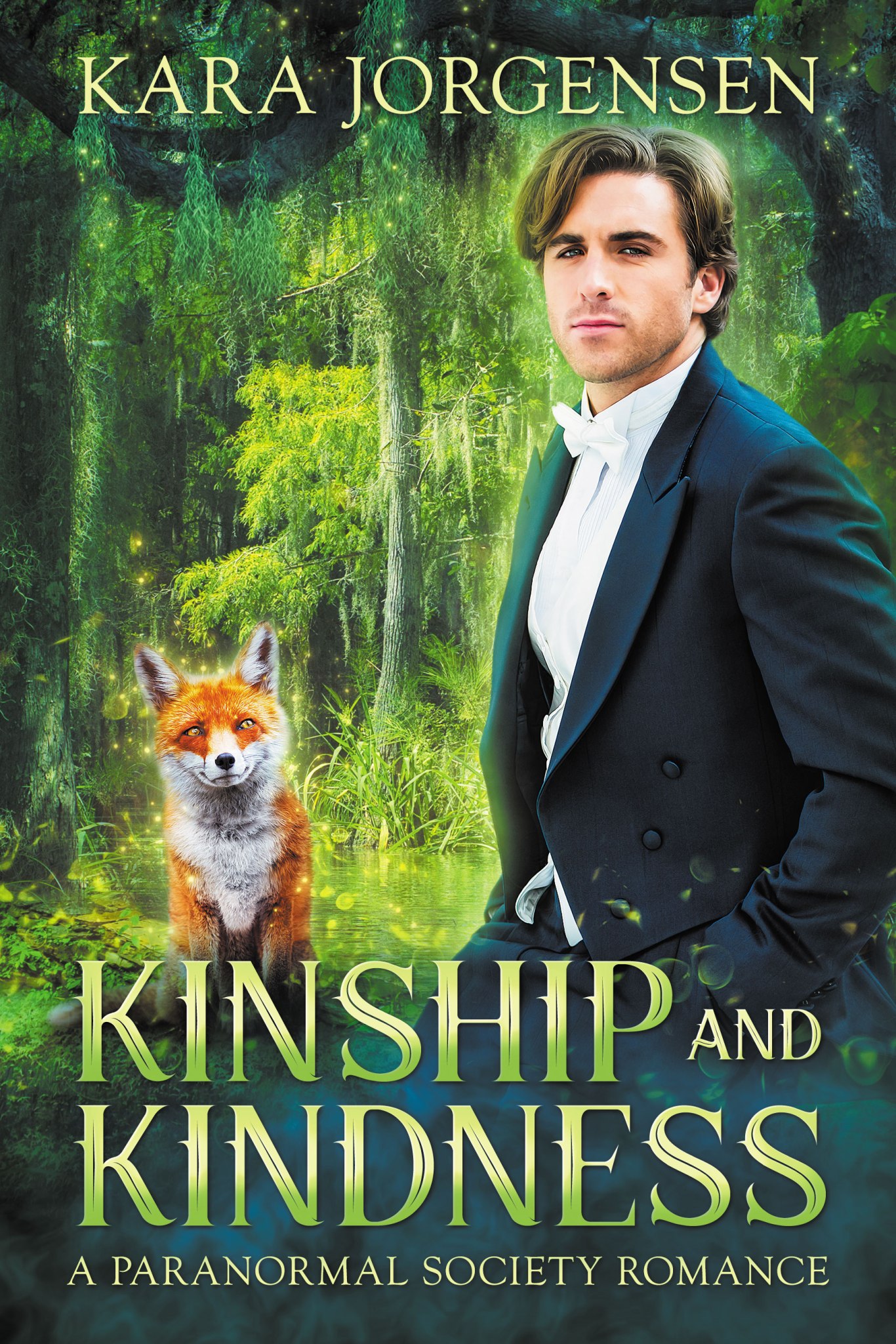
Cover Reveal: Kinship and Kindness

I know I’ve been going off the grid on here, but there’s a good reason (besides work and life), I’ve been working on a new book: Kinship and Kindness.

Kinship and Kindness is a bit of a spin-off from the Ingenious Mechanical Devices series. It follows Theo Bisclavret, the name might sound familiar because he was mentioned in The Wolf Witch. He is Silas Bisclavret’s son and Wesley’s brother.

The story continues where The Wolf Witch left off, but it’s set in Louisiana and kicks off a new series about paranormal society in America. It’s a m/m romance between a cis man and a trans man, and yes, that is very possible historically (see my previous post about queer historical-romance). Here is the blurb:

Bennett Reynard needs one thing: to speak to the Rougarou about starting a union for shifters in New York City before the delegation arrives. When his dirigible finally lands in Louisiana, he finds the Rougarou is gone and in his stead is his handsome son, Theo, who seems to care for everyone but himself. Hoping he can still petition the Rougarou, Bennett stays only to find he is growing dangerously close to Theo Bisclavret.
Theo Bisclavret thought he had finally come to terms with never being able to take his father’s place as the Rougarou, but with his father stuck in England and a delegation of werewolves arriving in town, Theo’s quiet life is thrown into chaos as he and his sister take over his duties. Assuming his father’s place has salted old wounds, but when a stranger arrives offering to help, Theo knows he can’t say no, even if Mr. Reynard makes him long for things he had sworn off years ago.
As rivals arrive to challenge Theo for power and destroy the life Bennett has built, they know they must face their greatest fears or risk losing all they have fought for. With secrets threatening to topple their worlds, can Theo and Bennett let down their walls before it’s too late?

As promised, here is the cover, done by the wonderful Lou Harper.

Kinship and Kindness

If you’re interested, you can pre-order Kinship and Kindness here. I plan on setting up the pre-order to other retailers soon, but I need to work out the logistics first.

In regards to the publication date, it’s currently set on July 1st, but I’m hoping to have it ready by early May. When you set-up a pre-order you cannot push it back if things so south, so I’ve left myself wiggle room and will move the date up (and let everyone know when I do).

Stay tuned because I will be posting an excerpt as we grow closer to publication.

Book Reviews

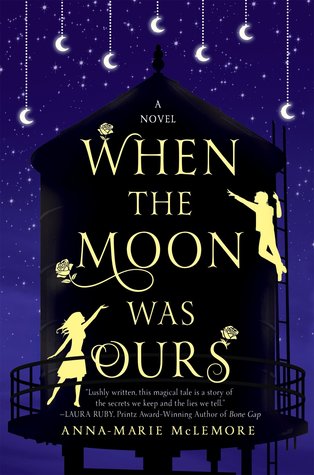
Reading Rec: When the Moon Was Ours

In When the Moon Was Ours, Anna-Marie McLemore once again casts us under her spell and fills our world with pumpkins and roses.

wtmwo

Miel met Sam the night she magically appeared out of the the town’s fallen water tower. As children, they were inseparable, Honey and Moon, and while Sam hung painted moons all over town to make Miel happy and keep the nightmares of the other children away, Miel became known as the girl who grew roses from her wrist. Every few days I new rose would burst forth, but soon, the town’s it-girls, the Bonner Sisters, believe they need Miel’s roses to keep their powers of enchantment and romance and they will use all of Miel and Sam’s secrets against her to get them.

First off, if you aren’t new to this blog, you know I love Anna-Marie McLemore’s work, so keep that in mind as you read this review.

Now that fall is upon us, When the Moon Was Ours becomes extra atmospheric, evoking all of the hallmarks of fall with bright moons, pumpkins, leaves, and shades of orange. The scenery of this story is lush in detail and magic without becoming overwhelming or too strange. With all of McLemore’s books, you need to be open to magic and strange things happening in the normal world. It’s a hallmark of magical realism I know some have a hard time dealing with. My advice is: magic happens, so don’t question it, just enjoy it.

One of the things I loved about this story is the different ways magic is explored. We have Miel’s caretaker, Aracely, who helps to cure love sickness using traditional means like eggs, herbs, flowers, etc. Then, there’s Sam’s mother who has the uncanny ability to get children to do their lessons and practice their instruments even when they give others a hard time. Sam makes his beautiful moons while Miel grows flowers from her wrist and the four Bonner Sisters ensnare lovers as easily as breathing. Each character has a different magical quality and while some are more overt than others, it’s obvious that each has more going on than meets the eye. This leads to a discussion of who is a considered a bruja. Bruja has a bit of a different connotation than simply saying someone is magical; it’s typically seen as more of an insult or something to be feared. Behind their backs, the Bonner Sisters are referred to as brujas while Miel and Aracely hear it to their faces despite how many people come to Aracely for help with their love lives. The discussion of race is fairly subtle but certainly there.

While this is a story of magic, it is certainly one of identity as well. Miel struggles to remember who she is before she appeared in the water tower while the Bonner Sisters deal with losing their identity after their oldest sister leaves and returns a different person. It is also the story of Sam’s identity. Sam is transgender, but he hasn’t quite come to accept himself and his identity yet, despite identifying as a boy for the majority of his life. Sam fears what it means for him to fully accept that he is a boy/man and not a bacha posh, a Pakistani tradition where a family with no sons dresses a daughter as a boy and treats her as such until she reaches adulthood and returns to being a woman. The arc about coming to terms with a shifting identity was handled incredibly well and McLemore states that the essence of Sam’s character was pulled from her husband’s experiences coming to terms with his identity. The realism behind Sam’s struggles are obvious and well done.

Overall, When the Moon Was Ours is a beautiful story about love and identity wrapped in a blanket of moonlight and pumpkins. If you’re looking for a seasonal tale to sink into for fall, I highly recommend it. You can grab a copy here.

Book Reviews

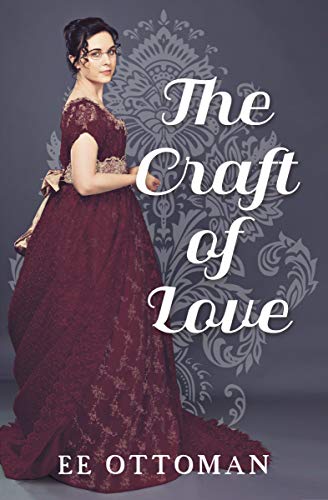
Reading Rec: The Craft of Love

The Craft of Love is a sweet novella featuring two artisans falling for each other in early Victorian New York City.

love of craft

When Benjamin Lewis stumbled across some of his mother’s old sewing projects, it dredges up painful memories from his past. Unable to part with the old dresses, he decides to have them transformed into something new: a quilt. Luckily, his lace-making sister knows just the seamstress for the job, Remembrance Quincy. Remembrance is a woman of strong convictions and even stronger skills. At her studio, she and her girls produce pieces for New York’s upper class, but something about the soft-spoken Mr. Lewis catches her attention. He proposes a trade: the quilt from his mother’s dresses for a silver teapot worked by his hands. Soon it’s silver for fabric and craftsman for craftswoman.

Sometimes I really crave a drama-free romance, and The Craft of Love hit the spot. Remembrance is a strong, confident woman who prides herself on her skills and her principles. She’s an abolitionist who practices what she preaches by staying away from goods produced by slaves, like cotton and sugar, and within her own community she tries to give women a voice. Mr. Lewis is also more than what he seems. Some of you may have been curious why I have a male-female romance on my blog when I mostly read LGBT+ romance. Well, Mr. Lewis is transgender, which is revealed early on and isn’t made a big deal over. This is incredibly refreshing as there’s no traumatic reveal or obsessing over the character’s sex. It’s woven in with skill and no muss, which I think speaks to the fact that Ottoman is an own-voice writer.

What I absolutely loved about this novella is how much of early nineteenth century New York City is brought into it. We hear about William Cullen Bryant doing a poetry reading, the New York Botanical Society (and how the city couldn’t care for their plants), and Sunday promenades in the park. It makes for a lush yet familiar atmosphere, especially for someone living in the Tri-State Area like myself.

The other highlight of this book is how Ottoman focuses on the characters’ crafts. The same amount of gravity is given to quilts as to silver-working. Remembrance is seen as someone who is incredibly skilled even if her works bear no maker’s mark or end up in a museum in the twenty-first century with the name anonymous where her name should be. It speaks to a changing tide in how women’s handicrafts are now being taken more seriously and are starting to get the scholarship they deserve. This book took me back to the American Wing of the Metropolitan Museum where silver tankards sit in display cases in the sun, maker’s mark highlighted and explained on a card while sewing and quilts are indoors within their period rooms behind glass, easily missed as one passes down the hall to the pieces of furniture and grand portraits. It’s easy to miss the skill and time needed to make a piece when we have been taught to ignore that craftsmanship. The same can be said for Benjamin’s pieces, which are domestic as well. Do we ever stop and give a teapot its due? Probably not, but after reading The Craft of Love, I know I shall pay more attention.

The Craft of Love comes out Friday, so grab a copy now and have it delivered to your Kindle.

Writing

Why I Write LGBT Characters

lgbt flag

Because we still refer to them as LGBT characters.

They’re still a novelty.  We get all excited (or angered, depending on your political/religious stance) when a character in a TV show turns out to be gay or bisexual.  Let’s say, being attracted to the same gender is a recessive trait (yes, I do believe it is genetic), then statistically, gay or bisexual people should make up about a quarter of the population, yet in the media, they make up only between 1-5% of the characters in shows and movies.  On top of that, in certain aspects of the media, they are wholly absent.  Do you see the disparity between population and representation? Continue reading “Why I Write LGBT Characters”