I know this isn’t my usual fare as a queer author, but when we decided that Katie would need radiation therapy to treat the remaining cancer on her nose, it was so hard to find firsthand experiences of what it was like. It’s hard to make an educated decision on how best to treat your pet when most of the posts are other people asking for experiences and randos fearmongering or spreading misinformation. This post is my attempt to help other pet owners decide whether radiation therapy is best for their pet by reading about the experience of another dog going through the same thing.
Some Background
Katie is a ten year old dachshund mix who has had no major health issues in all the years we have had her. Last year, we noticed a bump growing on the side of her nose. At first, we thought it was from allergies or a cyst, but when we finally went to the vet and had a fine needle aspiration done, it was determined that it was soft tissue sarcoma, which is a type of cancer that arises from connective tissue. Our vet recommended we go to Garden State Veterinary Specialists (we went to their offices in Woodbridge and Eatontown- both were awesome). A surgeon checked Katie out, ran blood work, and did an x-ray to confirm she was a good candidate for surgery. The surgeon was able to remove 98% of the tumor by her estimate (due to the location on her nose, she couldn’t get clear margins), and she sent it off to get biopsied. The biopsy showed that it was a low grade myxosarcoma (arising from fibroblasts if you’re into histology), which is good because low grade means that it divides slow and has a lower chance of spreading throughout the body. Katie recovered very well from the surgery and ended up with a scar across her nose as the only proof that it happened. We immediately got in contact with the oncologist at GSVS, and after reviewing Katie’s records, she said that we could either take a wait and see approach (and it had a decent chance of coming back since it wasn’t all removed) or we could do radiation treatments in order to kill whatever cancer cells remained. We decided to treat her tumor with radiation.
Radiation- the Costs
The biggest problem with radiation treatments is the cost. It was about $13,000 all together, with it being about $2,500 for the CT scan before treatment and about $10,000 for the radiation treatments themselves. My mom and I split the cost of her treatments, and I made a GoFundMe to help pay for it since it took a very large chunk out of my savings and because I don’t make a whole lot. The cost above did not include the surgery either, which was about $2,500 as well. We paid for about 75% of it up front and the last 25% (which included the costs of medications she needed along the way) on the day of her final treatment. The radiation cost covers daily vet checks, anesthesia and monitoring, and the radiation itself for 18 days. Many vets will also let you pay for treatments weekly or daily if that is easier for you than paying in big chunks.
The CT Scan
The CT scan was done about a week or two after Katie’s surgery. They knock the dogs out for this in order to get good imaging of the place where they plan to do the radiation. The doctor then runs that scan through a program that maps out the radiation treatments for the next 18 days. They also figure out how they will position your dog during the treatments and make any casts or molds from that. The CT scan took about an hour, and we just waited in the parking lot for her to be done. They have to fast beforehand, but the vet did it pretty early in the morning, so Katie didn’t have to wait too long. She came out like nothing had happened and happily went home to eat. About three days after the CT scan, the oncologist called us to talk about scheduling radiation for the next week.
What does Radiation do? What is the Process?
Radiation therapy is a treatment that uses high doses of radiation to kill or stunt cancer cells. Basically, the machine beams radiation into a portion of the tumor or radiation field to kill the cells that might be remaining. The radiation cooks the cells to the point that it kills or damages them. The problem is that it also hits noncancerous cells, which is when you get radiation burns or inflammation. Normal cells repair or replace themselves quickly, so they recover well from being hit with radiation and return to normal in a few weeks (especially skin and mucus membranes). Cancer cells, while able to replicate quickly, are not good at repairing themselves. They’re unstable, so when they’re hit with radiation, they either die or cannot repair themselves. This is how radiation kills or curbs cancer cells from spreading. Definitive radiation is usually 18 treatments, Monday to Friday with weekends off, at high doses. Palliative radiation is meant to ease suffering or lessen a condition with the hopes of shrinking a tumor. Those treatments tend to be far fewer sessions spaces out and vary greatly based on the pet, tumor, outcome objective, etc.
The process for your pet will look something like this: they arrive at the clinic, they’re brought to the back by a vet tech, they check their vitals and temperature to make sure they’re healthy, they are given a light sedation to keep them still for the treatment, the radiation treatment is given (this takes about 3-5 minutes), and then, they are brought into a recovery area where a staff member keeps an eye on them until they are awake enough to go home. The whole process takes about an hour.
Radiation Week 1-2
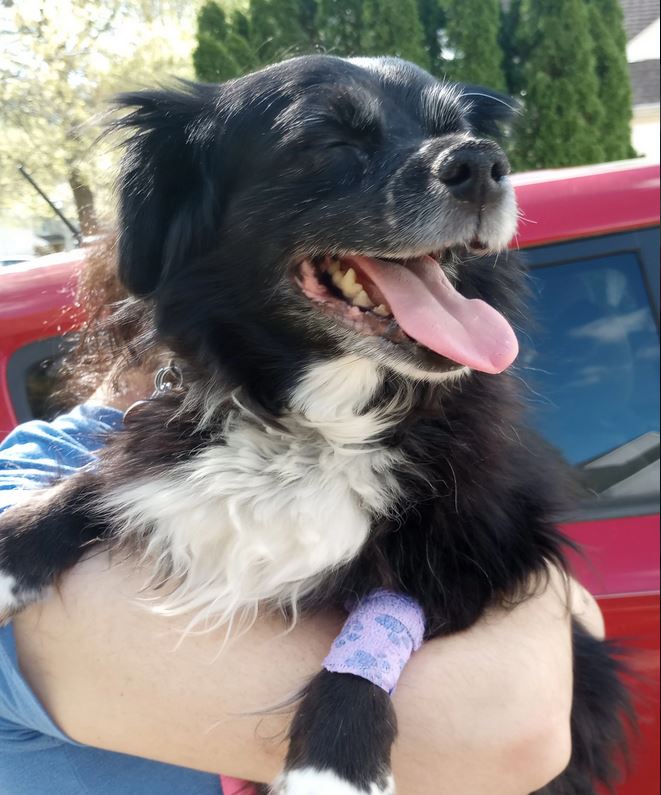
Katie’s slot for radiation ended up being at 7:45 AM. On one hand, yay, let’s get it done and over with without having to fast her for too long every day. Boo for having to scramble out of the house by 7:05 AM. Katie wasn’t accustomed to going in the car for that long by herself (she was in a car seat instead of my partner’s lap), and the vet end up prescribing Trazadone to keep her calm in the car. She said they only put the dogs under light sedation when they do radiation, so they don’t want to have to give them more if they’re being antsy. We gave it to her twice a day (once in the evening and my mom gave her a dose about 90 minutes before I took her to the vet). Katie tolerated treatment really well. She came out of the vet a little groggy and slept it off in the car, but by the time we got home 30 minutes later, she was wide awake and ready to eat her breakfast. It was obvious that the vet staff at GSVS loved her and took good care of her. Katie always seemed eager to go with them or get in the car when she realized where we were going. Each treatment took about an hour to an hour and fifteen minutes to complete. As mentioned above, the actual radiation treatment only lasts a few minutes, but there’s prep before and the wake up time after. I just sat in my car and read a book because the waiting room was really loud. The vet techs would text me when she was ready for pick-up, and I would go inside, tell the people at the desk, they’d call back to radiation, and a few minutes later, they’d bring Katie out. Most of the time it was a vet tech, and occasionally, like once a week, the vet would come out to update me on new meds or what to expect. Then, I’d pop her in the car seat, drive home, and remove the bandage left from removing her IV when I got home, which was bloodless and easy.
Week 2 was basically a repeat of week 1. She had no side effects, and we were just trucking along.
Radiation Week 3
At the beginning of week 3 or the very end of week 2 (not 100% sure), the hair started to fall out around Katie’s stitches from the surgery, and the vet prescribed her carprofen (an anti-inflammatory) and pregabalin (a pain medication) because she expected that Katie would soon start to experience side effects. By the end of that week, she started to get a congested nose and would sneeze more than she did before the treatment. The tumor had been on the outside of her nose (not the inside like a nasal tumor would be), so the radiation field penetrated her sinuses and irritated them. She also started to get irritation inside her mouth. To help with that, we started wetting her kibble to make it softer. We noticed Katie start to chew slower due to discomfort. By the end of week 3, her lip started to get sore, so the vet put her in the cone of shame to keep her from bothering the irritated skin on her lip and later her nose. We put her in an inflatable doughnut cone since that was easier for her to navigate with such short legs. Katie is also not one to rub her face on random objects, so the cone was enough to keep her from rubbing her face with her feet. By the end of week 3, she was uncomfortable but well medicated, so it really didn’t bother her in terms of energy and sass.
Side note: we ended up with a 4 days, 4 days, 5 days, 5 days schedule to make the 18 days of treatments because one day the machine went down. We just tacked the last day onto the end.
Radiation Week 4
Week 4 was a lot like week 3. The radiation burns started to appear on her nose at this point, but it wasn’t horrible. One the day she finished her treatment, she really only bald and sore spots on her lip and around her surgical incision, which had healed up). The vet prescribed another pain medication (Amantadine) to help keep her comfortable as the radiation field was about to get sore. On her final day of treatment, we finished paying, and Katie got a certificate of completion and got to the ring the bell to signify that she finished her cancer treatment. My eyes welled up. The vets and vet techs were absolutely wonderful, and it was obvious that they were fond of Katie and treated her like their own dog. What works in Katie’s favor is that she is pretty calm, enjoys people and attention, and is remarkably cooperative at the vet (unlike her brother). We scheduled a follow-up with the vet for a complimentary recheck about 10 days after her treatment ended.
The Weeks After
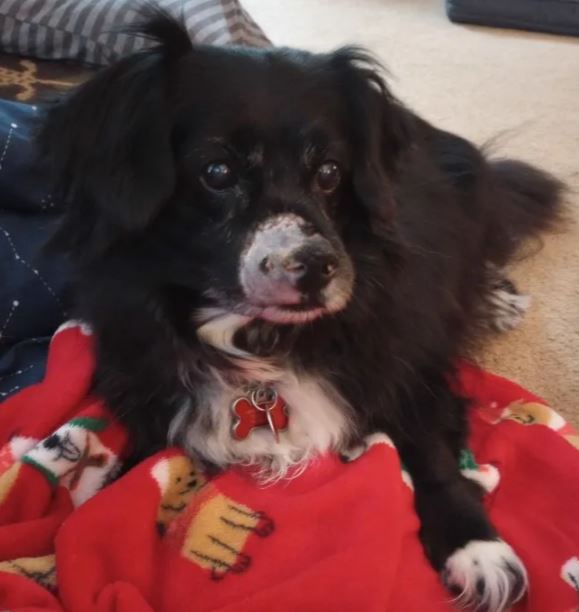
The week after was when her face looked the worst as radiation continues to do its thing for about a week after the treatment ends. The skin on her snout turned into an open wound along the surgical incision, and the hair fell out around the radiation field. It looks like really bad sunburn or wet eczema. The best thing to do is to keep it dry and leave it alone. I kept an eye on her wounds and subsequent scabs, checking for infection or goop every day. We only cleaned her wound as needed. If it looked goopy, we washed it very gently with cool water and patted it with an alcohol wipe. We didn’t pick any scabs or mess with her wounds. We were just looking to prevent infection or anything that could slow healing. By the end of the week, the peak of the radiation passed, and her wounds healed up within a few days. She was still completely medicated with all three medications during this time. Her skin is now bald in that area and paler than it was (it was previously black).
At the follow-up appointment, the vet determined that Katie was healing well and took her off the amantadine. She continued on the pregabalin for about an extra week, and she will finish her carprofen today. This week we’ll be about a month out from her finishing her radiation treatments, and she is 100% back to her normal self. Her energy levels are high, her face is healing, and she’s back to eating dry food. Overall, she tolerated the treatment REALLY well, and it was 100% worth it to keep the remaining cancer cells at bay or to neutralize them completely, hopefully. Nothing is guaranteed, but it was the best way for us to definitively treat her myxosarcoma. She will go back to the vet in September/6 months after her surgery to get an x-ray and a check to make sure her cancer is still inactive. She will probably get that for the rest of her life.
Things to Consider
- There is A LOT of misinformation online about animals and their healthcare, like a ton. I have seen people try to use black salve and other quack medical cures on their pets. Please, go to a vet and talk to them. They are not money hungry. They want to do what it’s best for your pet, and they wish it was cheaper too.
- Katie’s tumor location was on the surface of her skin, which makes it easier to treat. The nose is a tricky spot because you can’t get good margins surgically, but for radiation, the inflammation ends up being mostly external, which makes healing easier.
- If your pet has a nasal tumor, brain tumor, or something located closer to important things, they’re more likely to have worse side effects than Katie did.
- Katie loves people, which made going to the vet every day like going to the spa. We joked that I dropped her off to get high for an hour with her besties. For a dog who is very anxious or hates people, this would be a far more stressful process
- I was able to wait in the parking lot for 18/19 days because my job was in the afternoon, which made this far easier than it might have been for someone with a full-time 9-5 job or a less flexible schedule.
- Dogs and cats tolerate radiation and chemotherapy a lot better than people, so don’t assume your dog is going to look like a cancer patient. Katie really wasn’t affected by her treatments. Throughout she was happy, hungry, and mostly her normal self. The two weeks of discomfort passed quickly.