Book Reviews

Spooky Season Nonfiction to Add to Your TBR

Since the Reanimator Mysteries sit firmly on the morbid side of research, I have acquired and read a lot of nonfiction books that are great for the Halloween season, so I thought I would share them with you in case you need a hit of spookiness before October ends or year ’round. All links below are affiliate links, so I get a tiny kickback if you buy anything with them.

  • Eaters of the Dead by Kevin J. Wetmore- a fantastic look at cannibalism and man-eating creatures from ancient legends to pre-modern folklore to our pop culture creatures. Wetmore sheds light on where these creatures come from and what in our psyche makes us fear being eaten or becoming man-eaters.
  • Calling the Spirits by Lisa Morton- a look at seances and what we now call mediumship throughout history. While far less morbid that Eaters of the Dead, Morton does a great job of linking past to present and how the rise of women in Spiritualist communities really cemented mediumship in pop culture.
  • Trick or Treat by Lisa Morton- Morton is very into the spooky, apparently. This is an overview of Halloween from its ancient influences to holidays or traditions that overlap and led to our modern Halloween. It dispels some Victorian myths about Halloween and creates a clearer picture of how it came to be in the US.
  • The Book of Halloween by Ruth Edna Kelley- Behold the originator of many of the myths. I read this before Morton’s book, and it was interesting to learn what Kelley got wrong. This Halloween book has a lot of poetry and fun tidbits like recipes from the early 1900s. It is not historically accurate, but I think it paints of fun picture of what people thought about Halloween in the early 20th century.
  • A Haunted History of Invisible Women by Leanna Renee Hieber and Andrea Janes- A look into how the lives of women shape ghost stories and how those ghost stories get their lives incredibly wrong. It sheds light on the lives of people often left in the margins and totally left out of their own stories after death. Hieber and Janes have a second book out America’s Most Gothic, which I haven’t read yet but am looking forward to reading soon.
  • Vampire Forensics by Mark Collins Jenkins- This is sort of a how to spot a vampire book. It’s very accessible and what I found particularly interesting about it is the forensics behind it. Many signs of a vampire are actually normal parts of decomposition, and that is mainly what Jenkins explores. If you want to be a vampire expert like Gwen, highly recommend it.
  • Ghostland by Colin Dickey- I loved this book. It’s a fascinating read about the archetypes of ghost stories and how ghost stories are akin to fairytales in America. Dickey does a great job connecting the dots when it comes to trauma, warnings, sociological upheaval, and the proliferation of ghost stories. Oh, and of course, capitalism.
  • Over My Dead Body by Greg Melville- This was SO GOOD. It’s a book about cemeteries and how they are a reflection of the society that created them. It goes into fascinating depth about how cemeteries in America have evolved over the centuries and where they might be going in the future. For those who think cemeteries are merely hallowed ground, Melville shows they are so much more than merely plots of land. The audiobook is stellar and great for a commute read.
Book Reviews

10 Nonfiction Books I Love

Since it is Valentine’s Day (or it will be when this post comes out), I thought I would share some nonfiction books I have greatly enjoyed.

First off, I will say, I am not the biggest consumer of nonfiction. I like it, depending on the topic, but I tend to have a 1:10 ration of nonfiction to fiction. But when I do read nonfiction, I tend to go science, weird, or very niche, so buckle up for my 10 favorite nonfiction books so far.


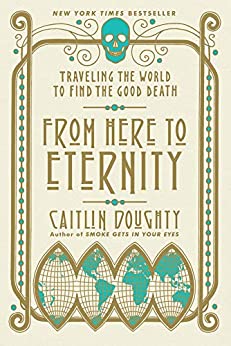
  1. From Here to Eternity by Caitlin Doughty– Caitlin Doughty is the figure head of the Order of the Good Death, a death positivity group online. She is also an incredibly engaging writer. If you’re interested in death rituals, the American alternative funeral industry, and the morbid in general, definitely hit her works up. I also highly recommend her first book, Smoke Gets in your Eyes. What I especially love about her work is that she doesn’t sensationalize things that aren’t the norm. She treats death rituals with a great deal of respect and talks about the cultural reasons behind them.
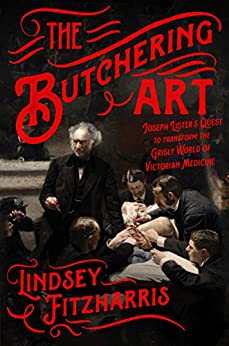
  2. The Butchering Art by Lindsey Fitzharris– As a writer of Victorian stories that often have medical scenes, I greatly enjoy learning about antique medical science. Lindsey Fitzharris is a wealth of information regarding medical history. The Butchering Art talks about Joseph Lister’s journey to promoting germ theory and totally transforming the medical profession but especially surgery. There’s an incredible amount of depth to this story that interweaves Lister’s life with his professional contributions as well. Fitzharris has a new book coming out about plastic surgery during WWI that I am looking forward to as well, called The Facemaker, and she hosts the show The Curious Life and Death of… which is also fascinating.
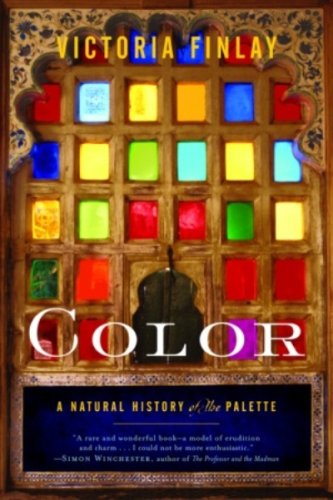
  3. Fabric, Colors, or Jewels by Victoria Finlay– I will auto-buy anything Victoria Finlay comes out with. I absolutely love her books and hope she makes many more in the future. All three books are close looks into the cultural significance, history, and composition of fabric, jewels, and pigments. What I love about her books is that she goes all over the world to do deep research and talk with the people in the communities that create these things or are affected by their harvesting/creation. I’m a nerd who loves super deep, niche research, and Finlay’s books fill this void for me.
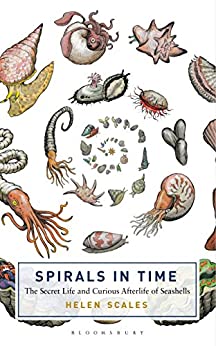
  4. Spirals in Time by Helen Scales– I have a thing for sea creatures, and spirals in time does a deep dive into the anatomy of molluscs, the way they were used in different cultures, how they can be used for drugs or food or poison, how they are being affected by climate change, etc. Basically anything you wanted to know about molluscs, Scales talks about. Once again, probably niche for some, but if you like to learn about a large part of ocean life that happens to be quite small and seemingly unimportant, this is for you.
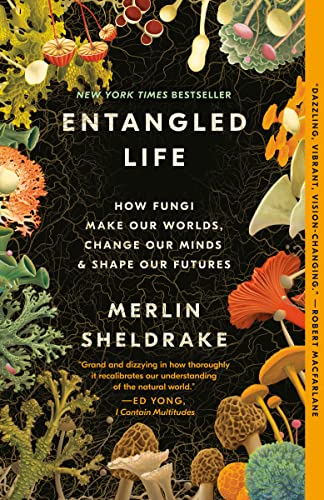
  5. Entangled Life by Merlin Sheldrake– First off, the author’s name is amazing, especially in relation to a book on mushrooms. Second, fungi is the most fascinating of kingdoms. Much like Spirals in Time, it is a deep dive on the structure, life cycle, toxicity, promise, and even processing power of fungus. I know a nonfiction book is good when I want to read five more books on the same topic. Definitely leans more toward the creative nonfiction side than a try text, which I appreciated (other reviewers, not so much).
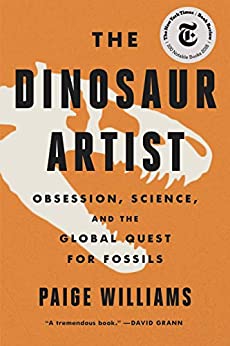
  6. The Dinosaur Artist by Paige Williams– This was one of those books where it just got wilder and wilder. The world of dinosaur hunting and selling, international trade regulations, fraud, Mongolian politics, and so much more. As a child who was obsessed with dinosaurs, I am still an adult who loves dinosaurs. This book is less about the dinosaurs themselves and more about the craze surrounding them. The magnetic appeal that leads to international smuggling rings and high profile arrests.
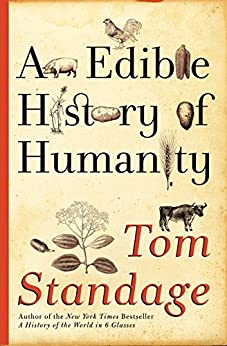
  7. An Edible History of Humanity by Tom Standage– an interesting look at food from pre-history to modernity with detours into the evolution of grains, how empires were built around them and transported them, as a tool to create ideologies, the spread of foods through empires, and how modern farming and consumption affects food. I didn’t love the more modern chapters, but the archaeology/anthropology-based bits were far better.
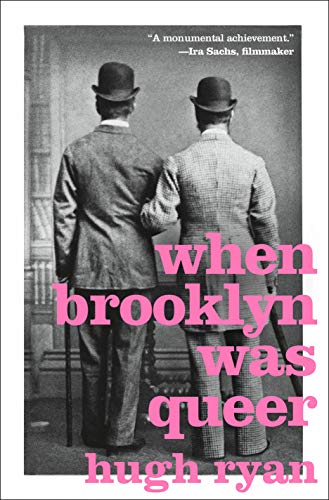
  8. When Brooklyn was Queer by Hugh Ryan– This is a book I’ve been referencing since starting the Paranormal Society Romance books. Ryan takes readers from Walt Whitman’s home in the 1850s to the sapphic women of the Brooklyn Navy Yard in WWII. The book is loaded with information but told in a way that feels almost like a story. It’s a comfortable pace without becoming too dry. I ran through When Brooklyn was Queer far faster than George Chauncey’s Gay New York (which I also recommend but it was drier). Ryan also provides a great works cited section at the end.
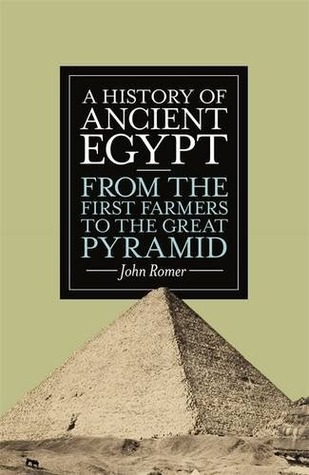
  9. A History of Ancient Egypt by John Romer– I will warn you, it is dense and large with tiny print. But if you are interested in Ancient Egypt, it is worth it. So far, there are two volumes, and I am DYING for the third which runs from the beginning of the New Kingdom to (I assume) the end of the Ptolemies. What I love about Romer is he only uses archaeological evidence for his theories, which takes away a lot of the “assumptions” we have about Ancient Egypt that reflect a British imperialist mindset.
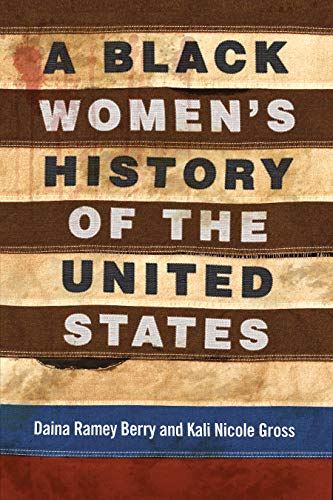
  10. The ReVisioning American History series by Michael Bronski, Kim E. Nielsen, Roxanne Dunbar-Ortiz, Paul Ortiz, Daina Ramey Berry, and Kyle T. Mays (so far)- This series is really a starting point for further reading, but I like them because they talk about the history that often isn’t taught in schools. The books focus on queer history, disability history, Indigenous history, an African American and Latinx history, a history of Black women, and Afro-Indigenous History. The histories are often horrific at times, but they need to be told and read. As I said, they are not comprehensive, but they are a good starting point in order to delve deeper.
Personal Life

An 8.5

Today, I had an awesome day. Today, I worked at the Career Carnival at one of the universities I teach at, representing the creative writing side of our English program and as an author. I loved every minute of talking to students about something we both love. What surprised me were how many non-English majors came to me and said that they love to write and are interested in taking a creative writing class. Writing helps them decompress, especially since most of the majors were STEM related. I completely understood, coming from a biology background initially.

Today, I had an anxiety attack that had nothing to do with my old fear of public speaking and crowds. The Career Carnival went great and I even got to chat with one of my favorite professors afterwards, but everything went to hell at home over something really stupid.

My dog had loose poop.

Yup, that’s it. That’s the thing that sent me careening over the edge into a 8.5 out of 10 panic attack.

From the moment I realized I would have to hose him down and that his could happen again, my body has been on high alert. My heartbeat is so obvious that I’m trying hard not to fixate on it which only causes more palpitations and more panic because it feels like it could stop at any moment. I’ve been still the whole evening, but no one seems to notice. I have my laptop open next to me with Scrivener open to the story I’m working on and Facebook, but I can’t bear to put it in my lap.

What if he has to go outside and in the time it takes to set it aside, he has an accident?

So I sit there playing on my phone when I could be reading The House of Many Ways, which I want to finish by tomorrow night. I text my boyfriend about my anxiety level. Somehow seeing it in numbers and words makes it easier to set aside for a moment.

8.5

An hour and a half later, it’s a 7.5. At least it’s an improvement.

It’s finally settling in at a solid 6 where it now sits like a lump in my throat. Even as I write, I can feel it ebbing and flowing like breath, a heavy helter skelter shroud engulfing me until I fear I will suffocate. As I sit staring at my phone, I picture myself hiccup sobbing. That’s where I’d be if it hit a 10/10, and I’m scared of sliding past the point of reason.

Mostly, I’m frustrated. I’m frustrated that dog shit is what has sent me over the edge after a really good day. I’m frustrated that I will be on the edge of sleep all night for fear that he will need to go out. I’m frustrated that people in my house tell me not to obsess or fixate as if I can shut it off or that I voluntarily surrender myself to sudden panic.

More than anything, I want to feel like this evening wasn’t a total waste, so I’m writing this post in hopes that someone might read it and understand that all-consuming visceral panic. Or maybe someone who has been in the grips of it will feel a little less alone.

Writing about panic and anxiety can be cathartic in my fiction, but not today, not in this. Today it just feels like I’m trying to swim to the surface on a dwindling breath.

Book Reviews

Book Review: Write. Publish. Repeat.

wpr cover

Title: Write. Publish. Repeat.: The No-Luck-Required Guide to Self-publishing Success by Sean Platt and Johnny B. Truant with David Wright

Genre: Writing, non-fiction

Rating: ♥ ♥ ♥ ♥ ♥

TL;DR: Write. Publish. Repeat. is an indie author’s dream in terms of a straight-forward how-to book for marketing, building an audience, and creating a writing empire.


I love Sean Platt and Johnny B. Truant. This is the first of their books that I’ve read. I picked this one up on a recommendation from several other authors, and I am so glad I did.
Write. Publish. Repeat. is an extensive book, covering the self-publishing/publishing as an industry, how to look professional, what to do, what not to do, marketing, and probably every other topic under the sun that an indie author could want to know about.
The information is laid out in an easy to follow manner with each section of the book being devoted to a certain topic, and while the authors say there may be some back-tracking and double covering of topics, I didn’t notice. The tone is conversational and most importantly common-sensical. Platt and Truant pull from their own experiences as indie authors as well as those of their friends and fellow authors to illustrate how to an author can make it in the industry by achieving certain manageable goals. The book certainly isn’t a get-rich-quick scheme or a sensationalized how-to-make-millions-with-a-shitty-but-marketable-book book. Truant and Platt don’t play that way, and they remind the reader of that.
Write. Publish. Repeat. relies on an author understanding a few finer points: be adaptable, work hard, and be yourself without being an asshole because no body likes those.
People who should read this book: Indie authors of any range (new, moderately successful, successful, thinking of possibly maybe publishing) and traditionally published authors who need to learn how to market their book professionally or would like to know about more publishing options or would simply like to build their brand. I’m thinking especially of authors published by small presses.
People who shouldn’t read this book: people who want fame and fortune with one book, people who aren’t in it for the long haul, quitters, whiners, literati types, and people who can’t deal with occasional profanity.
Write. Publish. Repeat. is an indie author staple. The advice within in it is straight-forward, doable, and for the most part, painless. If you’re even thinking about going indie, read it.