Writing

No, You Shouldn’t Use AI, Even on the Small Stuff

If you’ve followed me on social media for longer than a few days, you know I hate AI. I am morally opposed on every level to AI because it not only destroys the environment but is a tool of fascism. As much as I would like to word vomit about that, instead, I would like to speak about why writers shouldn’t use AI, even for seemingly minor details as so many AI-using authors claim to do.

Here’s the thing, there are no truly minor details or unimportant parts of a book as everything needs to further the characterization and mood of the story.

I can already feel some writers rolling their eyes at that. Feel free to do so at your own peril. Writers who are willing to hand over parts of their project to AI to “free up their time” to do other things should instead look at their relationship to hustle culture and why they have chosen quantity over quality. Hustle culture is rife in the writing world with many author groups pushing a churn and burn mentality where authors need to publish every 3 months or be lost to irrelevancy. If you go onto Amazon’s top 100 category boards for books on writing, you’ll find books about writing more or writing faster. While those can be useful, writing more isn’t the same as writing good or better books. The hustle side of the writing world stresses that readers don’t care about the books themselves. They’ll read anything as long as it checks off a few boxes for them, and that once you have hooked them, readers will come back every 90 days to choke down whatever book you throw at them.

I despise this mentality. For one, it is patronizing to readers. Readers won’t stick around if your book sucks or if the quality goes down over time. We’ve seen this with readers noticing an author with a massive backlist has turned to AI, and they abandon them when the writing becomes nonsensical or the quality change becomes noticeably bad. I don’t like when authors treat their readers like shit or take advantage of them by assuming they will always be there no matter how they treat them or how crappy their books are. If you’re a writer, I believe you should write for yourself first, but anything you sell to readers should be the best it could possibly be for them since they’re the ones supporting you monetarily.

What I hate even more about the hustle culture mentality is the way corporate speak has made its way into creative fields. Creativity can and should make you money. Artists should be paid fairly for their work and be able to make a stable living off of it. At the same time, I don’t think creativity should be treated like a business in the way that corporations expect exponential growth at all times. It is unsustainable. We cannot write more books every single year and increase our yearly word counts exponentially. It is impossible and will quickly lead to burn out and quality loss. In order to meet these unsustainable quotas, authors turn to AI because others have convinced them that if they outsource the tedious parts of writing to the machine, they will free up time to write more of the things they enjoy or just write faster. The problem is that those tedious parts aren’t useless; everything in your book should serve a purpose.

What many of these “write more in less time” gurus purposely ignore is writing as a craft. There is almost no discussion of how to make your writing better, only how to do it faster. If they did care about craft, none of them would be suggesting using AI. As someone who teaches young writers how to better their work, every piece of writing I have seen from AI is far worse and emptier than anything brand new writers in my classes have come up with. AI writing is confusing, devoid of charm or character, and just flat-out bad. 0/10 do not recommend using it because it will take way more time to edit than just writing something yourself. A study with people who code showed that while they thought they were taking less time using AI, they were actually taking longer because they had to review it, fix it, etc (source). This is on top of the environmental harm, the fact that it is a tool of fascism, and a plagiarism machine.

The thing that a lot of writers using AI for the “boring parts” don’t seem to understand is that the minor details are incredibly important to your story. One of my most hated posts online is the whole, “Only English teachers care that the drapes are blue. They’re just blue. The author just gave it a random color. It isn’t that deep.” Sure, that can be true occasionally, but 99% of your descriptions and details should be purposeful. When you are creating a world, even if a story takes place in the real world, you are building a microcosm specific to your characters and the story you are telling. Therefore, there is an added level of cohesion and purpose in those details that might not appear in our material reality. When you are setting the scene, you need to think about how you want the reader to feel while interacting with this part of the world, how the structure fits the function of this setting, and how the point of view character effects the way the world is interpreted or experienced. For example, a character with a phobia of dentists is going to view, experience, and describe a dental office differently than someone who doesn’t think getting their teeth cleaned is a traumatic experience. If you just let AI fill in the description of the dental office, you are losing that context. Even if the character isn’t scared of it, they will still notice details other characters won’t, and while you’re writing your story, that should be something you focus on.

The other place I’ve heard people using AI for “busy work” in books is dialogue. This really makes no sense to me because dialogue is one of the best ways to insert characterization, motivation, and movement into a story. Even if you feed a chat bot relevant information about your character, it isn’t going to understand the context of your work and anything about the character below a surface level. Any dialogue it spits out will be generic, boring, and probably ill-fitting for the moment. This is one of those situations where editing extensively will be necessary and will probably take longer than just writing it yourself.

But what if I’m stuck? Why can’t I just use AI to fill in the gap for me?

Because that’s cheating! It’s cheating yourself out of using your brain to puzzle out what should go next. It’s like saying, “I find this exercise hard, so I’m going to use a motor to move the dumbbell for me.” It isn’t going to help you, and at some point, your writing muscles are going to shrink and atrophy until you can’t write anything without constantly circling back to AI. Using AI long-term causes cognitive problems (source). If you continually use it to help write your books, you will become more dependent on it and eventually get worse at writing. The best way to combat this is to face the things that challenge you head-on. Why are you stuck on this dialogue? Why do you struggle with description? Do you not know when you need to add it, or do you simply need some resources to help you name things?

There are a ton of writing resources online made by authors for authors, many of which are free. Instead of using AI, slow down and invest time and effort into getting better at your craft. I know hustle culture says write more, write faster, publish quicker, but the best way to get ahead as a writer is to take time for yourself and do things to be a better writer. Sometimes, that looks like taking a break to read good books, watch shows that stoke that creative fire, do other crafts to refill your well. Other times, it’s dissecting how other authors write well and figuring out how to do that in your own way. Writing takes work, and work means effort on your part. Using AI to write the things that you struggle with or find boring means that you are cheating yourself out of the opportunity to learn, grow, and become a better writer. Before you run to ChatGPT for help when you get stuck, look up a resource on Google that can help you with this particular thing. If you are struggling, others have too, and there’s a 90% chance that someone has made something to help you figure it out on your own.
Monthly Review

June 2025 Wrap-Up Post

Part of me would love to say that this month went really well because I got quite a bit of writing done, but the other part of me looks at the dumpster fire and chaos around me and feels otherwise. Either way, I am happy that I feel like I have finally found my stride with The Reanimator’s Fate. Let’s look at our goals for June before we get started.

  • Write at least 20,000 words of The Reanimator’s Fate (TRM #4)
  • Try to write every single day at least a little to be consistent
  • Get the audiobook for The Reanimator’s Remains (TRM #3) out everywhere
  • Maintain my mental health and balancing my writing and hobbies to avoid burnout
  • Catch up on my stitch-a-long
  • Exercise consistently
  • Read 8 books
  • Blog weekly
  • Send out my monthly newsletter
  • Enjoy my 20th anniversary with my partner

Books

My goal was to read 8 books, and I read exactly 8.

  1. The Gentle Art of Fortune Hunting (#1) by KJ Charles- 5 stars, two fortune hunting but charming young people come to London hoping to find stability and find more than they bargained for when the young man sets his sights on the well-off niece of a cranky brewer only to fall for the brewer instead.
  2. Iris Kelly Doesn’t Date (#3) by Ashley Herring Blake- 4 stars, Iris has sworn off love after too many failed relationships while Stevie is trying to get back into the dating world after leaving a long-term relationship. When anxiety wrecks a one night stand with Iris, Stevie thinks she’ll never see her again until they end up in the same queer community theater production.
  3. The Other World’s Books Depend on the Bean Counter (#3) by Yatsuki Wakatsu- 4 stars, an accountant ends up accidentally ending up in a new world along with the woman fated to save it only to find out he’s allergic to magic and the only one who can keep him safe is a very serious, slightly overprotective knight. The world’s books are a mess, and they may be the key to saving the kingdom.
  4. The Other World’s Books Depend on the Bean Counter (#4) by Yatsuki Wakatsu- 4 stars, see above.
  5. The Other World’s Books Depend on the Bean Counter (#5) by Yatsuki Wakatsu- 5 stars, see above.
  6. I Hear the Sunspot: Four Seasons (#3) by Yuki Fumino- 4 stars, a hard-of-hearing man joins a new company only to realize he’s stepped in it in regards to one of his coworkers. Meanwhile, his boyfriend is struggling with his own issues at work and how to deal with being a queer person.
  7. The Duke at Hazard (#2) by KJ Charles- 4 stars, a duke ends up duped out of his signet ring and goes on a mission, while incognito, to find it only to run into a ruined noble who might be the key to helping him find it.
  8. Mr. Collins in Love by Lee Welch- 4 stars, a very sympathetic retelling of Pride and Prejudice from Mr. Collins’s point of view where he is neurodivergent and struggling to maintain the life he desperately wants to keep. His life changes for the better when he runs into his childhood best friend only to realize it runs up against his patroness’s desire for him to find a wife.

Admin/Behind-the-Scenes Stuff

  • Wrote the initial blurb for The Reanimator’s Fate
  • Published The Reanimator’s Remains (TRM #3) on Amazon, Audible, Apple Books, Spotify, Chirp, Nook, Kobo, LibroFM, library systems, and every other major audiobook platform
  • Enjoyed my 20th anniversary with my partner
  • Got my partner’s blood work done (this gets a spot here because it was an ordeal)
  • Made my goals for Q3
  • Edited someone else’s book
  • Took a weight-lifting hiatus due to the heat
  • Played Coral Island extensively to maintain my sanity
  • Incessantly bothered my senators and congress person
  • Fell even further behind on my stitch-a-long project (oops)

Blogs


Writing

While I didn’t hit my goal for the month, I did write quite a bit and feel like I’ve finally hit my stride. The beginnings of books are where I struggle most. It feels like there are so many paths open that it is overwhelming to me. By the time I hit the end of act 1, I find my footing, and my daily word counts get progressively larger. Part of the problem is that the #3.5 short story took longer to write than I expected, and then, I had to restart the beginning of TRF because I didn’t like it. This version is significantly better, and I will not yeet this draft into the void. Oliver and Felipe are dealing with a case of death by book while also grappling with librarians being weird, buildings with a mind of their own, and of course, their own neuroses getting the better of them. Next month, I will have more to show you and talk about, so stay tuned.


Hopes for July

  • Write at least 20,000 words of TRF
  • Set up the preorder for TRF
  • Work a little on the rewrite of F&F
  • Manage my stress better as a USian living in this hellscape
  • Keep up with my bullet journal better
  • Catch up with my cross-stitch
  • Enjoy my birthday
  • Read 8 books
  • Blog weekly
  • send out my monthly newsletter
Project Shop My Shelves

Project Shop My Shelves: Q2 2025 Update

Back in March, I decided that I wanted to start Project Shop My Shelves (known as PSMS going forward). The goal of PSMS is to read twice as many books per month than I buy, but there are a few sub-goals that are equally important:

  • Don’t buy new books unless they are from marginalized authors (indie or trad)
  • A 2:1 ratio of old books to newly bought books every month (or more if possible)
  • Read through the older books to finally get them off the TBR pile
  • Be realistic about my enjoyment of an author and what medium I prefer to read them
  • Post quarterly about my progress with this project

I figured now was as good a time as any to update my progress with this self-imposed project. TL;DR: I did not hit the 2:1 read:bought ratio, not even close. Here are my stats for the second quarter of 2025.

Stats:

April: I bought 11 ebooks, 0 ARCs, 5 physical books, 0 audiobooks. I read 10 books, 5 of which were preexisting, 8:5 bought:read ratio

May: I bought 3 ebooks, 0 ARCs, 10 physical books, 0 audiobooks. I read 8 books, 3 of which were preexisting, 13:8 bought:read ratio

June: I bought 6 ebooks, 1 ARC, 8 physical books, 0 audiobooks. I read 8 books, 3 of which were preexisting, 7:4 bought:read ratio

As you can see, I epically failed trying to hit that 1:2 bought to read ratio. Part of my spectacular failure is due to Indie April sales (hence the 11 ebooks) and a lot of preorders coming available in May. Combine that with being in a governmental stress-induced reading slump, and my reading and buying habits have been on the hot mess express.

Buying Books: A Breakdown

Something I did stick to was buying marginalized authors of the *cough* many *cough* books I bought, only 2 were by white cis het Christian authors (aka non-marginalized authors). My reading habits tend to be pretty varied, so I’m not surprised that this was the part I was willing to stick to. The worst part about trying to stick to this ratio is that there are a lot of marginalized authors I want to support, especially since I know publishing requires early sales, and for indies, I want to give them monetary support. I’m okay with putting my money where my mouth is. I just need to read more without wrecking my mental health in the process.

One of the points mentioned above is paying attention to the format in which I enjoy authors. So far this quarter, I haven’t had any authors that I think I’ll be shifting to a different medium. There are a few, not ones I read this quarter, who I have decided I will no longer be reading after I finish the series I am working through. Susan Dennard is one of them. I don’t dislike her books, per se. I just don’t have any desire to read more of her work after finishing the Witchlands. My brain bounces off her writing style, and there are certain things in her books that annoy me long-term. I also plan on reading an Alexis Hall book in ebook form because so far I have only read them as audiobooks, which I really enjoyed. I just want to see if I have a form preference or not where their books are concerned.

Reading Books: A Breakdown

I completely forgot to read the oldest books on my list. Oops. I’m sort of torn on this bullet point because I tend to be a mood reader, and I don’t want to force myself to read books that I’m not jazzed about. The problem is that less than half of the books I read were preexisting books. That means that I’m not reading what I have. Part of this was due to starting a new manga series, which was five books long. I’m glad that I’m somewhat staying on top of what I have bought, but because I’ve been in a bit of a reading slump, I haven’t been reading as much as I would like and therefore, am not reading my older books. Treading the line between reading more and burning myself out has been a struggle lately, but I am going to try to read more next quarter.

Quarter 3 Goals/Outlook

Void staring has been a major issue for me in quarter 2. A lot of it is due to external stress and strife (aka the US government is stressing me the hell out 24/7). It makes it very hard to focus or get a whole lot done. I’ve also been struggling to write and rewrite the beginning of The Reanimator’s Fate (TRM #4). The good thing is that I think I have finally found my footing, so there’s a good chance that balance may actually be returning to my life in the near future. I’m also debating trying to listen to an audiobook while playing Coral Island. I haven’t tried to do so, but I know one of my friends often does this. This will help me get through some of the older books on my TBR while still doing something fun and relaxing. As of right now, I don’t have a lot of preorders set up from July to September, but my birthday is coming soon. I was debating whether to have my birthday haul count as books bought or not, but I ultimately think they should count since they are new books added to the TBR pile. I’ll make sure to specify that next quarter, so you all don’t think I just have a shopping addiction. I will keep the 2:1 read to bought ratio, but if I haven’t done this once by the end of the year, I might pull it back to a 1:1 ratio to make it more realistic.

Personal Life

Kara’s Random Game Recs in 2025

Not going to lie, I have not been coping all that well with *gestures to the dumpster fire that is the United States right now*, and to cope in a way that wasn’t doom scrolling for hours on end, I have been playing video games. I know a lot of my readers also play games, so I thought I would recommend a few I have enjoyed recently. By the way, all of these games are at least on PC since that is where I play games.

  • Love, Ghostie– This is a game where you play a match-making ghost who runs a boarding house. In this game, you partner up people in the boarding house by giving them gifts from the other person and setting them up on dates. The game is super cute, low stress, and every pairing is possible. There are lots of little Easter eggs and nods to other media that I really enjoyed.
  • Spilled!– THIS GAME IS VERY SHORT, but it’s also cheap. It’s a basic game where you pilot a boat and clean an oil spill. The game is one of those you can easily play when you’re anxious and just want to give your brain something to focus on that doesn’t require a lot of higher thinking. You also rescue animals and clean up a pretty pixel landscape.
  • Minami Lane– This game is also semi short, but it also has a no rules, play as long as you want mode. In Minami Lane, you build up a town and try to make the residents happy. It’s interesting because you have to balance the needs of older and younger people, which most games don’t care about. It’s like a much lower stress Rollercoaster Tycoon or games like it.
  • Botany Manor– It’s a first-person exploration puzzle game where you play a botanist who goes through pieces of her house to grow about a dozen fantastical plants. While you solve these puzzles, you learn more about the main character’s life and show where she’s going in the future. The scenery is gorgeous. If you are directionally challenged like me, you will spend a lot of time in the landscape, and it is worth the time loitering. If you like a subtle narrative with plenty of serene puzzles, definitely check this one out.
  • Lost But Found– This game is still in development but is playable, so it will be a little buggy. It’s more stressful than any of the games mentioned above while still being far lower stress than most games. You work at the lost and found at an airport, so you have to quickly give things back to the people who show up. It’s a lot of sorting while also being like a search and find game. If you only play on a laptop, it is difficult without a mouse as it sometimes lags.
  • Urban Jungle– Another plant-focused game that is similar to Unpacking but with a score/puzzle element involving plants. You can end up grinding a bit if you are trying to collect all of the plants (like I did), but the story is very sweet and well done. It makes me hope they make a second game involving the character’s brother. It’s about becoming the person you are and nurturing yourself (and your plants) in order to grow.
  • Coral Island– This is the longest game on the list as it is open-ended. Coral Island is a farming sim like Stardew Valley, but what sets it apart is the styling of the game and the emphasis on pollution/cleaning up the ocean. You can romance SO MANY characters, but there are also mines, a town score you need to raise in order to unlock many things, and an ocean world to explore and clean up while fighting off a mega corp. I am many, many hours deep into this game, and I cannot recommend it enough for staying sane during trying times.
  • Spirit City– This is less of a game and more of a working/learning tool, but Spirit City is worth the money. It is a game that helps you body double, do pomodoro timers, keep track of your goals and more, all while creating a cute avatar, playing with your creatures, and customizing your space. The customization in this game is chef kiss, and it helps a lot if you are struggling to stay focused. It also comes equipped with lofi beats and many helpful tools.

If there are any games you think I would like, please leave them in the comments!

Personal Life

To My Partner

This Friday will be my twentieth anniversary with my partner. Yes, you heard that right, 20 years. My partner and I have been together since we were fourteen. We went to high school and college together and have gone through our own respective gender journeys together. I finally figured out the words for my gender back around 2017 or so. I have always felt like being a woman didn’t fit me, and once I heard the term “nonbinary,” I realized that I had been feeling dysphoria for years and started to do things to make myself happier and more in line with my feelings regarding my gender. None of these were huge changes because I’m incredibly stubborn and refused to dress femme for years before that. Now, I am just more aware my dysphoria and less willing to please others while making it worse.

My partner, on the other hand, ignored the fact that she was dealing with dysphoria for years. She tried to double down on dressing masculine while in college, but it didn’t make her feel better. Last year, she thought she might be nonbinary because our discussions of gender made her more comfortable to explore her feminine side. And this year, she realized she was actually a trans woman, and we figured out how to get her gender affirming care. She is close to the three month mark on hormone-replacement therapy, and she is the happiest she has ever been. More than anything this year, I am so glad to have my partner feel more like herself and be on her way to being the person she truly is. Twenty years and two gender discoveries later, we’re still together.

I love my partner more than anything or anyone. She is my best friend, my biggest supporter, the best pet co-parent, the one I turn to when times are tough, and the one I want to see flourish more than anything. If you’ve never seen someone you love transition, it is a beautiful thing. Every day I see my partner become more herself. She is so much happier, even after a few months. She has new pronouns and a new name, but she’s still the person I have loved for twenty years. I look around at everything that’s going on with trans rights being under attack in the US and UK, and I cannot understand how people can see others transition and not think it is something beautiful. It is a righting of a biological wrong, and the mental health results speak for themselves. My partner has battled depression for as long as I have known her. She still has depression, but it is night and day since she started on estrogen and t-blockers. Her mood is better, she’s more emotionally even, and when she is sad, it isn’t the same level as past depressive sadness.

As if to spite the transphobes (and because I love her deeply), I have thrown myself into being as supportive as possible. What’s funny is so much of what I’m doing to affirm her has been dysphoria-inducing to me. I have sat here racking my brain about what she could need or what people tried to give me that I hated when I was hitting puberty. My partner has been collecting more feminine clothes for a while now, many of which came from my wardrobe because they were too feminine for me, but I have added to the pile. She now has a purse or two, bras, and my favorite surprise for her was a Kaboodle with some starter make-up. My partner will probably never come out to her family because she doesn’t think they’ll accept her, and I want her to feel as loved and accepted as possible.

When I first realized I was nonbinary, I was afraid my partner would be upset or confused that I wasn’t a woman. She was fine with it, unconcerned, and she has supported me in my weird little guy-ness ever since. That sort of acceptance paved the way for her own journey of self-discovery, and I am honored that I get to be on that journey with her to smooth the way and support her in every way I can. Being a t4t couple has only made us closer and stronger, and I will do anything to make sure my partner has the best life she can possibly have no matter the political climate and no matter what people who don’t know her say.

To my partner, may you have the best life and the life you have always wanted. Here’s to twenty years, and many, many more!

The Reanimator's Remains

The Reanimator’s Remains is out in Audiobook!

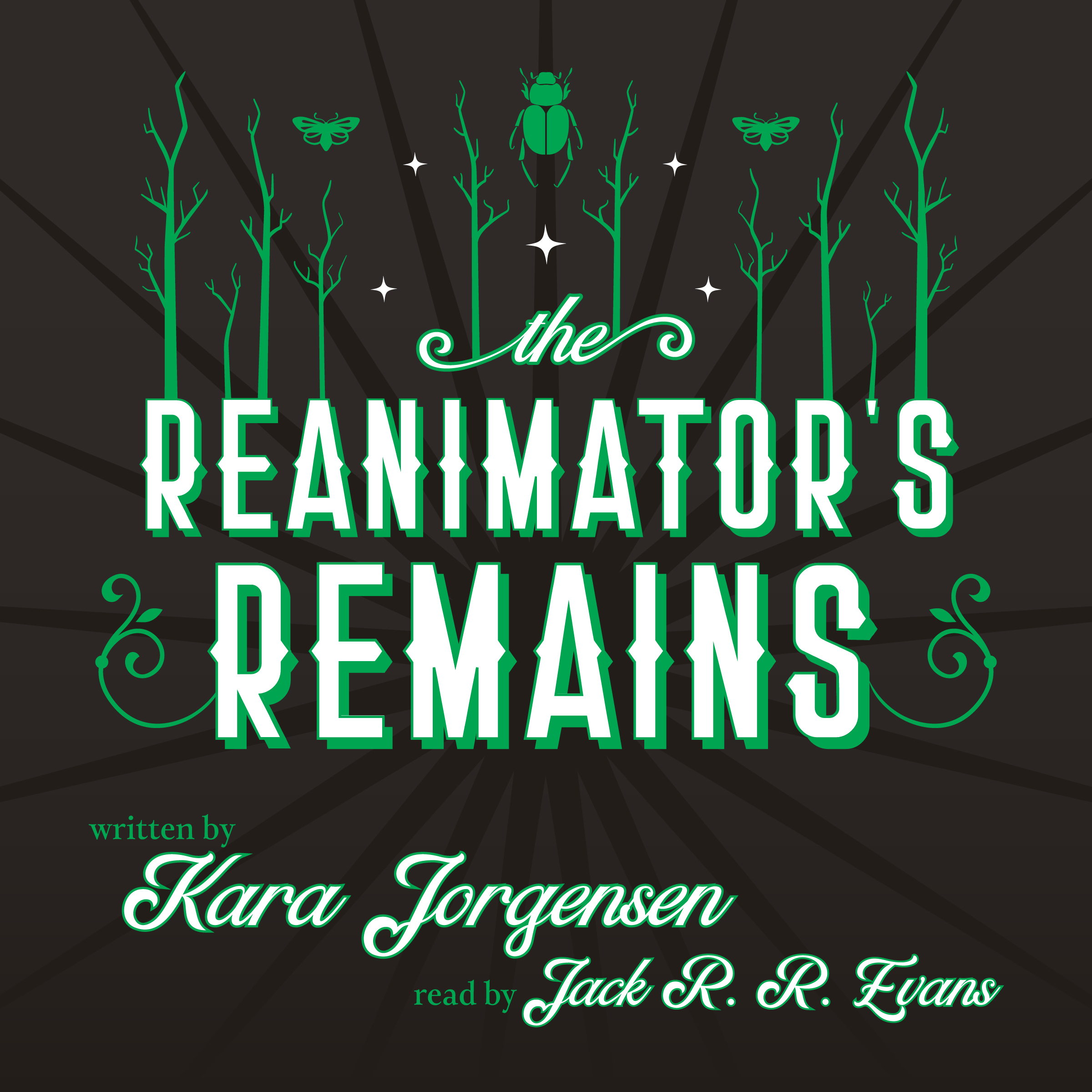
I was debating holding off on announcing this, but just in time for Pride, The Reanimator’s Remains (TRM #3) is out in audiobook! Jack R. R. Evans is back as our narrator, and they are absolutely awesome. I think they did a fantastic job capturing Oliver and Felipe as well as all of the characters inhabiting the mysterious town of Aldorhaven.

the audiobook cover for The Reanimator's Remains written by Kara Jorgensen and narrated by Jack R R Evans

The audiobook version of The Reanimator’s Remains is available on Kobo, Chirp, B&N, Audiobooks.com, Apple Books, Spotify, GooglePlay, library systems, and more! You may need to request your library buy a copy, but it is available! The only place where it isn’t out yet is Audible/Amazon. They are dragging their heels, so it may take a few more weeks for it to be available there. If you really want to get your hands on it, I highly suggest grabbing it elsewhere.

You can also get books 1 and 2 (and Kinship and Kindness) at all major audiobook retailers.

Monthly Review

May 2025 Wrap-Up Post

I feel like every other month I say, “Damn, that month went fast,” but truly, May went very fast. The first half was taken up by finishing my grading while the second half was taken up by letting my brain quiet before refocusing on my writing project. Since it feels like forever, let’s get reacquainted with our goals for May.

  • Write 20,000 words of TRF
  • Write the working blurb for TRF
  • Maintain my mental health
  • Keep working out consistently
  • Continue proofing the audiobook of TRR
  • Finish grading portfolios
  • Send out my May newsletter
  • Read 8 books
  • Blog weekly

Books

My goal this month was to read 8 books, and I read exactly 8. All links below are affiliate links, so I get a small kickback if you buy from them.

  1. Death in the Spires by KJ Charles- 5 stars, a mystery that flips back and forth 10 years from when Jem was a student at Oxford when his friend was murdered to the present as he tries to solve the crime and gain control of his life again. It is very queer, rich in texture, and just a fantastic read.
  2. Tasting History by Max Miller- 4 stars, an interesting cookbook based on the Youtube channel about historical recipes. The recipes themselves are great, but I really love the tidbits about the history behind the recipes. I highly recommend his Youtube channel as well.
  3. From Bad to Cursed by Lana Harper- 4 stars, opposites collide when two witches have to figure out who hexed someone at a festival. It’s an MF romance in a series with queer couples as well. Rowan and Issa have a complicated past, but seeing them come together is worth a read.
  4. Lore Olympus (#8) by Rachel Smythe- 5 stars, we’re nearing the end of the series, and this volume was chef kiss. I love seeing Persephone and Hades grow toward each other.
  5. Saga (#12) by Brian K. Vaughn and Fiona Staples- 4 stars, Hazel is maturing and growing into a teenager, so this volume speaks a lot about PTSD, mental health, and finding where you belong. I love every volume of this series and also hate that the end isn’t that many volumes away.
  6. The Magus of the Library (#8) by Mitsu Izumi- 4 stars, the young magi have their first encounter with spirits and the villains who want to bring the library to its knees. As always, Theo is just such a cinnamon roll, and this was an action-packed volume.
  7. The Other World’s Books Depend on a Bean Counter (#1) by Yatsuki Wakatsu- 5 stars, I picked this manga up on a whim and LOVED it. If you like Oliver from my books, you will love the MC. He is an accountant who gets sucked into another world by accident and takes on the accounting in this new world only to become an enemy to someone in high places and catch the eye of a magical knight who saves him from himself.
  8. The Other World’s Books Depend on a Bean Counter (#2) by Yatsuki Wakatsu- 5 stars, see review above

Admin/Behind-the-Scenes Stuff

  • Proofed the entirety of the audiobook for The Reanimator’s Remains (TRM #3)
  • Sent corrections and paid my narrator Jack R. R. Evans (they’re awesome)
  • Published the audiobook for The Reanimator’s Remains (it is currently trickling out to distributors, libraries and Amazon/Audible will take a few more weeks)
  • Wrote the blurb for The Reanimator’s Fate (TRM #4), so keep an eye out for that soon
  • Accidentally sent my monthly newsletter out super late in the day
  • Finished grading all of the papers and portfolios for my classes
  • Sent out a few job applications to non-academic jobs
  • Worked out fairly consistently
  • Fell very behind on my stitch-a-long project because my mental health dipped a bit
  • Rested mid month to avoid burnout/a mental health spiral
  • Voted in the NJ democratic primaries by mail (send in your ballots if you have them, early voting starts 6/3)

Blogs


Writing

I think I have finally found my footing with this draft. Halle-friggin-luah. Last month I mentioned that I had to scrap the draft I had because I just didn’t like the direction it was going or the tone. It wasn’t working, and sometimes, it is better to start over than torture yourself by trying to force something that just isn’t going to end well. Scrapping it was the right choice, but it put me behind. That, of course, gave me anxiety, which made it harder to write and led me to falling more behind. You can see how this can cause a downward spiral. I took a small break, got my brain shit together, and restarted my book. Now, it’s flowing much better. I have a clearer direction of where I need to go, what the characters are doing, etc. It’s especially hard when you know it’s the last book in a series and you want to make it extra spectacular for your readers. The most important thing is that I am back on track and cruising along at a slow but steady clip (as the beginning always is). When I get further along, I will post the preorder and all the relevant information for this book, so stay tuned.


Hopes for June

  • Write at least 20,000 words of The Reanimator’s Fate (TRM #4)
  • Try to write every single day at least a little to be consistent
  • Get the audiobook for The Reanimator’s Remains (TRM #3) out everywhere
  • Maintain my mental health and balancing my writing and hobbies to avoid burnout
  • Catch up on my stitch-a-long
  • Exercise consistently
  • Read 8 books
  • Blog weekly
  • Send out my monthly newsletter
  • Enjoy my 20th anniversary with my partner

Personal Life

Weighing My Options

I have started to apply for jobs outside of academia. It’s a decision I haven’t come to lightly, but after over eight years of being an adjunct professor, I don’t think I can afford to stay in this position for much longer. The sad thing is that this isn’t due to my spending habits or being bad at my job, it’s because academia is being run like a business rather than a school.

If you aren’t in academia, let me give you a primer on the job market: it’s shit. In most areas, there are very few jobs and lots of people graduating from grad school who loved their experience and want to be that professor for future students, so they all take up adjunct positions, which are contract-based, part-time teaching positions. Usually, you don’t get any benefits, you are paid very poorly, and you can’t have more than two classes per semester per school. Often, adjuncts work at two or three schools and have other part-time jobs on the side in hopes that it’ll make up the difference. The adjuncts who aren’t doing all of that have family money or a spouse with a really good job. When a position in your field opens, thousands of people apply all at once, so your chances of even getting an interview are incredibly low just based on numbers. If a position at your current employer opens, there’s an even lower chance since most schools won’t hire one of their adjuncts for full-time work. Don’t ask me why. I don’t get it either.

What ends up happening is that professors of color, queer professors, working class professors, and those with other marginalized identities have to work their asses off extra hard to get noticed on top of working extra jobs. You can be a stand out or be supported and appreciated by your department, like I am, and still have no chance of becoming a full-time professor with a stable paycheck because the university isn’t hiring. Professors retire, and their jobs aren’t filled. Other professors in the department pick up the slack and the lower level classes go to adjuncts. Partly this is due to the devaluation of the humanities in my case, but it’s also due to the political climate as students don’t see college as a safe bet, just a mountain of debt.

For the past eight years, I have loved teaching. I love teaching writing, I love my students, I love my school (which is also my alma mater), and I love my department. The problem is that I’m being exploited by the system, not the people around me, which makes it very hard to pull away. Higher ed relies on adjuncts to stay afloat. They exploit that so many of us want to teach our subject and will ignore our needs to do it. They bank on the fact that we’ll have outside monetary support and if we don’t that we’ll rely on Medicaid, SNAP, or other supports that they don’t need to provide. The problem is that at some point, this becomes unsustainable.

By the end of this semester, I could feel my brain and body fraying. It feels impossible to keep up, and with the current administration threatening to rip these support systems out from us, I’m extra stressed and frayed. All I’ve wanted was to be a writer, teach writing, and have a modest life with my partner, and that middle class dream feels impossible. In a moment of fleeting panic, I applied to one writing job, and then, I saw another online that looked right up my alley. I’m not quitting teaching or applying to every job I come across. I don’t want to trade one mess for another, but I’m tired of being ground down by a system that pays teachers nothing and administrators six figures. Apparently, it would cost too much to pay me fairly for my time, so I am looking for someone who thinks my skills are worth the expense.

What irks me is that I am a good professor. I’m good at my job. I give my students so much of myself and my time. I accommodate my students without paperwork. I do my best to anticipate their needs and make sure my marginalized students are supported while giving my international students the confidence to write well and have the space to learn and become more comfortable writing in English. As far as I know, I’m one of the only out trans professors on campus (if not the only), and if I leave, I will leave a gap behind. I know I’m easily replaceable to the administrators, but I would like to think that with the students and my department, I would be missed. I managed to cling on for over eight years because I’m white and live at home. Those less privileged than me have come and gone far quicker, and it shouldn’t be like this. Higher education pushes about those most motivated to help marginalized students because they aren’t willing to pay for our talent. In this age of people yelling about DEI, I have to ask where? Is the DEI in the room with us? Because most of the adjuncts and professors who are able to stick it out long enough to get hired are either very privileged or have worked themselves into the ground to get there.

While I’m not leaving teaching yet and won’t until I have a position lined up, I am eyeing the exits and hating that I am.

Writing

AI Writers, Please Quit

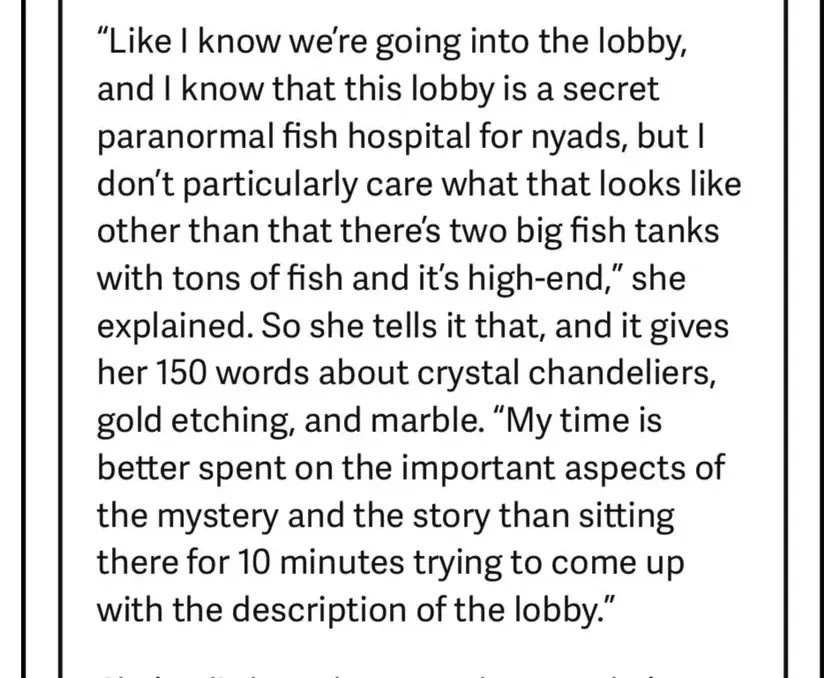
I came across this excerpt from a writer talking about using generative AI during her writing process, and all I have to say is, if you use generative AI to help you write your book, please quit writing.

That isn’t hyperbole or snark; I mean every word. Here’s the thing about writing, it isn’t glamorous, but people think being an author is. People who use AI to write some or all of their books want the aesthetic of being a writer. They want the fans or readers, they want the pretty covers, the money (lol), the minor amount of fame and prestige it bestows upon someone who has published, but ultimately, they don’t want to do the work to get there. And writing is work. It is incredibly unglamorous work. It’s long days staring at a screen, figuring things out, murmuring to yourself, getting stuck, and getting stuck, and getting stuck. It’s weeks of fiddling with descriptions or rewriting things that don’t quite make sense or need a bit more life breathed into them.

For the writers who use AI, they look at the work part and think about how to eliminate it. Who wants to deal with the ugly, un-fun bits of the process? Let the machine do the things I find hard or unenjoyable.

But once you outsource your process to the plagiarism slot machine, is it even yours? See, the thing about AI is that it doesn’t magically come up with new stuff for you. It’s essentially the predictive text feature on your phone, so it pulls up the most likely thing it can from a combination of words. Not the most correct or the most interesting, the most likely. Whatever description or idea it is spitting out is the lowest common denominator. It’s always going to give you a homogeneous, verbal statistical average. If you generate a bunch of statistical averages, your book is also going to be statistically average and have the same voice as other writers using AI. For some writers, at least the ones who use AI, that’s fine. As long as they can make a little more money or churn out work a little more quickly, who cares if the quality suffers? Their readers won’t even notice.

The fact that they think their readers are so indiscriminate that they won’t even notice their is statistically average is sad. Either they don’t value their readers and don’t think they’re intelligent or they have cultivated a following of people who will shell out for average slop and be happy about it. Personally, if an author I read did that, I would stop reading them, unfollow them, and never give them a dime because they don’t respect me as a reader, and I know a lot of other readers and writers who would do the same.

The thing about art is that the process is the important part. We make money off the final product, but we better our skills through the process and ultimately that is what gets us the best product. Going back to the original quote above, writing that off-handed description of the lobby in the paranormal fish hospital is part of the process. It is the process of getting better at writing descriptions; adding more depth, realism, and interest to your setting; adding theme or mood into your story through the use of setting. No description in your book should be pointless enough that you can hand it off to a computer to write. If it serves no purpose, don’t write it.

The fundamental issue with writers using AI is that they choose to outsource their creativity instead of bettering their craft. Learning your craft comes from doing mundane bits repeatedly or by dissecting what writers you like do and figuring out how to work it into your writing. It’s like playing a sport. Having a robot shoot baskets for you won’t make you better at basketball, only you doing lay-ups and practicing can do that. Writing, art, crafts, etc. are skills that can only be increased with practice. Every writer using AI has lost the plot in that regard. Outsourcing the mundane bits will ultimately make you a worse writer because the muscle you have for writing those bits will atrophy over time, and you will have to rely on it more and more. Same for using it for research, coming up with ideas, outlining, editing, etc. Those are skills you need to learn and strengthen through practice and getting feedback from other people. The machine cannot give you feedback as it does not have a brain that can analyze and be critical. It can only regurgitate what it thinks you want to hear. It’s also not a search engine, so any research it brings up is not necessarily accurate, just the thing that appears the most in relation to the terms you gave it. It’s a median machine.

At its core, authors utilizing AI leans heavily on the idea that talent for art or writing is either innate or store-bought with no between. Those who think they don’t have innate talent go for store-bought (the AI) when in reality the writers they think are innately good have just practiced for years and the store-bought isn’t talent, it’s basically a box of saw dust mislabeled as cake mix. Adding your characters’ names to it won’t make it any better, but people will still buy it if you put a shiny enough wrapper on it.

Book Reviews

10 Books to Add to your TBR 2025 Edition Pt. 1

In the past, I would make a best of list for books I read, but I hate holding off on talking about my favorite reads. Instead, I plan to make a few of these posts throughout the year as I find books I loved. The links below are affiliate links, so I get a tiny kick back if you purchase through that link.

  1. Adrift in Currents Clean and Clear by Seanan McGuire- this is the tenth book in the Wayward Children series, but I think this one can be read out of order. The story follows a Russian girl who was born without an arm who was adopted by an American family who tries to change/fix her. She falls into a water world and finds that she is capable of far more than her adopted parents ever thought she could be while still staying true to who she is.
  2. Two Friends in Marriage by Jackie Lau- once again, this is the third book in the series, but they can be read out of order. This story is a queer MF romance where both characters are queer! We have a demisexual FMC and a bisexual MMC. I loved how both characters are queer and stay true to themselves throughout the story. It was just super sweet to watch this marriage of convenience become a romantic and sexual relationship as their emotional intimacy builds.
  3. 10 Things that Never Happened by Alexis Hall- after getting a concussion while having an argument with his asshole boss, a man fakes amnesia in order to keep his coworkers from being fired, but when his boss takes care of him after his head injury (which is real, unlike the amnesia), he finds the man is far more complicated and caring than the jerk they all know at work. It’s very much gay, reverse Overboard, but I loved it.
  4. The Knight and the Butcherbird by Alex E. Harrow- a short story packed with so much post apocalyptic goodness. An old knight arrives in town with his hawk to slay the woman who has turned into a demon only to have her lover (and the town memory-keeper) step in. It’s about love, subverting regimes that want you dead, and so, so much more in a very concise package.
  5. The River Has Roots by Amal El-Mohtar- it’s the tale of two sisters, magical willow trees, and a river of grammar. The story is short but has so many layers. Magic is grammar, grammar is magic, both are words, meaning, etc. It is fascinating and beautiful. I highly recommend the audiobook version as the author and her sister play the music for it and sing as well. It is immersive and gives a fuller experience than just reading it.
  6. When the Earth was Green by Riley Black- a nonfiction book that is about how plant life evolved over eons. What I particularly love about Black’s books is that she weaves history, science, and narrative in such a seamless way. This is the opposite of a dry textbook. If you’ve ever wondered about plant life evolution, especially in the very distant past (think dinosaurs and before humans), this is a great place to start. There are also cool illustrations peppered throughout.
  7. Time Loops & Meet Cutes by Jackie Lau- a workaholic woman who is feeling unfulfilled by her life eats some dumplings and ends up in a time loop. This story is sort of a Ground Hog Day meets 50 First Dates where the main character has to figure out how to get out of the time loop while slowly falling for the man she meets nearly every day in the loop.
  8. Don’t Sleep with the Dead by Nghi Vo- a loose sequel to her retelling of The Great Gatsby, The Chosen and the Beautiful, this story returns to Nick twenty years after the end of the last story. He is facing his own demons in magical New York City alone, or is he? When he hears Gatsby’s voice in his ear, he goes looking in the shadows. It’s a story of unrequited love, desire that borders on gluttony and greed, and fantastically grotesque creatures.
  9. A Gentle Madness by Nicholas A. Basbane- even though this book was published in the 1990s, it was a fantastic nonfiction read about the world of book collecting. I think I liked it because it takes place before the digital age, and we get to see the world of trading, collecting, and how the world’s most famous book collections came to be. Basbane also talks a lot about bibliomania, and the history of book collecting.
  10. Death in the Spires by KJ Charles- because this is a mystery, I don’t want to give too much away, but it’s a historical murder mystery that takes place in the late 1800s at Oxford where seven friends met and became embroiled in the death of one of their best friends. A decade later, Jem sets out to figure out once and for all how his friend died and who killed him. As with all KJ Charles books, the texture of the world is rich, and the characters are complex and wonderful (even when they’re awful).