Book Reviews

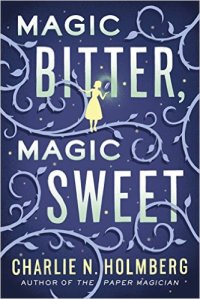
Book Review: Magic Bitter, Magic Sweet

mbms
Title: Magic Bitter, Magic Sweet by Charlie N. Holmberg

Genre: Fantasy

Rating: ♥ ♥

TL;DR: Magic Bitter, Magic Sweet is a fantasy story that features magic and a hundred pages of Sisyphean punishment that made it a tough read that was not redeemed by a quick and clean ending.


I received a copy of this book through Net Galley in exchange for an honest review.

Magic Bitter, Magic Sweet opens with the tale of Maire, who is able to enchant magical treats in her bakery, but Maire is more than she appears. Four years ago she appeared in town as if dropped from the heavens with no memory of who she was besides her name. Soon, Maire finds herself a slave, sold to a strange and primitive master who forces her to create magical treats while holding her wholly under his control. To be free and find her true identity, Maire must trust otherworldly beings and escape the clutches of her captor.

When I saw Magic Bitter, Magic Sweet on Net Galley, I was incredibly excited. I have Holmberg’s Paper Magician series on my to-be-read pile and thought I would love this based on the description, but I found MBMS to drag horribly and I nearly gave up around 30%.

The majority of the book is mostly Maire suffering at the hands of her captor. It reads like Sisyphus pushing his boulder up hill only to have it roll back. Maire gets instructions from the mysterious, ethereal Fyel on how she can possibly escape, and instead, she doesn’t do it, which leads to more suffering. I read through all of her tasks, cursing her for her stupidity and feeling very little sympathy for her. Poor battered, maimed Maire is a glutton for punishment, and I was completely over it by the halfway point. At the very end, when Maire is putting the pieces together from her memory, all of her tasks seem to have a purpose, but every pointless task is made relevant and done with within a few paragraphs. It was too clean and not worth the hundred pages of drudgery for the reader.

The other incredibly off-putting aspect of MBMS is that the antagonist appears to be a mentally handicapped man. He’s violent, called stupid by Maire, and is treated like a freak and a horrible person for at least 80% of the book. It just didn’t feel right. In the end, his handicap makes sense, but it made me incredibly uncomfortable. Can we really hold a mentally handicapped person responsible for their actions? Should we judge them like they’re normal? Maire tries to understand, but it reminded me of Lennie from Of Mice and Men. The handicapped hulking killer trope shouldn’t be revived.

In the last three chapters, everything comes together so neatly and quickly. It would have been a better experience for me if the beginning had been shorter and the info/flashbacks had been sprinkled in throughout the story. The relationship between Maire and her captor makes me wonder if the author was trying to grapple with a personal experience. I won’t mention what because it could give the ending away, but its deeply personal message hindered the story. Holmberg simply spent too long punishing Maire and the reader.

dead magic · Writing

Dead Magic Update: Blurb

dead magic

By the time I hit the halfway point in my stories, I like to have a tentative blurb written. If you don’t know what a blurb is, it’s the enticing synopsis on the back of books or on the description on their Amazon page. While I’m still fine-tuning the blurb for Dead Magic, I thought I would share it with you and see what you think.

Emmeline Jardine had no idea that when she stole a package, it would contain a grimoire that holds the secrets of life and death. Disillusioned with Spiritualism, she turns to the enchanting Lord Hale, who offers her a world of limitless opportunities at the Eidolon Club. But strange rumors stir about the exclusive club: grave-robbery, occult rituals, magic.

Across the city, Immanuel Winter, the boy who shares Emmeline’s soul, has settled into a peaceful life as a museum curator, but his happiness is short-lived when his past demons refuse to go quietly. Immanuel fears his sanity is slipping as body-snatching spirits attack and creatures return from the dead. Are they an illusion, or are they merely tied to the new powers he struggles to hide from his lover?

Dark forces are heading for London that threaten to tip the balance between death and life, and they are after more than the grimoire.

They want their soul.

So what did you think? Interesting? Terrible?

If you have an opinion, leave a comment below.

Dead Magic (Ingenious Mechanical Devices #4) will be out this fall and you can add it on Goodreads here.

Book Reviews

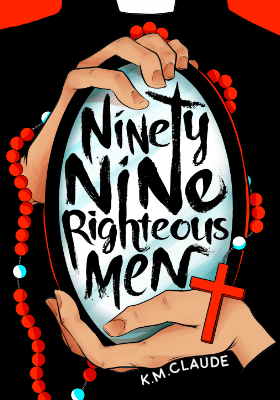
Book Review: Ninety-Nine Righteous Men

99 righteous men

Title: Ninety-Nine Righteous Men by K. M. Claude

Genre: Horror, graphic novel

Rating: ♥ ♥ ♥ ♥ +0.5

Tl;DR: Ninety-Nine Righteous Men perfectly blends the tragedy of unrequited love with Gothic horror into a beautifully illustrated graphic novel that can only be described as a Catholic’s nightmare.


You know a book is good when you dock half a star for not being long enough.

K. M. Claude’s graphic novel begins with two somewhat unlikely heroes, priests Daniel and Adam, who have a rather tumultuous and complicated past together, as they are drawn into the web of a demon possessing one of the parishioners. What transpires is a tale of tormented souls united by lust’s cruel embrace.

The art style for Ninety-Nine Righteous Men is gorgeous. It’s a style reminiscent of both Eastern and Western comics by utilizing a more Western anatomical style with a more manga-like action style. What Claude creates is some impressive juxtapositions with the rigid piousness of Catholic imagery alongside the pliant sensuality of the demon. At times, I’m hesitant to read graphic novels because I typically hate the style of traditional Western comics (mainly the gritty, rather sloppy style of super hero comics), but Claude’s art style is clean, precise, and deliciously detailed.

One of the things I greatly appreciated was the balance between sensuality, sexuality, and the quiet moments of action and dialogue. When I first began reading, I worried the entire graphic novel would be reminiscent of the game Catherine, but Claude deftly balances all aspects of the work until it comes to a head at the climax (puns intended).

As an ex-Catholic, I felt comfortable in the discomfort of Adam and Daniel’s wholly Catholic world. Often what disturbs them, disturbs me, and Claude highlights the rather gruesome aspects of Catholicism that tend to disturb small children with wandering eyes. While what’s discussed in the book might anger some more devout Catholics, we must all remember that priests are humans and should be treated as such. If you’re a fan of Anne Rice’s style of sensual Southern Gothic with Catholic guilt, you’ll probably enjoy Ninety-Nine Righteous Men.

My biggest complaint with the book is a good one. I wanted more. I didn’t want the book to end. I wanted more on Daniel and Adam’s backstories, their lives before the priesthood, their encounters together, and even Caleb’s life before the story takes place. While the characters are well fleshed-out, I think they could have been explored more.

Ninety-Nine Righteous Men is a unique tale of lust, love, and sacrifice through the lens of the Gothic, and I look forward to reading more by K. M. Claude in the future.

Monthly Review · Writing

May 2016 in Review

Last year, I decided that I would post my accomplishments for the month and what goals I hope to achieve in the following month.

Somehow I didn’t expect to be so productive in May, yet I feel like I’ve walked away with a lot of writing and ideas to use in June.

What I accomplished in May:

  1. Wrote 17,000 words on Dead Magic (hit 39,000 total)
  2. Wrote 8 blog posts
  3. Read 2 books
    1. Write. Publish. Repeat. by Sean Platt and Johnny B. Truant
    2. The Dream Thieves by Maggie Stiefvater
  4. Heavily researched for an Ingenious Mechanical Devices companion novella
  5. Began cover construction for Dead Magic
  6. Finished the audiobook for The Winter Garden to Audible’s specifications (should be out within the next week)

What I hope to achieve in June:

  1. Write at least 18,000 words of Dead Magic (for 57,000 total words)
  2. Write at least 6 blog posts
  3. Read at least 3 books
  4. Begin outlining and writing one of the IMD companion novellas
  5. Write the back blurb for Dead Magic
  6. Do a preliminary edit of chapters 1-10 of Dead Magic

I can’t believe I wrote 17k words this month. March and April were so slow in terms of my word count, but it seems that once the story hits the 1/3 mark, it just starts to roll. Laying the foundation is the slowest part, followed by the end when I need to make sure that I’ve tied everything up. I’m hoping that June will continue the trend of the productivity.

I’m so excited to be able to share some random excerpts of Dead Magic. Writing it has been a blast so far with lots of dark things, some gore, a bit of magic, and having to do a lot of research on trauma and PTSD (sorry, Immanuel). My artist boyfriend/cover designer/Photoshop guru will soon be working on the cover for Dead Magic as soon as I finish the back blurb and convince him to do it instead of working on his new design shop, Regal Rook designs. I’m sure I’ll be posting more on that in the future as well.

The one major thing that was sacrificed this month was my reading. I meant to finish Blue Lily, Lily Blue by Maggie Stiefvater in May, but I was busy researching and writing and it ended up sitting on the sidelines. It’s a really good series despite how long it’s taking me to get through it.

On Tuesday in my post Plot Bunnies and Projects, I wrote about the companion novellas I’m planning to write over the summer. I haven’t really begun planning them out yet, but I hope to have at least one of them written (probably Judith Elliott’s first). I’m super stoked to work on them because I really love the ideas I have rolling around, so hopefully, they’ll come out as good on paper as they are in my head. I will be updating you as I write.

At the top of the page is a little newsletter sign-up thing. If you want to get exclusive excerpts, ARCs, and messages about new sales/deals, sign-up. I don’t send them out often, so you won’t need to worry about me blowing up your inbox.

So what are you working on this month?

Book Reviews

Book Review: Write. Publish. Repeat.

wpr cover

Title: Write. Publish. Repeat.: The No-Luck-Required Guide to Self-publishing Success by Sean Platt and Johnny B. Truant with David Wright

Genre: Writing, non-fiction

Rating: ♥ ♥ ♥ ♥ ♥

TL;DR: Write. Publish. Repeat. is an indie author’s dream in terms of a straight-forward how-to book for marketing, building an audience, and creating a writing empire.


I love Sean Platt and Johnny B. Truant. This is the first of their books that I’ve read. I picked this one up on a recommendation from several other authors, and I am so glad I did.
Write. Publish. Repeat. is an extensive book, covering the self-publishing/publishing as an industry, how to look professional, what to do, what not to do, marketing, and probably every other topic under the sun that an indie author could want to know about.
The information is laid out in an easy to follow manner with each section of the book being devoted to a certain topic, and while the authors say there may be some back-tracking and double covering of topics, I didn’t notice. The tone is conversational and most importantly common-sensical. Platt and Truant pull from their own experiences as indie authors as well as those of their friends and fellow authors to illustrate how to an author can make it in the industry by achieving certain manageable goals. The book certainly isn’t a get-rich-quick scheme or a sensationalized how-to-make-millions-with-a-shitty-but-marketable-book book. Truant and Platt don’t play that way, and they remind the reader of that.
Write. Publish. Repeat. relies on an author understanding a few finer points: be adaptable, work hard, and be yourself without being an asshole because no body likes those.
People who should read this book: Indie authors of any range (new, moderately successful, successful, thinking of possibly maybe publishing) and traditionally published authors who need to learn how to market their book professionally or would like to know about more publishing options or would simply like to build their brand. I’m thinking especially of authors published by small presses.
People who shouldn’t read this book: people who want fame and fortune with one book, people who aren’t in it for the long haul, quitters, whiners, literati types, and people who can’t deal with occasional profanity.
Write. Publish. Repeat. is an indie author staple. The advice within in it is straight-forward, doable, and for the most part, painless. If you’re even thinking about going indie, read it.

Writing

Plot Bunnies and Projects

dm cover idea
A sketch for the cover concept for Dead Magic.

Hey peeps,

I thought I’d drop a post about why there’s been silence AGAIN on the blog. Well, that’s mostly because I’m actually writing. The more words dropped into MS Word, the less words I have to spare for the blog.

So I am knee-deep in Dead Magic at about 45% of the way into it. I’m still planning on having it ready to publish in the fall, so I will definitely be posting more excerpts and hints along the way.

What I’m really excited to announce is that between now and the fall, I will be writing two companion novellas for the Ingenious Mechanical Devices series.

The first story divides its time between Edo Japan where Americans and Europeans have finally barged in to “modernize” the Japanese and 1880s New York. Judith Elliott’s little sister is dead. Unable to save her and in failing health, Judith is sent to her uncle’s country home in New Jersey to recover. Resentful and dissatisfied with life, Judith fights her family’s concern and the treatments her doctors believe will get her over the devastating loss. Judith fears her life will never go on until she meets her uncle’s Japanese wife, Kiyo. Kiyo has seen more in her life than anyone Judith knows and thinks she can devise a way to repair a broken spirit. Can Kiyo help Judith move on? And is it possible to move on after fate steals the one you love?

The second will be a paranormal romance that centers around Emmeline’s mother. An old suitor has come to call. Two years after his disappearance, he’s returned to claim Madeline’s heart and hand. The only thing standing in their way is her absentee husband who has once again gone off to Africa, leaving Madeline alone at Headington Hill. Will she give in to her renewed feelings? And does her ex-lover have more to explain than just his absence?

Sound interesting? Well, the reason I decided to post the early blurbs for my forthcoming novellas is because I’ll be offering them as free ARCs (advanced reader copies) to my newsletter followers. If you would like to receive the free ARCs for my next two novellas along with updates and exclusive excerpts, sign-up for my newsletter by clicking here.

Personal Life

Graduation

As of last Wednesday, I have officially graduated from graduate school with my MFA in Creative and Professional Writing.

It seems strange to say that I’m done with school since I’ve been in it one way or another for nearly 20 years. I still may go back for a MA in literature, but for now, I’m done.

It still hasn’t sunk in yet. I feel like in the fall I should be ordering texts for class and preparing my backpack with supplies.

I guess I’ll be doing much of the same thing because in the fall I’ll be an adjunct professor at two universities, teaching freshman writing. An adjunct professor is basically a part-time professor who teaches the underclassmen. An entry level professor. It’s the bottom of ladder, but at least I’m on a rung. I’ll be one step closer to becoming a full-time English professor. It may take years to get there, but I’m willing to stick it out.

For most of my life, I had no idea what I wanted to be when I “grew up.” I went from wanting to be an archaeologist to a doctor to an English professor. What I really want to be is a writer, but I think I can balance that with working as a professor. I’ll be teaching students about writing and literature while actively engaging in that community. I’ve seen the publishing industry change over the last five years, and I’ve been self-publishing for the last two. I’m someone who loves reading and writing, and I hope I can impart that to my future students. My life was changed drastically by the influence of a few key professors, and maybe one day, I’ll be that professor for someone.

Writing

Series Mega Sale!

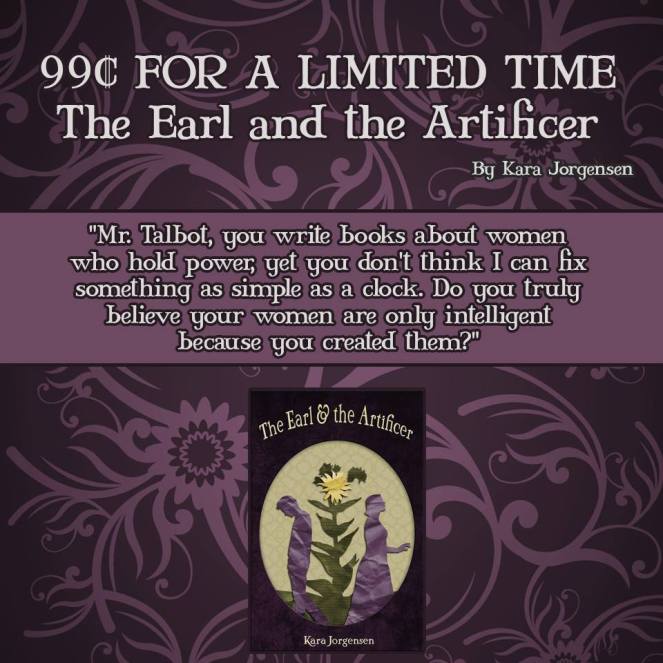
EoB WG free promoEatA 99 promo


As you can see, the entire Ingenious Mechanical Devices series is on sale this week from Monday (5/16) to Thursday (5/19).

I decided to mark everything down as a little congrats to all of the college/grad students finishing up this week and the professors who are finally finished with papers. You can get the whole set for less than $2. The links are below, and if you are able or would like to help an indie author out, please share the pics under the links on your social media accounts to help spread the word.

The Earl of Brass FREE

The Winter Garden FREE

“An Oxford Holiday” 99 cents

The Earl and the Artificer 99 cents

EoB free promoWG free promoEatA 99 promoEoB WG free promo

Writing

5 Tips for Atmospheric Writing

Recently, I’ve been reading Maggie Stiefvater’s series The Raven Cycle, and what has blown me away (besides the characters, plot, and just amazing story overall) is her ability to create atmospheric settings. What I mean by that is that the settings evoke a specific feeling, and this feeling adds to the tension or heightens the mood of the piece. Atmospheric settings can sometimes be so evocative that they are characters themselves. I found this in The Raven Cycle series by Maggie Stiefvater, Jazz by Toni Morrison, and The Witching Hour by Anne Rice.

In my own writing, I’ve tried to develop this skill while building the backdrop of London in The Winter Garden and Brasshurst Hall in The Earl and the Artificer. While working on this skill, I’ve learned a few things.

  1. Write your scene first. Add your atmosphere after. I tend to write my scene in layers where I write out the dialogue and overall scene direction first. Then, I do a quick pass through where I add more detail until the scene is fleshed out. When it comes to writing, dialogue, plot, and character movement is much more important than atmosphere. My suggestion is always to work on your scenery after you’ve gotten the essentials down. This also tends to eliminate pages and pages of atmosphere/scene building because you already know what you need in your scene instead of tossing in everything and the kitchen sink just in case your character needs it.
  2. Know what you’re trying to evoke. It makes infinitely easier to build tension or heighten the mood if you know what you’re trying to accomplish. Ask yourself a questions. Is your story paranormal or a western? How does your genre affect the atmosphere of your piece? What’s the overall emotion in this scene? Suspense, mystery, anger, romance, sadness, etc. Does the feeling fit the genre or scene? Does it fit the characters? Sometimes the feelings will conflict with characters to create tension, but if it stands out in a bad way against the rest of your story, you may want to rethink what you’re trying to create.
  3. Figure out what your scenery looks like before you start adding it in. I don’t mean that you need to break out the Sims and start building an entire house, but you should know the major features or the features you hope to highlight. My suggestions is to jot down the defining characteristics of the character the scene relates to. For example, when I was creating Dr. Hawthorne’s home office, I knew he he was a busy doctor who was progressive for his day. This comes out in his bookshelf, which is filled with medical texts from scholars throughout history, and between books there are rather disgusting anatomical specimens in jars. Because he’s busy, his desk is covered in notes that need typing and random bits of paper for his own research. Personal spaces should reflect the characters who live in them. As always, knowing where you’re going makes it infinitely easier to avoid writer’s block.
  4. Focus on the senses. And not just sight. Pretend that you’re where your characters are. What would you smell? Could you taste or hear anything? The more sensory details you include, the more evocative your scene will be. When I get stuck in this area, I go onto Pinterest to look for photos or Youtube for videos of scenery or thunderstorms, depending on the scene. If need be, look up words to describe smells or tastes. I know I’ve looked up how to describe the smell of rain.
  5. When you’re all done, go back and prune. You don’t want pages and pages of atmosphere, so go back after you’ve written your scene and see if you can get rid of anything. Pay careful attention to word choice as you’re editing. Are your descriptions succinct and do they make sense? Show them to someone else and see what their feelings are about your descriptions. Sometimes what’s in our heads doesn’t come out on paper. Atmospheric writing should add to the scene, so if it’s doing nothing but adding to your word count, cut it.

If you’re trying to boost your writing skills and learn how to create atmosphere in your story, my best suggestion is to read and take notes on what other authors do. The best way to learn to write is to learn to read as a writer.

Do you have any examples of writers who rock at creating evocative scenery?

dead magic · Writing

Dead Magic Sniplet #2

dead magic

Dead Magic, the fourth book in the Ingenious Mechanical Devices series, won’t be out until the fall, so I thought I’d share another clip from my WIP with you. Miss Emmeline Jardine has pilfered a package from the Spiritualist Society.


The Dorothy Restaurant hummed with chatter only broken by the occasional sharp laugh. Emmeline resisted the urge to shift in her seat. She had been to the Dorothy several times with Cassandra Ashwood, but she never failed to feel odd there. There had never been a public place she frequented where men were not allowed. The room was overly bright even in the dreary weather with its cream and red walls and gaudy array of colorful Japanese fans and parasols artfully tacked to the walls and ceiling. Around them all manner of women ate the same meal at the same white tablecloth and vase of flowers. During previous visits they had spotted Constance Wilde and the Countess of Dorset not far from a table of shopgirls. In a space free of men, the women seemed to change before her eyes into some strange perversion of the womanhood she knew. Cigarettes were lit and overheard table conversation often involved politics, women’s rights, and even colonialism. Of course, there was gossip, but mixed in were stories of tête–à–têtes that bored on elicit. At the Dorothy, they all seemed so free, yet surrounded by a complete lack of restriction, Emmeline faltered.

“You’re very quiet today, Em,” Cassandra said, looking up from her roast chicken and potatoes.

Her eyes flickered over the window where rain pattered against the pane and through the drivel, she inadvertently caught the gaze of a man peeking inside. What he expected them to be doing, she couldn’t imagine, but gawkers, she was quickly learning, were common at the Dorothy.

“Ignore him.”

“Why are they always staring in? It’s rude. It’s a restaurant, not a sideshow.”

“They don’t like that we finally have some privacy. You know, you could have left your book in the coatroom. I’m pretty sure no one would steal it, especially when Miss Barker knows us.”

“That’s not what I was worried about.” She paused. What was she worried about? “I didn’t want anyone to see the title.”

Cassandra shook her head. “Maybe I don’t want to borrow it if you’re that nervous about other people seeing it.”

Emmeline gave her a weak smile. Her eyes traced the outline of the book beneath the crinkled paper. She had placed it on the table facedown with her reticule and gloves on top of it to keep Cassandra from turning it over. Her heart pulsed in her throat, ruining the taste of the meat in her mouth. She was itching to open it. Every time she looked away, she felt its glare upon her, as if the book was watching her—beckoning to her—the moment she turned her gaze. For a moment, she wondered if she should just confess to Cassandra what she had done and open the bloody book.

Before she could act on her thought, Cassandra straightened with a squeak. She wiped her mouth and took a long sip of tea before she asked, “Did I tell you about the gala?”

“What gala? The season is over.”

“Well, it isn’t a society party. It’s a gala to celebrate a new ancient botanical collection at the British Museum. I’m sure you heard.”

When Emmeline raised a dark brow, Cassandra continued, “Your aunt’s cousin, the Countess of Dorset, and her husband donated the main specimen, the silphium plant. Please tell me you know what I’m talking about. I’m sure your aunt mentioned it.”

Thinking back to dinner conversations, she could vaguely recall some mention of a party at the museum. She hadn’t paid much attention. “I don’t think I was invited, but it doesn’t matter. I don’t want to go.”

Cassandra’s chestnut eyes widened and sagged.

“You actually want to go? But why? It will be so boring. All those old stuffy scholars and their pinch-faced wives.”

“My friends will be there. I don’t think you have met her, but Judith Elliott is my best friend—”

Emmeline stiffened.

One of my best friends, and I’m certain you will love her as much as I do.”

“Of course,” she replied tartly as she stabbed a piece of boiled potato and brought it to her lips.

She could feel Cassandra’s gaze upon her, eyes torn between anger and guilt. Somehow, Emmeline had never imagined that she could have friends besides her, that she had a life outside the spiritualist society. That and the Dorothy was the only place she ever saw her, and she didn’t appear to have a beau or that she was even looking. Modern woman, Emmeline scoffed. No wonder Aunt Eliza loved when Miss Ashwood came for tea. Watching Cassandra go back to her meal, Emmeline’s stomach knotted. She knew so little about her even though they spent nearly every weekend together and most nights at the spiritualist society. She knew Cassandra worked as a secretary somewhere, though Emmeline couldn’t remember where, and that she lived in a flat not far from the society along with another woman.

From the edge of her vision, Emmeline studied Cassandra’s features. She envied her prominent cheekbones and her expressive lips. When she smiled, it made Emmeline’s face join in her joy, but it was her bearing that caught her attention when they first met. She had thought of quitting the spiritualist society for good until she spotted Cassandra waiting at the front door. She stood tall despite her short stature, with her walking suit smartly cut to accentuate her curves and the color rich enough to bring out the flecks of gold and green in her eyes. There was a self-assuredness about her that didn’t require words to enforce. Maybe that was what five years of relative independence did to a woman. Still, it was troubling to know she had no suitors to fall back on or tear her attention away from the gloom and tedium of the spiritualist society.

“I shouldn’t be telling you this since you have decided to be peevish, but Mr. Talbot’s cousin just walked in,” Cassandra whispered, her eyes darting toward the front door as a rush of warm, damp air washed in.

“How do you know who she is?”

“Because I just saw him drop her off.”

Whipping around, Emmeline turned in time to see a dark-haired woman enter and a charcoal grey steamer pull away from the curb. “I can’t believe I missed—”

The words died in her throat. Cassandra was holding the book, her book, regarding her with pursed lips. Emmeline reached to snatch it from her grasp but pulled back. It wouldn’t do to make a scene. Shaking her head, Cassandra handed the paper-wrapped book back to her.

“I knew something was wrong when you wouldn’t give it up. You never wait to open a book. Nostra is a fool, but this is hers. You can’t steal her property, Emmeline,” she replied in a harsh whisper.

Groaning, Emmeline placed the package in her lap and covered it with her napkin. “But she isn’t even the head of the society, not yet anyway. Besides, it probably isn’t even hers.”

“If it isn’t hers, then whose is it?”

Emmeline opened her mouth, but his name refused to leave her throat.

Sensing what she wouldn’t say, Cassandra shook her head. “But it’s been over five months. Do you really suspect it was meant for him?”

“I don’t know. I know taking it was wrong, but you didn’t know him, Cass. He was evil.”

“You think it’s something malicious?”

She shrugged. “It could be. Would you want Nostra getting a book on soul-stealing or God knows what?”

Cassandra sighed, her gaze traveling to the book in Emmeline’s lap before coming to rest on her concerned eyes and drawn mouth. “Maybe you should open it and see what it is. If it’s just a book, we could rewrap it and bring it back tomorrow, and if it’s something bad—”

“We can get figure out what to do once we know what it is. Good idea.”

Using her untouched bread knife, Emmeline carefully slipped it between the paper. With a crack, the must of centuries old paper and ink rushed out. Emmeline locked eyes with Cassandra as she tipped the package and let the book slide into her hand. Laying across the front cover was a letter. Setting the book and torn wrapper on the table, she turned her attention to the missive. The sole page was stained with ink and flecks of brown, but the lines of the long, looped writing had been written with such force that it had been incised into the page. As she lifted it closer, minute beams of light broke through the parchment.


September 14th, 1892

To the person the grimoire chooses,

I hope whoever is reading this letter can forgive that I know not to whom I am writing. I don’t have much time left. The duke is ailing and has entrusted the book to my care, but I fear my time will be as short as his. They have discovered me, and the grimoire is no longer safe in my care. This book has passed through many hands before reaching you. Others like us will have received this package, and in turn, sent it to another to keep the book out of the hands of those who would pervert the knowledge within. If you are reading this note, you are the end of the line. It is my hope that the book has fallen into worthy hands.

You must know dark forces are in Berlin and are moving north to London. They move against all of our kind. Those who would seek to keep the balance of death and life are being cut down by practioners wanting to tip the scale. They need what the grimoire possesses.

Protect it or send it to someone who can.


There was no signature. Flipping the paper over, she found the same note written in Latin. Emmeline’s heart thundered in her throat. Dark forces were coming to London. What had she taken?


Stay tuned for more updates for Dead Magic. If you would like news about releases, ARCs, and special deals, please sign up for my newsletter.