The Reanimator's Remains · Writing

One Day Until The Reanimator’s Remains

As of when this post goes up, it is ONE day until The Reanimator’s Remains comes out!

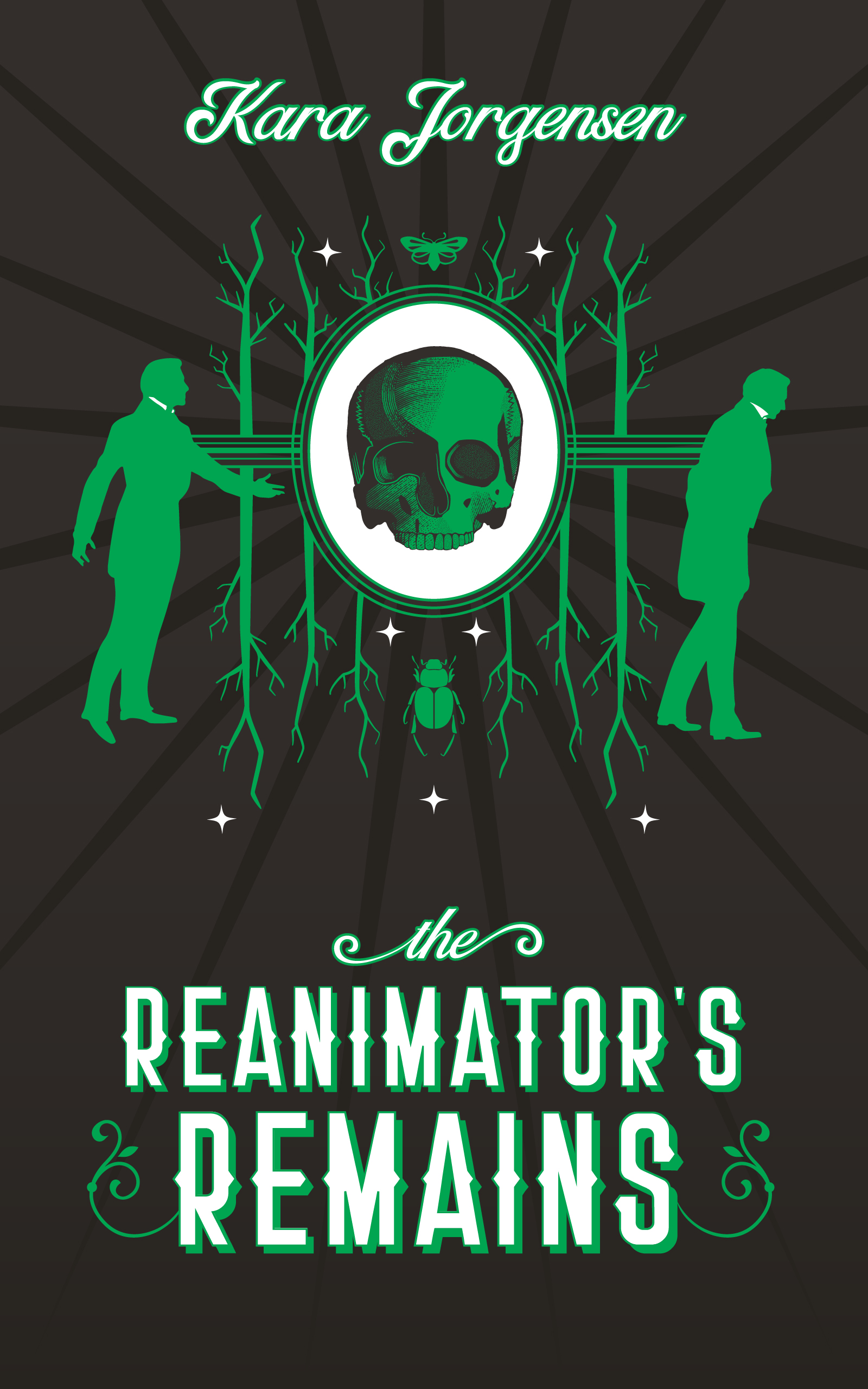
the cover for The Reanimator's Remains by Kara Jorgensen. It is green with a skull in the center with trees, roots, bugs, and one man reaching for the other as he walks away
Cover by Crowglass Design

The Reanimator’s Remains is the third book in the Reanimator Mysteries series and follows Oliver and Felipe as they travel to the Pine Barrens on a new case. Here is the blurb:

An autistic necromancer, his undead love, and a covenant that must be broken.

Oliver Barlow never knew what happened to his parents. With a note from his mother as his only lead, Oliver had given up hope of ever learning the truth. But when the dead start rising in the town of Aldorhaven, Oliver jumps at the chance to take the case if it means he can investigate the last place his parents were seen alive.

Felipe Galvan would like to be anywhere but Aldorhaven. Between protecting Oliver and Gwen, dealing with distrustful townsfolk, and an unexpected letter from his estranged parents, Felipe is already stretched thin. But when he is suddenly plagued by whispers from the woods and nightmares from his past, Felipe fears he is only one misstep away from becoming the monster he was meant to be.

Far more sinister things than the dead lurk in Aldorhaven’s woods. A centuries old bargain has been broken, and the only thing that can satisfy it is Oliver’s blood. Together, Oliver, Felipe, and Gwen must finish what Oliver’s parents started or they too will be ensnared by their devil’s bargain


The Reanimator’s Remains is the third book in the Reanimator Mysteries series and is my tenth full-length book (eleventh if you count Flowers and Flourishing). It takes place in the same universe as my other books and is set in the New York Paranormal Society, which is mentioned in Kinship and Kindness. You can also grab several free in-between book short stories in the freebie section of my website. The content warnings for book 3 are listed below and are also in the book are well.


CWs: suicidal ideation, self-harm, blood, gore, violence, death, descriptions of dead bodies, autopsies, on page sexual content, anxiety attack, historical period typical homophobia, remembered.mentioned child abuse, ableism, saneism, medical procedures, insects


The paperback of The Reanimator’s Remains is currently on Amazon and will move to other retailers in the coming weeks. You can still preorder the ebook at all major retailers or you can request it from your library system when it comes out October 29th, 2024. The audiobook is currently in the works and will be available spring of 2025 if all goes according to plan.

If you pick up a copy of The Reanimator’s Remains, I hope you will leave a review on Goodreads, StoryGraph, or your favorite retailer! They really help authors like me out in terms of visibility and credibility.

And if you haven’t read The Reanimator’s Heart (TRM #1), you can pick it up here. Or you can grab book 2, The Reanimator’s Soul (TRM #2), here.

The Reanimator's Remains · Writing

A Preview of The Reanimator’s Remains

The Reanimator’s Remains (TRM #3) comes out on October 29th, so about a little over a week from now! In order to whet your appetite, I thought I would share another lengthy excerpt. This time from chapter one. I hope you enjoy it.

Chapter One: Secrets and Surprises

Oliver Barlow did not keep secrets or enjoy surprises, yet he found himself eagerly doing both for Felipe. As Oliver buttoned his waistcoat, he went over the plan for that night’s outing once more. First, he would borrow one of the Paranormal Society’s steamers and take Felipe to the botanical gardens. Oliver wasn’t certain Felipe particularly cared about plants, but he enjoyed walking far more than sitting through a play. Besides, going to the greenhouses would be like visiting forests and gardens all over the world without ever leaving New York. Unlike at the theater, they could freely talk, and there was still a chance they could sneak a touch or kiss on a secluded trail. On the way back to the society, Oliver planned to stop at an Italian restaurant Louisa and Agatha had raved about. Felipe had mentioned wanting to have dinner there one day, but in the chaos of cases and meetings, they had never gotten around to it. Oliver wasn’t certain if the restaurant served dessert, so he double checked the maps in the archives to confirm there were places nearby where they could get an egg cream or some rugelach if Felipe was still peckish.

Oliver drew in a calming breath and shook out his hands to keep Felipe from feeling his anxiety on the other end of the tether. He didn’t need him running down to check on him and ruining the surprise. After listening to confirm Felipe hadn’t reached the laboratory or closet outside his basement bedroom yet, Oliver retrieved the strong box from under his bed. Tucked under papers and old photographs sat a ring box. A nervous smile crossed his lips as he turned it over in his hands. More than anything, he wanted Felipe to enjoy their outing because when they got back to the apartment, Oliver would give him a ring. Popping open the box, he marveled at the way the globe of polished amber set in gold caught the light. When he first saw the amber ring in a display case at the jeweler’s, he couldn’t get it out of his mind. Inside the fossilized resin were bits of ancient flower petals forever frozen in time, but what truly drew him to it was that the amber was nearly the exact shade of Felipe’s eyes when they caught the sunlight. He even got it inscribed with My light in the darkness to drive home to Felipe how much he meant to him. A man who reminded Oliver of all the beauty and softness in the world deserved a ring that reflected that light and life.

Oliver’s thumb drifted to the gold and black enamel band on his ring finger. Even though he wore it every day and kept it on a chain around his neck during autopsies, he still couldn’t believe it was there. He had never expected to be proposed to or to be proposing to Felipe. Men like them rarely found someone, let alone someone who wanted to stay with them forever. Oliver knew it was different at the Paranormal Society, that they could have some semblance of permanency and normalcy, but he never expected that he would find anyone who loved him like that. When Felipe had suggested they take a trip to Coney Island to relax, Oliver never thought it would end with Felipe presenting him with a ring and asking him to spend the rest of his life with him. Oliver swallowed hard at the memory. He would have given anything for that, proposal or not, but the ring with its grinning skeleton and Felipe’s message of Don’t go where I can’t follow was as much a memento mori as it was a memento vivere. If Oliver had his way, they would have so many more years together.

Shutting the ring away, Oliver shoved the strong box back under the bed with his foot. Felipe knew the proposal was eventually coming; Oliver had asked him if he could do it in return after all, but even if it couldn’t be a true surprise, he wanted Felipe to feel special and loved, the way he had made Oliver feel. At the clack of the laboratory door, Oliver stuffed the ring box into the jacket he left hanging on the desk chair and scrambled to his feet. He had just finished smoothing the wrinkles from his trousers when the bedroom door opened, and Felipe slipped inside with a tired sigh. His curly brown hair and suit were rumpled, and beneath his eyes, dark circles blotted his tan skin, but when he saw Oliver watching him, a relieved smile spread across his lips. Oliver crossed the room in two strides and caught his partner in his arms. The shorter man sagged against him in a boneless heap.

“That bad?” Oliver asked with a small smile.

Felipe grunted into Oliver’s chest. “You don’t know the half of it. You’re lucky you work down here. If it wouldn’t make a mess for both of us, I would fully retire now just to not have to deal with these meetings.”

“Why? What happened?”

“Everyone’s getting on my nerves,” Felipe replied, leaning into Oliver’s touch as he combed his fingers through his hair. “During the meeting, the head inspector let us know that a case is being transferred to us from the New Jersey Paranormal Society, so of course, everyone has to pipe up that they are too busy to take it. It couldn’t possibly go to them. Give it to someone else.”

“Do you want to take it?”

“God no, but I didn’t start griping about how we’ve been run off our feet since the Institute for the Betterment of the Soul case. Everyone is busy. Yelling at each other and fighting over whose case is bigger isn’t going to make us any less short staffed. Besides, it hasn’t even been officially transferred to our branch. None of us even know what the case is about, so why start making trouble before we even know what we’re up against?”

“I’m assuming there’s no corpse, or it would be my problem too.”

Kissing the top of Felipe’s head, Oliver inhaled the familiar scent of his aftershave mixed with coffee. When his lips traveled down Felipe’s cheek and into the hollow beneath his jaw, the other man’s hands tightened on Oliver’s back and a low moan broke from his throat. Oliver’s tongue rasped against Felipe’s stubble as his lover’s hands snaked under his waistcoat and down his backside. Halfway down the dark blue wool, Felipe’s hand stilled.

Opening his eyes, he pulled back to look over Oliver’s form. “You’re in your new suit.”

“I am,” Oliver replied with a sly smile.

Felipe stepped back to take Oliver in. His walnut brown eyes raked over Oliver’s form, pausing pointedly on his navy-clad legs and backside as he circled him. A blush rose on Oliver’s cheeks at the heat in Felipe’s gaze. Letting out an appreciative whistle, he ran his hands down Oliver’s sides before kissing him in that slow, deliberate way that made every thought scatter like billiard balls.

“And what’s the occasion for so much color? Last time I saw you, you were in work charcoal.”

“I thought we could go out this evening. I have a whole itinerary. Unless you’re too tired, of course. We could always put it off until tomorrow if you would prefer to stay in. I don’t mind waiting.”


You can read the rest of chapter one when The Reanimator’s Remains comes out October 29th. Preorder it here. Paperbacks will be available very soon.

Writing

How to Deal with Writer’s Block and Imposter Syndrome

This semester I’m teaching a class about writing a novel, and one of the things I am trying to emphasize is maintaining your mental health as a writer. I wanted my students to know all the things I had to learn the hard way or from other writers way too late, so I thought I would share my tips for dealing with writer’s block and imposter syndrome.

Writer’s Block

There is no such thing as writer’s block. Before you get mad at me, hear me out. What I mean by that is that there is no divine muse that has ripped away your ability to write and you may never write again. 99% of the time, there is a very fixable reason as to why you are blocked

How to fix writer’s block

  • Deal with your emotions– is there something bothering you? Sometimes you have a mental block. There is an emotion or thought that is clogging the pipes, and until you get rid of it, there will be no way to go forward. If you do need a good cry, embrace it, or if you think that will tank your ability to write afterward, you might consider writing about it in a journal or spending ten minutes to just dump whatever is in your head.
    • Performance anxiety-Another version of this is that you’re ruminating on something you’re worried about with your story. Whether it’s a plot hole you need to fill or imposter syndrome, freewriting for a few minutes can eliminate that block.
  • You’re burnt out– Sometimes you’re just plain tired. Being mentally, physically, or emotionally drained can cause writer’s block. You are out of spoons, and you need to take a break. You might be on a deadline or rushing to finish something, but sometimes, taking a day off can make you more productive after. If you still feel fried after taking a day off from trying to work, you may be headed toward burnout and more self-care and rest may be necessary.
    • Refill the well– This can be resting, watching tv, playing video games, going to a museum/concert, or doing crafts. Do what you need to in order to refill your creative well. In order to be creative, you need to also take things in that inspire you or stimulate your creativity.
  • Work on something else– This has the biggest caveat because if you have shiny idea syndrome, you will never complete anything, but sometimes you started working on something too early or you have another story that is loudly knocking at your brain, making it difficult to focus on your main project. You may want to give yourself a smaller amount of time to work on the other thing. Once you vent it out, you’ll probably have an easier time. If you worry you’re going to run with it and abandon your first project, then don’t do this one or only allow yourself a little side project as a treat.
  • You need to backtrack– One of the most common things for me when I get stuck is that I screwed up somewhere a few pages back, and somehow, my subconscious knows it but I don’t. Reread your story and see if you can figure out what went wrong. Sometimes it’s someone acting out of character, a missing beat/plot point, emotions that just aren’t ringing true, or an imbalance of action to introspection. Once you edit that bit and recalibrate, the words should start flowing again.
    • Most commonly, this tends to be a character issue. We’ve written ourselves into a corner or in such a way that moving in the direction we want doesn’t make any sense. Using a reverse outline can help you avoid this sort of thing, though it does still happen.

Resistance– sometimes we get ourselves so wrapped up in the anxiety of starting that we can’t get going. Some tips for this is to set a 15 or 20 min timer and tidy up your writing space (less to fiddle with or feel stressed by). Then, sit down and read your work for 10-15 min. If you feel the need to tinker or edit as you do so, do it. Then, set the timer again for 15-20 minutes and write. Sometimes all we need is to force ourselves to start in order to get over that resistance. You can also try switching it up by opening a new doc, working on paper, using a white board. Lower the stakes.

Imposter Syndrome

  • What is imposter syndrome?
    • It’s the feeling that you aren’t a real writer, artist, etc. and that if anyone looks closely, they’ll realize you’re a liar/faker. Basically, feeling you shouldn’t be given the label because you aren’t good enough. That sort of self-doubt can paralyze you or make you give up before you’ve even truly started.
  • How to deal with it:
    • Remember that this is a very normal feeling. All of the writers and artists you look up to have also had imposter syndrome, and you still look up to them. There will never be a point when this fully goes away, even if you’re famous and on the New York Times bestseller list.
    • Remember you are a writer if you write. If you have put pen to paper or finger to key while working on a story, you are a writer. People who put other writers down are insecure and projecting. If you have written, you are a writer.
    • Keep a log of your accomplishments. It’s really easy to remember all the rejections, but you need to celebrate the wins, even the small ones. You sent out your manuscript to agents- celebrate! You wrote the end on a book- celebrate! You got your first 5 star review- celebrate!
    • Talk to other writers about your feelings. Trust me when I say they will get it and will try to hype you up. Everyone has gone through it from time to time. The key is to not give in to those feelings and stop writing.
    • Remember that everyone sucks. The books you see in stores are usually like the 5th draft of a story and have been professionally edited. The first draft was a hot mess. If you think your writing is a hot mess, good. That’s part of the process, and it’s what editing and second drafts are for.
The Reanimator's Remains · Writing

One Month Until The Reanimator’s Remains

I am so excited because in a month, The Reanimator’s Remains (The Reanimator Mysteries #3) comes out in ebook and paperback. During October, I’m going to be sharing more of the story along with some fun tidbits about why this book came to be, what it’s about, etc.

Today, I want to whet your appetite by giving you some things I listened to and looked at while working on The Reanimator’s Remains.

First up, we have the YouTube playlist for The Reanimator’s Remains. I really love this playlist because the songs are so moody and fit oh so well with the creepy, woodsy ambience of this story. Compared to past playlists, it feels a bit ballad-heavy, but since this book is a slightly slower, more inwardly focused story, I think that works. Some favs:

You might have noticed there are quite a few songs from Shawn James, including “Orpheus,” “Haunted,” and “Through the Valley” among others. His deep, almost smokey voice adds such richness to his music, and of course, the subject matter of his songs is perfect for The Reanimator’s Remains. “Orpheus” is especially so.

“My Attic” which is a P!nk cover sung by Adam Lambert perfectly encapsulates Oliver and Felipe’s relationship in this book as both of them work to deal with parts of their pasts and family histories that are better hidden or left unsaid.

You might also notice songs like “The Lullaby of Woe” and “O Willow Waly,” which are meant to evoke the spookiness of the Dysterwood in book 3. If you loved the creepy cathedral in book 1, you’re going to love the Dysterwood. There’s plenty more on the “soundtrack” for this book, so I hope you enjoy it!

And I cannot give you previews without sharing the infamous Pinterest Board for The Reanimator’s Remains.

The Pinterest board has some research tidbits from this book along with my face castings for Oliver, Felipe, and Gwen. Yes, Gwen is heavily featured in this book! Gwen fans rejoice! If you’ve been wondering what The Reanimator’s Remains is about, the Pinterest board and playlist together should give you a pretty good idea of the mood and some themes. The boys are going through it.

If you haven’t preordered The Reanimator’s Remains yet, there’s still time. It comes out October 29th, 2024 at all major retailers. The Google Play preorder link will be up VERY soon (my apologies for my Google Play peeps), and paperbacks will be available closer to release day since I can’t put those on preorder ahead of time.

Personal Life · Writing

Community and Bad Author Behavior Pt. 2

Last week in part 1 of “Community and Bad Author Behavior,” I discussed what to look out for when it comes to a writing or online community that enables toxic behavior from bad actors. In this week’s post, I would like to outline what we can do on a personal level and going forward as a community to hopefully combat this behavior and keep this pattern from repeating.

Recognize Manipulation

This is easier said than done, but being aware of the signs of an abusive manipulative person helps you avoid falling for another abusive manipulative person. Keep in mind that people who are manipulative are good at what they do. If they weren’t, they wouldn’t do it. Some things to look out for are:

  • love bombing– this is when someone showers another person with praise and attention while getting closer to them. Once they have the person close, they then withhold affection. This done to keep the person craving their attention and trying to get in their good graces. Someone who runs hot and cold with their “friends” might be love bombing.
  • gaslighting– telling you something didn’t happen or didn’t happen the way you remember it in order to make you question your sanity or to make them look better. Once again, it keeps the person off balance, and the story might even be spun in such a way that it makes the person apologize to the gaslighter and try to make it up to them.
  • testing your boundaries– often they will run over your boundaries by asking you to share more, give them more time, be more emotionally intimate, trust them more. If you set a boundary, they will ignore it. At the same time, they are allowed to have boundaries, and if you run them over, they will punish you for it.
  • controlling behavior– In online communities, you’ll often see things like, you can’t interact with X person; if you do y, you’re a terrible person; you can’t be part of the group if you like so and so; and if you do any of those things, you’ll be kicked out of the group. People want to be loyal and be part of the crowd, so they comply without much push back, especially if the person is adamant.
  • using DARVO tactics– DARVO stands for deny [behavior], attack [victim], reverse victim and offender. Often someone is at the center of drama from multiple sources will try to play it off like they are the victim in all cases. Yes, someone can be bullied by multiple groups, but if someone seems to be involved in drama constantly, it warrants looking closer because DARVO tends to be involved. It’s a “get them before they get me” tactic to keep public opinion and support on their side and a way to muddy the waters when they do bad things.
  • can’t handle criticism or being told no– most of this abusive behavior comes from a fragile ego or low self-confidence, so they pretend to be an authority in order to maintain an unquestionable position. They use this to avoid accountability and deflect criticism when they do something wrong. When you approach them to tell you they hurt you, they will blow up at you or do the “I’m sorry you feel that way” type apology.

Think Critically

Manipulative and abusive people rely on the fact that you will not think too hard about what they’re telling you. Trust is key when manipulative people build communities to insulate them because, in order to get away with things for as long as they do, people need to not see what is right in front of them. It’s a slight of hand. In part one, I talked about how in these communities we often see cult-like vibes and a culture where authority isn’t questioned. Both of these mindsets require people to not think critically about what they see or experience. People who are or have been part of high control groups (like certain religions) are often more vulnerable to this sort of behavior as they were raised in a similar environment.

People who require control to keep things in their favor do not want you to think too hard about what they’re saying or push back against their behavior. Once one person defects, there’s a higher chance others will too. This is why they often boot or smear people who leave them, to keep others from believing them or doing the same. One can push back against compliance or herd mentality by having a healthy amount of skepticism. You don’t have to be an asshole and loudly question everything, but you can keep in mind that you don’t truly know people, especially online. I have online friends, and I love them dearly, but I don’t know how they behave when they aren’t talking to me. Two people can have two very different experiences with the same person.

At the same time, if something feels fishy, dig deeper. During the FM situation early on, there were red flags that popped up for me that I ignored at first because other people seemed to support them. Once they bullied one of my friends right in front of me, I realized those red flags were definitely there and dropped them like a hot potato. Being a “good friend” only goes so far. If you see them do something mean, confront them. How they react to that criticism is a good indication of whether they are trying to manipulate you or not.

Don’t Be a Yes Man

Being loyal is a good thing. Being blindly loyal is a good way to end up with a toxic friend group. Manipulative people rely on yes men to always support them out of blind loyalty or because you feel indebted to them. Community is important, but let me say this, you owe awful people nothing. Cut your losses and move on if you realize they’re toxic. There’s often a sunk-cost fallacy with friends or people higher than you in the industry where people think, “if I just wait a little longer, things will get better” or “if I wait a while longer, they’ll promote my work to their followers, and my work will take off.” People will stay in toxic situations far longer than they should because they’ve already been there so long. At the same time, it can also be a “boiled frog” situation where things slowly become worse and don’t notice.

What I think is most important is to pay attention to what is going on in front of you with this person. If you see them doing something mean or shitty, call them out on it. Normal people don’t expect their friends to always agree or support them. Most of us know we can be irrational, petty, childish, jealous, etc., and personally, I’d like to be told if I have gone off the rails and been an ass because I know I need to apologize for my behavior and do better. One of my fears is that in the age of “your valid,” people take it too far or misunderstand what it is supposed to mean. Someone feeling jealousy is a perfectly normal emotion to have. How you act on that emotion is a very different story. Having a little vent in your group chat is one thing. Spreading falsehoods about that person to undercut them is another. If a friend is doing something bad, they should be called out on it. If they can’t handle the criticism once the heavy emotions have died down, then you need to reevaluate your relationship with them.

I was debating which heading to put this under since it straddles all of them, but if you are part of a friend group or friends with someone and you are afraid to disagree with them because you think they will put you on blast or smear you as they do others, that is a mega red flag. Just think about the situation from a more objective perspective. You are afraid to leave a group for fear of being bullied. That isn’t normal, and you shouldn’t tolerate it.

Move Away from a Punitive Mindset

At the heart of many manipulator-fueled pile-ons is a sense of justice, that the people engaging in the pile-ons are helping their friend or standing up for some greater social cause. It’s commonplace for manipulative people to take a personal beef or a perceived slight and spin it with a social justice slant, couching the crime in language that isn’t truly applicable in the situation (once the evidence/situation is looked at more closely) in order to get the “good” people around them to react more strongly. “Good” people don’t engage in pile-ons unless a threshold of unacceptability is reached, and the manipulator knows that. They can’t say, “I hate so-and-so who many of you are friends with, so unfollow them,” but they can say, “So-and-so is harassing me and said something hateful about me.” That’s the kind of thing people will jump on because they believe their friend. This all should have been covered in the critical thinking section, but this mob mentality falls under punitive justice.

Punitive justice is the belief that people need to be punished for their crimes in a way that is proportional to the behavior. The problem is that people with large followings and parasocial relationships can turn those people into judge, jury, and executioner for those they don’t like. As mentioned in part one, often there is no evidence presented at all to substantiate what they’re upset about, the yes men/enablers swarm around them to console them, and then they go off to exact justice, whether that’s through harassment, review bombing, or smear campaigns. The question becomes is there actually a crime? And if there was one, is this hornet swarm proportional to what the person actually did? Acting as a white knight or savior to another person is a symptom of this sort of punitive mentality. The dragon must be slain, and the other person rescued.

In a perfect world, the mindset should be that the person is held to account but with a focus on restorative or transformative justice. If there was something done to the other person, they should make amends and do something to restore that person to how they were before the offense or to do something to atone to the community. Punitive justice leaves little room for growth or doing better, and I would even suggest that it works in the manipulator’s favor in several ways. 1. if they play the victim, the person they’re accusing will almost always be worse off than them because they end up being harmed for something they didn’t do. 2. When the manipulator is caught, they will just delete all their accounts and pop up with a new persona.

Do I think they should be punished? Yes. I think withholding support and unfollowing people is something one should do if someone is awful. At the same time, I think there should be room for growth. If we watch from afar and see that this person is trying (emphasis on is), then they should be allowed back into the community after rebuilding trust and making amends to those they hurt. Unfortunately, without all the things listed above and a severe, sustained attitude change from everyone (myself included) in the writing community, I don’t know if this is even possible.

A Note on the Victims of Manipulators

A manipulative person leaves swaths of victims in their wake. There are the people they actively wronged through smear campaigns and bullying, the people they manipulated and abused in private, and the people close to them who were used and lied to. Those closest to them need to examine how they behaved after the abuse is exposed and remember that you can be a victim and a bully.

Something that upset me after the FM incident was how the people closest to them were consoled and coddled far more readily than those who were the victims of FM’s bullying campaigns and cyberstalking. I understand why. Those people had more of a community than their victims; they had each other. It felt like they were more upset about being in the splash zone of a scandal than that they had been complicit in FM’s abuse by enabling them and/or acting as a bully by proxy for them by engaging in their pile-ons against others.

Every single person I’ve talked to who was a victim of their bullying, cyberstalking, and abusive behavior all show signs of PTSD and anxiety from the experience. Seeing their profile pic became a trigger. My blood pressure would shoot up when they appear on my timeline, and I would go into anxiety spirals when they would start harassing me with sock puppet accounts. Now that they’ve been exposed, the anxiety has lessened, but these online harassment campaigns are not victimless crimes. People who were abused privately feel deep amounts of shame, and some haven’t returned to online communities because they feel they can’t trust people anymore.

This section isn’t meant to be a complaint section on what I and others experienced. It is meant to point that real harm is done when people enable manipulators and let their behavior go on unchecked, especially after they’ve seen the red flags. My hope is that as a community, we can be better about seeing the signs of a manipulative person early, not enable their manipulation, and think critically about what we’re witnessing before acting in a punitive manner at their behest.

Writing

Community and Bad Author Behavior Pt. 1

It’s been almost five months since the FM event went down (if you know, you know), and I have had many thoughts over the last few months. If you don’t know what I’m talking about, I linked the first post above, and if you google the author, you’ll find plenty of info about what went down. This is less about them and more about how the writing community can create the [toxic] environment that led to this person doing so well and how we can recognize these sorts of conditions going forward in order to stop them before they start.

While I hate when my students do this, let me spell out my thesis for this post: Abusive and/or manipulative people cannot flourish in a community without support from those around them. No matter who is at the center of the mess, for a person to continue doing this for any length of time, those around them have to ignore bad behavior, explain it away, or join in. There are red flags to pay attention to or things we can do to avoid enabling this sort of behavior within our communities.

No Questioning Authority

Manipulative people, in order to manipulate efficiently, must hold a position of power. Grifters and other ne’er do wells often take up a niche and start posting authoritatively. It doesn’t matter if they are spouting nonsense about crystals or saying things about queer people that negate any and all nuance because if they say it in such a way where they posit themselves as an authority, people will believe them. This authority is hammered home by jumping on others who disagree. When others see them go after people with righteous indignation, they see that as confidence rather than weakness. By doing this repeatedly, they establish a hierarchy with them at the top OR they create a persecution narrative around disagreement from others in their community, which they can leverage for more attention and ultimately more authority as more people come in to support them.

From there, they rely on social compliance and herd mentality from those who surround them. Once a few people start saying they are an authority on x or y, others will agree and comply. Even if they don’t always agree, seeing many other people agree with the authority figure makes them either question their beliefs or default to what the authority said just in case or to maintain the peace. They might even create sock-puppet accounts that act as their supporters. Other people see the sock-puppet defending them and join in. Their marks are usually people who are less outwardly confident, those with less social capital (though they often end up as bullying victims later), and those who are seeking community protection. The fake authority figure appears larger than life and attracts people who want to do better or know more.

If you get involved with an authority figure who doesn’t like it when people disagree with them or they squash any discussion or dissent from people within the group, it’s a red flag. People who are secure in their authority don’t do this. They don’t worry people are going to usurp their position because they know where they stand and what they know and are confident in that. They can also handle criticism and altering their position with new information. Insecure people feel the need to put others down and make them look stupid in order to maintain their position in the hierarchy. A true “authority” or leader should be able to field questions and meaningful disagreement in order to have a discussion.

Group Think Vibes (aka it’s getting culty)

I remember being part of a queer writing Discord server once where the main person/owner of the server mentioned they hated Our Flag Means Death. Now, if you don’t know, A TON of queer people LOVE that show. This person said that in an online room full of queers, and not a single person disagreed with them. I remember sitting there like wtf is going on?? It was my first inkling that something was not right. I put the server on mute and backed away. Disagreement, discussion, and friendly arguments are normal in a business casual server like that. To see zero people disagreeing with the main person is bizarre and made me think that person must do something that makes others afraid to disagree with them, whether it’s anger, kicking people out, or using passive aggression to get them to do or say what they want.

This behavior gets worse when those in a position of power, like a beloved author, cultivate parasocial relationships with people in their Discord servers or Facebook groups, especially readers. Those readers are often following them on social media as well, and no matter what, the author is in a position of power within those groups. What begins as a mention of “drama” on a private server or Facebook group can become a swarm of readers and other writers attacking someone at the subtle behest of the person in power. The person in power has plausible deniability as they never named names or told their followers to go after them. On the contrary, they explicitly stated not to, but they wouldn’t bring it up there unless the unspoken message was to do their bidding. Bringing it up to a best friend or author friend who is also on par with you is one thing. To say it to people who look up to you is leveraging your power, especially if the group is substantially large.

The worst thing is that these readers get trained over time to become enablers by the person in power. If you do my bidding, you will get rewarded by being given attention, being treated like a white knight, or by thinking they are part of some larger social justice crusade (depending on how the disagreement is being spun). In reality, they are being used because they don’t see the larger context of the “drama,” how it started, or what role the person they like has played in instigating it. All they know is what they’ve been told, and because they trust and like this person, they don’t look deeper. People who go against the person in power or who don’t pull their weight are often booted from the group. This once again reinforces the enabler dynamic.

No Evidence or an Evidence-less Crime

I have mixed feelings about demanding proof from a victim as it can be traumatizing or impossible to prove. At the same time, I do think we need to be at least a little critical when someone starts shit with someone else on the internet, especially if they are trying to instigate a pile-on or harassment campaign. If someone is saying someone else is bullying, stalking, or harassing them, there should be proof somewhere. If someone is being accused of ableism, racism, transphobia, etc., there should be proof somewhere. People aren’t usually good at hiding that kind of stuff, and asking someone to show a post or two that prove they have done what someone said isn’t out of line.

One of the things that happened with the person mentioned at the top of the post is that they repeatedly leveled accusations against other people with zero proof. When people asked to see proof they offered to freely show, they never got it and received only excuses. The people who asked for proof weren’t part of the inner circle, so when they pointed it out, they either got hate from the in-group or were ignored. Later, it was revealed that there was no proof because those things didn’t happen. Whenever someone tried to point out they were being a bully, they would accuse the other person of something worse. Leveraging their following, they were able to quickly get public opinion on their side and silence the other person by playing the victim loudly for a crowd (it boils down to classic DARVO tactics).

It puts the other person in a very hard spot because if they react, they look angry, which can be used against them. If they don’t react, they look guilty. But how do you prove you didn’t do something? When I was dealing with *that person*, that was where I got stuck. How do I prove I didn’t harass them? How did I prove I hadn’t spoken to or about them in months? I couldn’t prove what didn’t happen, and they knew it. People who use these tactics know this and use it to their advantage. The worst part is that once it works and they see they can leverage their following and others to shut down the people who point out their bad behavior, they’ll do it over and over again.

Critical thinking? Don’t know her.

Something you may have noticed in all of the situations is people stopped thinking critically. When someone acted like an authority, they didn’t question that they might be wrong or they might be purposely ignoring nuance in a situation that needed it. When someone asked them to get involved in a fight that wasn’t their own, they did it. When someone was attacked for disagreeing, no one stepped out of line to stop them. When they accused someone else of wronging them, no one pointed out there was no evidence. As mentioned in the first section, grifters and bullies rely on herd mentality and compliance in order to get away with the bad things they do for as long as possible. People within their orbit stopped thinking for themselves and relied on someone else to tell them what to think or do, and this behavior had a social pay off for them.

The worst part is that grifters and manipulative people rely on “good people” to do their bidding. Good people want to help their friends or stand up for what is right. Good people don’t question that what they’re doing might not be the right thing because surely their friend wouldn’t do that to them. Unfortunately, good people are easy marks because they aren’t nearly as suspicious of those close to them as they should be. On top of that, they can gain social capital by participating in the harming of others. It feels good to stand up to someone they think is wronging a friend. They also often feel they will lose social capital if they don’t stand up for this person as they might throw it in their face later that they didn’t say anything in their defense, and thus they would lose standing within the group. The most loyal followers get the most social capital within the group.

Being an autistic person who tries to see the best in people, I have been burned a lot, and because of that, I have become suspicious and standoffish. I don’t wish that on others, but I do think it’s a good thing to have a healthy amount of skepticism and to remember that you don’t truly know the people you meet, online or in-person. Are they actually your friend? Is the relationship reciprocal or are you always coming to their aid? Would they drop you like a hot potato or go off on you if you disagreed with something they did? Are you afraid to distance yourself from them because you think they’ll call you out or go after you? If you answered yes to any of these, that is a major red flag, especially the last one.

Where Do We Go From Here?

I wanted to include this as one post, but it’s getting quite lengthy. Next week I’m going to discuss what can possibly be done to deal with this sort of behavior before it goes out of control. I also want to discuss the impact it has on those who the authority/bully turns against because these aren’t victimless crimes, and in online spaces, those victims are usually ignored or forgotten. Check back next week for more on community and bad author behavior.

Writing

Trusting Your Writing Intuition

As some of you may know, my writing process is a delicate dance of two steps forward, one step back. I’m a writer who edits as they go, which I know is not how many authors or writers work. There’s a lot of advice thrown around in the writing community about when to edit. Some people overthink things and need to power through a draft to get it out before going back and fixing it. I am not one of those people. I don’t like mess. When I cook or bake, I clean pans and utensils as I go. The same applies to my writing.

Recently, I was working on The Reanimator’s Remains (TRM #3) and was finding myself slowing. Every time I tried to work, I sort of stalled out, and I couldn’t figure out why. I had an outline, I knew where I was going, I double checked the outline made sense, yet I still couldn’t convince my brain that we needed to keep moving forward. Sitting with the feeling, I realized I wanted to edit earlier parts of the book. Not a major rewrite, but I wanted to tidy things up again and reacquaint myself with the first half of the book. I kept telling myself no. No, you need to write forward, not go back and fiddle with the book, especially when I already knew act 1 was solid.

For a few days, I ignored this compulsion to edit, and guess what happened: I still didn’t write. Finally, after several days of stalling, I gave in. I had Word read the book back to me, and I edited through the entire first half of The Reanimator’s Remains. It took two days since it’s already been gone over several times, and during those days, I didn’t write anything new. At the same time, I’m kicking myself for not doing it sooner. My subconscious was begging me to edit the first half of the book and reacquaint myself with the major threads before going on, but I ignored it. My brain literally had to force me to stop writing in order for me to listen.

The worst part is that I understand why I refused to stop. I need to be productive. I need to write every day. FORWARD MOMENTUM IS KEY. But editing is a large part of my process that helps me maintain forward momentum, and somehow, I forgot that key point. Going back through that chunk of the story helped to remind me of all the threads and little details I need to pluck at in the second half of the book. I made a list as I went through the first half and went through the parts of the second half that I’ve already written to sprinkle them back in. Continuity is key, and my memory is certainly not infallible. Actually, it’s more like an internet browser with 123 tabs open, so going back through the earlier parts of the book was vitally important to not making a huge mess had I gone further into the story without checking what I needed to add in.

This whole do I or don’t I edit again debacle really comes down to trusting your intuition. If your brain is saying, hey, we need to slow down and refresh our memories and/or tidy up, we need to listen to it. Often, your subconscious knows something you don’t. Same thing with when you stall out while writing and can’t figure out why. It’s usually because you messed something up earlier, and you need to fix it before going forward.

After over a decade of writing novels, this is still something I need to remind myself: trust that inner voice when it’s telling you to stop and regroup. 99% of the time it’s worth it.

Writing

On Writer Hustle Culture

If there’s something I hate seeing online, it’s the glorification of hustle culture. For those of you who are not chronically online, hustle culture is the hyper capitalistic, you must be on 24/7, #girlboss, #productivity, work myself to death with a smile because I’m making more money than you attitude. As you can probably guess from my past screeds, I’m not a fan of capitalism for many reasons, but as an author/creator/artist, it’s particularly shitty to be expected to grind yourself to dust while supposedly doing what you love. Because if you aren’t, you’re apparently doing it wrong.

I believe artists should be able to make money from their art. I believe there should be social/governmental safety nets to allow us to do so as there are in other countries. I believe artists should be compensated fairly for their work and do it in a time frame that is aligns with their process and health. I feel like these are all very reasonable things to believe, but if you start looking at how people behave online, especially in certain online writing circles, you’ll see that is not the case.

Something I’ve noticed over the past five years of watching authortube (authors on YouTube), writertube (writers on YouTube), and writertok (writers on Tiktok) is the prevalence of hustle culture but in a way that is softer and almost more insidious because it is less obvious. I do want to preface this by saying that I see this more often with younger or less experienced writers than with people who have multiple books published, though I will touch upon some of those people later.

Beneath the aesthetic “A Day in the Life” or “Write With Me” videos is the looming threat of toxic productivity. No longer are authors writing in their pajamas gremlin style, they are out in the world writing and making content and recording B roll while doing it. The problem is that one must still write in order to have content to pump out into the world, and when your social media relies on you being a #writer, you must perform being a writer. The performance of writing is pretty clear in these videos, but the part that I find to be most toxic is the focus on large daily word counts.

Now, there are some people whose natural writing rhythm is 3k words a day or to fast draft. That’s totally fine. We all have our own pace. My problem is with the people who write for the sake of getting those large word counts, draft the same book ad nauseam, chasing their tail but never finishing anything. Or even worse, they beat themselves up over a no word or low word count day, even when the word count is perfectly normal for many writers. I’ve watched so many young or unpublished writers do this and burn themselves out. There are times when I’ve suspected a writer is burnt out and not writing, though they read off some giant word count while never talking about their project in any detail.

I’ve complained about Tiktok and the capitalist drive to produce content, but the mixing of word count and content does nothing to help writers. It gives completely unrealistic expectations to newbies, it’s fake in some cases, and in others, it drives people’s mental health into the ground when they try to maintain high levels of productivity for way too long. As much as the idea of NaNoWriMo started out as a good thing, I lay the blame for this trend at their feet. I think a lot of younger writer thought, If I can write 1666 words a day for a month, surely I can do more and for longer, without understanding that NaNo is not meant to set the pace for the entirety of their career or life. As with most things relating to hustle culture, it almost automatically excludes people without ideal circumstances, so people with lower energy levels, people with kids, with demanding jobs, etc. Those people can never be #AuthorGoals if they aren’t typing 3k a day while taking aesthetic B roll at a coffee shop.

My hope is that newer writers will understand that a lot of what they see online is not real or is heavily curated to make it look better than it truly is. There are ways to be productive and have goals without running yourself into the ground or creating a facade in order to live up to perceived expectations. The key is to focus less on content production or high daily word counts and more on what works best for you at this stage of your life. For some, it is fast drafting, but for many, a more moderate or slower approach is healthier. Don’t get caught up in what you think you should be doing because someone online tells you that you should or because you see someone successful doing it. You don’t know how much help they have or how many hours they have to work.

Going off this, be wary of people who consider themselves to be writing gurus or who churn out 10+ books a year. Many people whose sole job is writing can write 4-6 books a year, but if someone is publishing every month, be skeptical. Often, those people use ghost writers, people on Fiverr, or now, they rely on AI to do the heavy lifting with their books. They may also have assistants who run all their social media profiles or spouses who take care of all the day-to-day life stuff that you’re still doing. Don’t fall for the aesthetic hustle culture you see in online writing communities. Being a YouTube or Tiktok personality with never be a substitute for good writing or maintaining your sanity and health through good habits when it comes to a building long-term career.

Writing

Why I Will Never Be a “Brand”

I’ve been thinking about brands, online personalities, and sincerity a lot lately. Without harping on past posts, let’s summarize the reason for this rumination as recent-past online trauma (if you know, you know).

Something you hear a lot as a new author is figuring out your “brand.” What’s your author brand? Build your author brand in 5 easy steps! Build your brand!

What building your brand should be is targeting your product to your ideal reader. Note: I said product. Your book is a product; you are not a product. I do have an author brand. I call it being a romantic goremonger. I write books with some gory, highly descriptive gross bits (usually medical in nature or having to do with a cadaver) while balancing that with lots of emotional intimacy between the two main characters. My ideal reader also enjoys historicals and is probably queer (or enjoys queer books) since those are basically all that I write. If you like Anne Rice, KJ Charles, Jordan L. Hawk, Cat Sebastian, Allie Therin, and Arden Powell, you’ll probably like my books.

What I don’t like and have come to actively distrust is creatives who treat their social media as an extension of their brand. There’s a big difference between throwing your audience a bone by posting a smutty snippet or sharing some cool research from your latest project and treating everything you post like it’s a direct reflection on you. When the latter happens, often people start posting less about things they actually care about and more about things that will reflect well on them as a brand. It’s the same reason corporations only post rainbow stuff in June or Black history infographics in February. It’s not that they care about any of these groups or want to foster equity of any sort. It’s that if they don’t, it’ll reflect poorly on their public image.

Years ago, I saw this mostly when authors completely refused to post anything “political” on their pages by abstaining from every mentioning a problem a person of color might face or that LGBT people exist. This was mostly due to the fear that people wouldn’t want to buy from them due to their lack of a stance (or conservative stance) on an issue. Unfortunately, we’re also starting to see it happen in the other direction where people make token posts about Palestine or trans rights because they feel they have to, not because they actually give a shit about either group. The idea is once again a preservation of their audience rather than a sincere post about something they care about. I’m totally fine with someone saying, “Hey, I’m not going to post about X because I don’t know enough about it.” I’d rather someone step back and educate themselves than make a knee-jerk post because they feel they have to. You should be supporting people of color, queer people, disabled people, etc. because you want to, not because you feel social pressure to do so. The social pressure on social media can absolutely drive this sort of insincerity, and I hate it immensely. The worst part is how many people seem very happy to tick off the boxes that make someone acceptable before supporting them when in reality it’s all for show and they don’t actually care.

Kara, how do you tell if someone cares? Well, at a glance, you really can’t.

This is the internet where everything is online for all to see, yet nothing is truly real. I think the only way you can truly judge is by looking at patterns of behavior. Do they continue support after X month is over? Do they seem to genuinely care about this topic/group? Do they retweet people who aren’t themselves posting about X thing? At the same time, some people only use their social media accounts for updates about their own stuff, so you have to take that into consideration. At a time where many people want a black and white litmus test for goodness or good rep, I’m here to remind you that nothing is that straightforward.

Going off of this, I will say the one rule of thumb that hasn’t proven me wrong yet is anyone who gets online and touts themself as an authority on anything is probably full of shit. Anyone who acts like they are the most queer, the most trans, the most Latinx, the most whatever because it makes them an absolute, unquestionable authority is probably pulling a Wizard of Oz act and hoping you can’t look behind the curtain to see who they really are. Authority should always be questioned, no matter if it’s in the community or outside of it. I feel like most people who know anything about something know that there is still a lot left to learn, and they are open to criticism or open to new information or outside perspectives. If someone’s online brand is that they are trying to cultivate a following that looks only to them or sees them as the ultimate authority on a marginalization or topic (like publishing), I would be very cautious as those people are usually grifters.

Has the idea of an author brand gone too far? I do kind of think so. The problem truly begins once a person gets a large enough following online. It seems around 3k-5k followers on most platforms is enough for fans/followers to start treating them less as a person and more of some random avatar that they can say whatever they want to as if they don’t have feelings. It’s weird, but I’ve seen it many times where people will suddenly say things to a person with a larger account that they would never say to someone they’re friends with who has 500 followers. The size of the account means the intimacy disappears and with it the humanity of the person holding the account. When we do that, we reduce a real person to only their posts, which makes it easier for grifters to turn themselves into an authority or “brand” that posts only to appease rather than sharing things they actually care about. Ultimately, it’s a problem that lies with the fans/followers as much as the creators. People don’t magically attain a different status when they reach a certain number of followers, and they are never going to appease everyone. Expecting them to do so will only lead to heartbreak, so keep your expectations in moderation and check yourself for parasocial relationships.

The Reanimator's Remains · Writing

An Excerpt From The Reanimator’s Remains (TRM #3) Part 2

Last week, I posted the first half of the prologue for The Reanimator’s Remains (TRM #3), which you can read here. You can preorder The Reanimator’s Remains at all major retailers in ebook form. The paperbacks will be available in October, closer to the October 29th release date. Without further ado, here is part 2.


The hairs rose on her arms as she passed from the normal forest and into the other realm. When Joanna looked back, the path to the Allen’s was gone, and in its place stood a thick carpet of ancient trees and moss. Here, there was no smoldering house or in-laws to hunt her, and she didn’t know if that comforted or terrified her. The Lady of the Dysterwood did not like humans to intrude upon her domain, and those who did so uninvited rarely lived long enough to regret it. Joanna’s heart beat loudly in her ears as she tried to remember the direction she had come from, but everything seemed wrong. The trees felt different from the ones growing the Pine Barrens. The pitch pines and black oaks around her rose to monstrous heights, leaving only smudges of sunless, red sky. They seemed older, as if their roots ran far deeper than humankind, and they had tasted the marrow of the earth. The Dysterwood felt untouchable. No human would dare take an ax or fire to it, lest they be destroyed.

All around her the woods teemed with life. Moss, flowers, and scrubby brush grew so thickly on the forest floor that she didn’t dare move or disturb them. It should have been a peaceful place, but beneath its bows, Joanna felt a litany of unseen eyes watching her. Every tree and leaf housed the Lady’s retinue. Birds she had never heard before squawked high in the canopy while the insects and creatures on the ground clicked and hummed as if oblivious to her presence. Hesitantly stepping deeper into the forest, Joanna froze at the gentle patter of blood from beneath her petticoat.

More! the Dysterwood howled as the ground closed around her boot and yanked her to her knees. Intruder!

Joanna bit back a cry as she landed hard, her palms stinging with scratches. Blood wept from the cuts, and in an instant, all eyes were upon her. The creatures buzzed to the surface, and the trees hissed in anticipation of the Lady’s verdict. Before it could come, Joanna drew in a deep breath and ripped her foot from the muck.

Lifting her chin, she stared into the waiting forest and held up her hand to show the ring her husband’s family had passed down for generations before he slipped it to her. “Take me to the Lady. I would like to make a bargain.”

For a moment, the entire Dysterwood went still until, with a dull rumble, the forest floor roiled and parted. Wet, petrified boards and bleached, half-rotted bones rose through the moss, cutting a path between the trees like the spine of some ancient slumbering beast. Squaring her shoulders, Joanna stepped onto the first tread.

The Lady would see her.

***

Time flowed oddly in the Dysterwood. Joanna walked for what felt like minutes, and darkness descended thickly over the forest. Owls hooted and screeched in the pine trees, diving down on unseen prey. A flash of red or a flicker of motion would catch Joanna’s eye, but she didn’t dare step off the path or let her attention linger for too long. Keep to the path and no harm will come to you, Stephen had said to her, but she wasn’t one of them, at least not by blood. She had the Lady’s attention, but she didn’t doubt she would feed her to some creature for her entertainment if given the chance. As she passed through a thick copse, the sky brightened to the bruised red of sunset. The trees thinned, giving way to pockets of mountain laurel, bushes studded with white bearberries and fragrant, pink swamp azalea. Bees droned nearby, though Joanna couldn’t see them through the thickets of flowers.

Stepping onto the next plaque of bone, rusty red water pooled around the soles of her boots. Joanna drew in a ragged breath. The endless forest should have been a paradise, but beneath the cloying aroma of flowers was the earthy smell of rotting earth and peat. If she strayed from the path to pick a flower or follow an animal’s child-like cry, the hungry ground would swallow her up and drag her down. The bog yearned for more flesh, more iron, more, though she didn’t dare stop following the path of decay, even as her calves and core ached and the blood ran from her body in earnest. What other choice did she have? The Lady might toy with her and let her wander aimlessly through the forest for all eternity, but Joanna wouldn’t lay down between the pitcher plants and sundew and let the Dysterwood consume her until she finished her pilgrimage. Her thoughts flickered to Mercy and the baby, but she quickly banished them from her mind. In her domain, the Lady might know her thoughts, and she wouldn’t give her any more tricks to use against her. She had given Mercy and the baby the best head start she could. That would have to be enough.

When Joanna raised her gaze, she suddenly stood in the center of an empty glade, and the trees that had surrounded her only a moment ago now stood a furlong behind her. She shivered, despite the summer heat, at the wrongness of the clearing. Still water pooled on either side of her, leaving a strip of grass only wide enough to accommodate the treads of bone and wood. With every step, her feet sunk deeper into bog and the pounding of her heart grew louder in her ears. Her powers hummed a steady dirge as she crossed the narrow turf. Joanna told herself not to look, but she needed to know. Beneath the bog’s still waters, a man’s face stared back at her. He was pale and still as death, a ragged wound marring his neck. While his clothes were from decades before her time, the outline of his features reminded her of Stephen. She half-expected him to open his sightless eyes or rise to grab her, but he never moved. Bracing herself, she looked into the pool on her right, expecting to find another body. Instead, a woman’s reflection hovered beside her own.

“Do you like my collection?”

Joanna gasped and turned to face the Lady of the Dysterwood. Nothing Stephen had told her could have prepared her for that moment. The Lady felt limitless, too old, too much, magic made flesh, made shadow, a glimpse of something other that was beyond comprehension. Then, she pulled back and solidified into something approximately human. A shadow of a smile twisted the Lady’s lips as she watched Joanna’s breath hitch and her eyes widen with terror. She was beautiful in an uncanny way that Joanna feared hid sharp teeth or claws. Her copper hair had been woven into intricate knots and braids, while her heart-shaped face remained unmarred by age, she appeared far older than Joanna’s twenty-five years. Her clothes were a mockery of the sumptuous, crinoline-fluffed gowns wealthy women wore. The fabric of her dress was so deeply red it hurt Joanna’s eyes to look at, and the embroidery decorating the edges shifted patterns from flowers to hunting scenes to figures of death, and where there should have been a chatelaine or purse at her belt, a heavy gilt knife hung. Instead of a simple necklace or ribbon around her neck, she wore a heavy, golden, dragon-headed torc. When the Lady looked down at her, her pale eyes bore through her, weighing on Joanna’s heart like lead.

“You took something that belonged to me,” the Lady said, her voice as deep and cold as her domain. “Do you know what I do to thieves?”

Joanna’s throat tightened like a garrot as the Lady stepped closer. If Stephen’s family dealt with her for centuries, she could do the same. Her feet were numb in the cold water and her head swam with blood loss, but Joanna straightened her spine and met the creature’s gaze.

“I am not a thief. Stephen made his own choices. I took nothing he didn’t freely give.”

The Lady’s eyes narrowed, and the trees around the glen rustled with an unseen gust. “My patience wears thin, little thief, and your hunters draw near. All it would take is but a thought to bring them here. Tell me why you have intruded into my domain.”

“I would like to make a bargain.”

A chiming laugh escaped her lips. “And why should I bargain with you?”

“Because I have this,” Joanna said, holding up the signet ring.

“That ring buys you entry, not cooperation, child. Besides, what do you think you could possibly give me that I don’t already have?”

Rusty water lapped against Joanna’s calves as the Lady turned away. Joanna’s powers hummed in time with her hammering pulse. Something was down there, a hair’s breadth from her skin, waiting for the Lady’s signal to strike. Her mind raced. She had to say something. She couldn’t be bested by a capricious demon’s disinterest after all they had done. “Me. You can have me and all that comes with that in exchange for a new bargain.”


If you enjoyed this excerpt, I hope you will preorder The Reanimator’s Remains at your favorite retailer or add it to your TBR on Goodreads. If you haven’t read books 1 or 2, you can grab them in ebook, paperback, or audiobook. Keep your eyes peeled for the cover reveal in July!